
Intrusion-Detection on the HW Bus
Explore innovative hardware-based intrusion detection techniques for enhanced system security, focusing on monitoring and analyzing hardware bus activity.
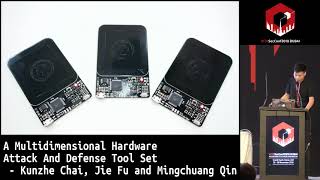
Multidimensional HW Attack and Defense Toolset
Explore multidimensional hardware attack and defense strategies with a comprehensive toolset, enhancing cybersecurity knowledge for both offensive and defensive applications.
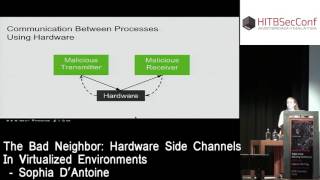
Hardware Side Channels in Virtualized Environments
Explore hardware side channel vulnerabilities in virtualized environments, focusing on cloud-based attacks. Learn about attack surfaces, demonstrations, and potential mitigations for these security risks.
Hack In The Studio - Fireside Chat
Fireside chat with security experts Cristofaro Mune and Adam Laurie, discussing their extensive experience in hardware hacking, embedded systems security, and reverse engineering techniques.
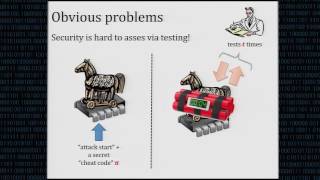
Private Circuits III - Hardware Trojan-Resilience via Testing Amplification
Explores innovative techniques for enhancing hardware security through testing amplification, focusing on resilience against hardware Trojans in private circuit design.

Apple Neural Engine Internal - From ML Algorithm to HW Registers
Explore the inner workings of Apple's Neural Engine, from machine learning algorithms to hardware registers, with insights into FaceID's neural network and SEP firmware security.

Precursor - Towards Evidence-Based Trust in Hardware
Explore evidence-based trust in hardware through the Precursor platform, challenging faith-based approaches and proposing new methods for verifiable hardware security.

Inside the Apple T2
Explore the inner workings of Apple's T2 chip, including methodology and tools for complex security research, going beyond publicly available technical details.
Remote Timing Attacks on TPMs - AKA TPM-Fail
Uncovers vulnerabilities in Trusted Platform Modules through timing analysis, revealing potential security risks in hardware-based cryptographic systems used across various computing platforms.
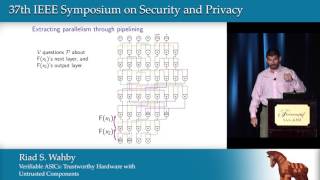
Verifiable ASICs
Explore verifiable computation for untrusted ASICs, enabling high-assurance execution without compromising performance. Learn about the Zebra system's implementation and its potential to match trusted platform performance.

Birds of a Feather - A Hardware & Security Panel
Engaging panel discussion on hardware security and defense strategies, featuring industry experts debating apocalypse preparedness in the context of cybersecurity.
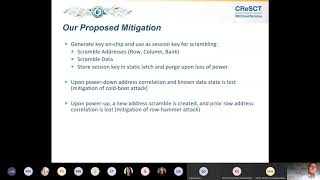
On-Chip Randomization for Memory Protection Against Hardware Supply Chain Attacks to DRAM
Explore innovative techniques for safeguarding DRAM against hardware supply chain attacks through on-chip randomization, enhancing memory protection in modern computing systems.
Exploiting Correcting Codes on the Effectiveness of ECC Memory Against Rowhammer Attacks
Investigates ECC memory's vulnerability to Rowhammer attacks, revealing limitations in its protective capabilities through reverse engineering and a novel attack method called ECCploit.
Hardware-Software Contracts for Secure Speculation
Explore secure speculation techniques through hardware-software contracts, enhancing system security and performance in modern computing architectures.
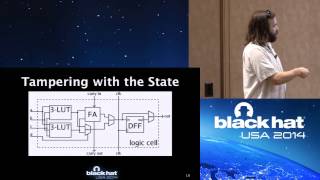
Secure Product Development
Explore hardware security validation techniques, Verilog vulnerabilities, and bug resolution methods in open-source core designs. Learn to identify and address security issues in integrated circuits.
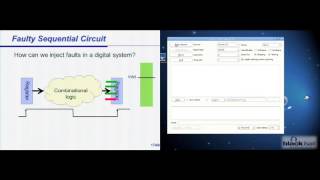
Torturing OpenSSL
Explore hardware vulnerabilities in secure systems through a side-channel attack on RSA signatures, demonstrating how induced faults can compromise software-secure systems and extract private keys.

Power Analysis Attacks for Cheapskates
Discover affordable power analysis attack techniques for cryptographic systems using open-source hardware and software. Learn to set up a budget-friendly lab and perform live demonstrations against AES implementations.
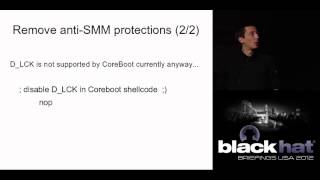
Hardware Backdooring is Practical
Explores hardware backdooring through Rakshasa malware, demonstrating permanent BIOS infection, NX bit disabling, and security lowering across various motherboards using open-source components like Coreboot.

Mission mPOSsible
Explore vulnerabilities in mobile payment systems, including code execution through various input vectors. Live demonstrations showcase attack methods, emphasizing security weaknesses in current mPOS solutions.

Building Trojan Hardware at Home
Learn to create and detect hardware-based trojans using everyday devices. Explore techniques for modifying hardware, embedding malicious code, and understanding countermeasures against these threats.

Discovering Debug Interfaces with the JTAGulator Part 2
Explore JTAG debugging interfaces, learn about data registers, state machines, and protection mechanisms. Hands-on demonstrations with various devices and UART scanning techniques.