
Oracle's Infrastructure Strategy for the Cloud and On Premise
Explore Oracle's infrastructure strategy for cloud and on-premise, covering latest developments in systems, services, and technologies for optimal performance, efficiency, security, and availability.
Femtocell - Femtostep to the Holy Grail
Explore femtocell technology, its advantages, security implications, and potential vulnerabilities in telecommunications networks through expert analysis and live demonstrations.
Hardware You Can Trust
Explore hardware security, tamper protection, and building trustworthy electronics. Learn about microcontroller selection, noise sources, and auditable design techniques for enhanced security.
The Challenges of Designing a Secure Encrypted Hard Drive
Explore the complexities of designing secure encrypted hard drives, covering security models, components, encryption methods, potential vulnerabilities, and protective measures against various attack vectors.
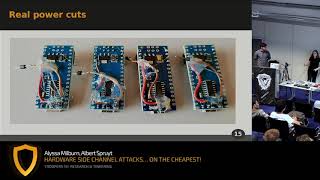
Hardware Side Channel Attacks on the Cheapest
Explore side channel attacks on low-cost hardware, covering power analysis, encryption vulnerabilities, and practical demonstrations. Learn acquisition techniques and countermeasures.

Thunderbolts and Lightning - Snare
Explore Thunderbolt DMA attacks beyond FireWire adapters, discussing novel approaches and potential vulnerabilities in current hardware systems with Thunderbolt ports.
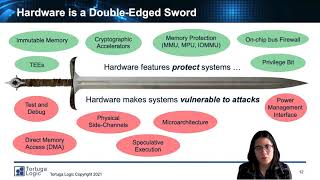
Hardware - A Double-Edged Sword for Security
Explore hardware's dual role in security: as a trust anchor and potential vulnerability. Learn about system-level threats, real-world examples, and promising solutions for detecting and preventing hardware vulnerabilities.
Machine Learning vs. Hardware Integrity Protection - Dominik Sisejkovic - Ekoparty 2021: Hardware Hacking Space
Explora el impacto del aprendizaje automático en la protección de integridad del hardware, analizando ataques basados en datos y discutiendo el diseño de esquemas de bloqueo resistentes al aprendizaje automático.
Defending, Detecting, and Responding to Hardware and Firmware Attacks - Teddy Reed - USENIX Enigma Conference - 2016
Explore firmware security, attack surfaces, and defense strategies. Learn to detect vulnerabilities, monitor integrity, and implement deep systems defense for enterprise protection against hardware and firmware attacks.
Introduction to Reverse Engineering
Explore techniques used by crackers to bypass security, access firmware, and find vulnerabilities in hardware and software. Learn to protect your products from reverse engineering.
Trusted Execution Environments - A Technical Overview of Intel SGX, Arm TrustZone, and RISC-V PMP
Explore key trusted execution environments: Intel SGX, Arm TrustZone, and RISC-V PMP. Learn their architectures, security features, and implementation processes for robust data protection.
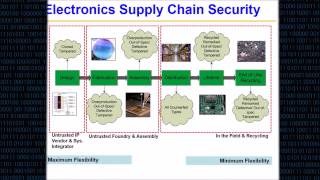
MERS - Statistical Test Generation for Side-Channel Analysis Based Trojan Detection
Learn statistical test generation techniques for detecting hardware Trojans through side-channel analysis, focusing on rare nodes and security metrics in combinational circuits.
Upcoming x86 Technologies for Malicious Hypervisor Protection
Explore AMD SEV-SNP, the next-gen x86 virtualization isolation tech, designed to protect VMs from malicious hypervisors. Learn about new security features, threat models, and impacts on open source ecosystems.
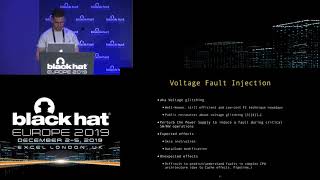
Fatal Fury on ESP32 - Time to Release Hardware Exploits
Methodical exploration of defeating ESP32 security features using low-cost hardware techniques, including voltage glitching and analog side-channels, with implications for IoT device security.
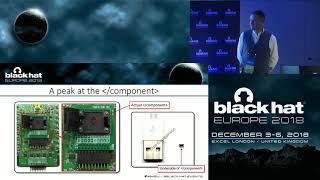
Attacking Hardware Systems Using Resonance and the Laws of Physics
Explore resonant frequencies to subvert electronic systems, challenging assumptions about hardware security and demonstrating vulnerabilities in supposedly secure components.
Securing Your In-Ear Fitness Coach - Challenges in Hardening Next Generation Wearables
Explore security challenges and solutions for next-gen wearables, focusing on a custom Security Development Lifecycle for hardware, software, and cloud components in IoT ecosystems.
Complexity Killed Security
Explore how increasing hardware complexity impacts software security, challenges in documentation access, and potential solutions for modern cybersecurity threats.
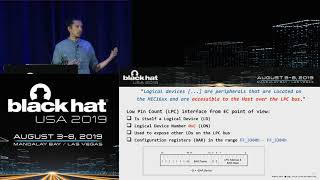
Breaking Through Another Side - Bypassing Firmware Security Boundaries from Embedded Controller
Reverse engineering Embedded Controller firmware to bypass Intel BIOS Guard on Lenovo Thinkpads, exploring hardware security boundaries and firmware update processes.
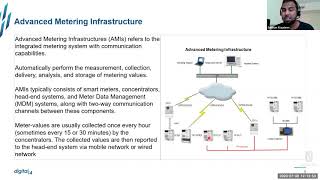
Insecurity of Smart Energy Meters - A Hardware Security Perspective
Explore hardware security vulnerabilities in smart energy meters, covering threat classifications, current trends, and testing methodologies for advanced metering infrastructure and grid security.
Silicon - Security's New Layer
Explore hardware security challenges, from supply chain vulnerabilities to chip-level attacks. Learn about emerging threats and best practices for securing technology stacks from silicon to software.

The Security of Classic Game Consoles
Explore classic game console security measures, their exploits, and lessons for modern software. Journey through gaming history to understand hardware, media, and software protection techniques.