Rage Against The Machine Clear
Explore new root causes of transient execution attacks, including machine clears, and discover novel attack primitives like Floating Point Value Injection and Speculative Code Store Bypass.
Low Level BootROM Protocol Fuzzing Secure Memory Regions
Explore low-level protocol fuzzing for secure microcontrollers, uncovering vulnerabilities in BootROM USB drivers. Learn about a custom fuzzing framework for SPI, I2C, USB, and UART, and its application in hardware security research.
Injectyll-HIDe - Hardware Implants at Scale
Explore hardware implants at scale, focusing on innovative techniques and potential security implications in this cutting-edge presentation on advanced technological vulnerabilities.
Path to Software-Defined Cryptography via Multi-Party Computation
Exploring software-defined cryptography through multi-party computation, addressing enterprise key management challenges and enabling innovation in data protection and privacy.
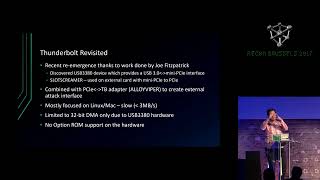
Getting Physical with USB Type-C - Windows 10 RAM Forensics and UEFI Attacks
Explore embedded microcontrollers in modern devices, focusing on the Surface Aggregator Module. Learn about security, firmware updates, and potential hardware implants in this deep dive into low-level system architecture.
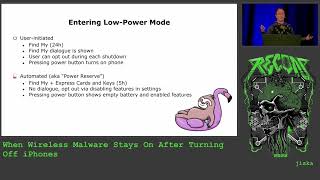
When Wireless Malware Stays on After Turning Off the Phone
Explore iPhone's wireless capabilities after shutdown, including Find My and Digital Car Key. Learn about potential security risks and firmware modifications for low-power Bluetooth malware.
Building Hardened IoT Implementations With LangSec
Explore Language-theoretic security for IoT, focusing on input recognition and processing separation. Learn about parser combinators, test case generation, and implementation in AMQP protocol for robust IoT systems.
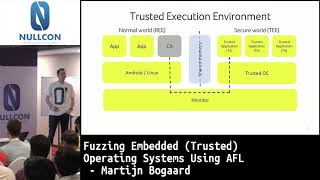
Fuzzing Embedded - Trusted Operating Systems Using AFL
Explore fuzzing techniques for Trusted Execution Environments using AFL, focusing on OP-TEE. Learn about challenges, coverage tracking, and creating initial inputs for effective embedded system security testing.

Hardware Security - Foundational Block of Cyber Battlefield
Panel discussion on hardware security as a foundational element of cybersecurity, featuring experts from healthcare, research, and defense sectors exploring challenges and strategies in this critical field.
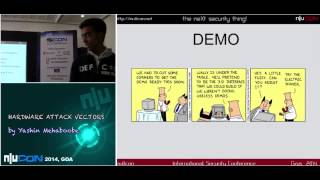
Hardware Attack Vectors
Explore hardware-based attack vectors including HID, IR, radio, and bus protocol attacks, with demonstrations for each technique in computer security.
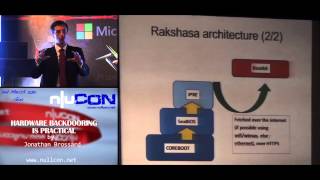
Hardware Backdooring is Possible
Demonstration of permanent hardware backdooring using Rakshasa malware, exploring BIOS vulnerabilities and implications for computer security and forensics practices.
Unlimited Results - Breaking Firmware Encryption of ESP32-V3
Unveiling vulnerabilities in ESP32-V3 microcontrollers through hardware security evaluation, focusing on extracting firmware encryption keys to decrypt flash content containing potential secret data.
Hardware Root of Mistrust
Explore hardware security vulnerabilities and potential exploits in this technical deep dive, uncovering the hidden risks in modern computing systems.
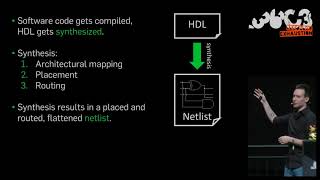
HAL - The Open-Source Hardware Analyzer
Einführung in Hardware-Reverse-Engineering und Vorstellung von HAL, dem ersten Open-Source-Framework zur Analyse von Netzlisten für die Erkennung von Hardware-Manipulationen und Backdoors.
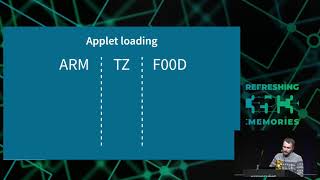
Viva la Vita Vida
Detailing hardware and software hacking techniques used to breach the PlayStation Vita's security, including reverse engineering, fault injection, and side-channel analysis on its proprietary architecture.
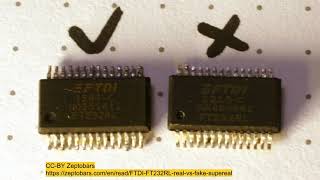
Modchips of the State
Explore hardware implants in supply-chain attacks, their feasibility, and potential countermeasures. Examine a proof-of-concept SPI bus implant and discuss methods to detect and mitigate such security threats.

TrustZone-M - Breaking ARMv8-M's Security
Exploring hardware attacks on ARM Cortex-M processors, demonstrating vulnerabilities in security features like TrustZone-M. Includes open-source tools for fault-injection testing and real-world examples of bypassing chip security measures.

Open Source is Insufficient to Solve Trust Problems in Hardware
Exploring hardware trust issues, supply chain vulnerabilities, and potential solutions. Introduces Betrusted, an open-source platform aiming to enhance security for high-risk individuals.
Expert's Take on Hacker Burner Phones, Automation, and Hardware
Explore IoT security challenges: hacker burner phones, automation in DevOps, and DARPA's vision for secure hardware. Gain insights from industry experts on cutting-edge cybersecurity topics.

Secrets Of The Motherboard - Shit My Chipset Says
Explore motherboard intricacies, security features, and hidden functionalities. Uncover potential exploits, design pitfalls, and challenges in hardware security through chipset analysis and datasheet discoveries.
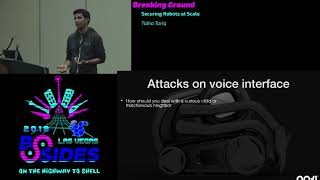
Securing Robots at Scale
Explore robot security challenges, attack surfaces, and protection strategies for hardware, software, and user privacy in the era of widespread robotic adoption.