From Combinatorial Maps to Correlation Functions in Loop Models
Explore combinatorial maps and their connection to correlation functions in loop models, delving into advanced mathematical concepts and their applications.
Hamiltonian Paths on Random Bicubic Maps and KPZ
Explore Hamiltonian paths on random bicubic maps and their connection to KPZ theory in this advanced mathematical lecture by Emmanuel Guitter.

Quantum Ergodicity on Periodic Graphs
Explorez l'ergodicité quantique sur les graphes périodiques avec Mostafa Sabri, découvrant les liens fascinants entre la géométrie spectrale et les structures mathématiques complexes.
The Subcritical Brain and Motion Control
Explore cortical linguistics, neural circuits, and brain dynamics. Discover how mathematical properties and firing rates drive memory, information processing, and motion control, with applications for neurological impairments.
Mean Field Limits of Heterogeneous Networks - Informal Systems Seminar
Explore mean field limits of heterogeneous networks, focusing on interacting particle systems coupled on digraphs and their macroscopic behavior. Gain insights into Vlasov equations and digraph measures.
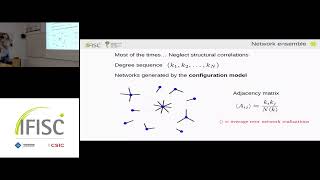
Stochastic Dynamics on Networks: Insights into Opinion Polarization
Explore stochastic dynamics on networks and gain insights into opinion polarization through advanced mathematical modeling and analysis techniques.
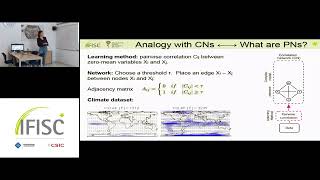
Probabilistic Networks for Modeling Complex Systems
Explore probabilistic networks for modeling complex systems, focusing on applications in physics and interdisciplinary fields.
The X Factor: Unveiling the Secrets of the X-Chromosome with Data-Driven 3D Modeling
Explore X-chromosome structure and function through data-driven 3D modeling, uncovering insights into sex-specific diseases and potential targeted therapies. Learn about expanding techniques to entire genomes.
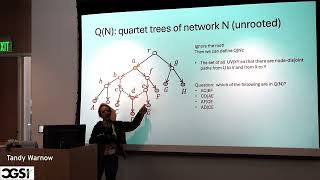
Statistically Consistent Estimation of Level-1 Phylogenetic Networks from SNPs
Explore statistically consistent methods for estimating level-1 phylogenetic networks from SNP data, focusing on rooted and unrooted structures in computational genomics.
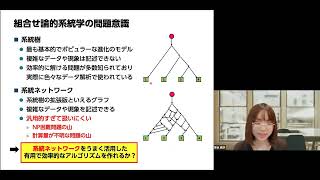
進化の系統樹と系統ネットワークに関する組合せ論 - 第17回MACSコロキウム
Dive into 進化の系統樹と系統ネットワークの数学的構造について、早水桃子博士による詳細な解説。系統樹の推定方法から構造定理まで、組合せ論的アプローチで探究する。
Scraping ArXiv Papers with OpenAI's GPT 3.5 - AI Assistant
Learn to build an AI research assistant that scrapes ArXiv papers using GPT-3.5, transforming messy references into a clean format for efficient information extraction and graph-based paper organization.
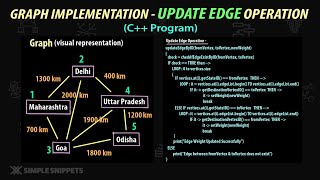
Graph Data Structure - Update Edge Operation Using Adjacency List - Part 5
Learn to update edge weights in a graph using C++ with adjacency list implementation. Covers pseudocode, working principles, and practical coding for efficient graph manipulation.
Efficient Community Search Based on Relaxed k-truss Index
Explore advanced techniques for efficient community search in networks using relaxed k-truss indexing methods and graph-based algorithms for optimized data analysis.
Untargeted Adversarial Attack on Knowledge Graph Embeddings
Explore advanced techniques for executing untargeted adversarial attacks on knowledge graph embeddings, focusing on privacy and security implications in federated learning environments.
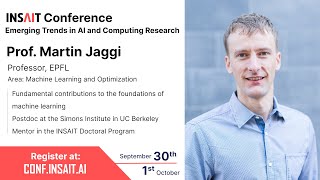
Towards Collaborative Decentralized Learning
Explore cutting-edge decentralized learning concepts, from federated systems to Byzantine-robust training, with insights into collaborative and personalized optimization approaches.
Local Hamiltonians and Quantum Cuts: Exploring the Quantum Heisenberg Model
Delve into quantum Heisenberg models and their connection to Max-Cut problems, exploring theoretical frameworks and approximation algorithms for Quantum Max-d-Cut Hamiltonians in computational physics.
Graph-of-Thoughts: From Chain-of-Thoughts to Advanced AI Reasoning Algorithms
Explore the evolution of AI reasoning from Chain-of-Thoughts to Graph-of-Thoughts, discovering advanced algorithms that enhance autonomous agent capabilities and decision-making.
DSPy Combined with Graph Optimizer in PyG - Multi-Hop RAG Implementation
Explore DSPyG's innovative approach to multi-hop RAG implementation, combining DSPy with graph optimization for enhanced AI research capabilities using minimal computational resources.

DSPy: Building Self-Improving Language Model Pipelines - Beyond LangChain Templates
Explore DSPy's innovative approach to building self-improving LLM pipelines, featuring automatic prompt engineering and graph-based optimization - moving beyond traditional prompt templates.
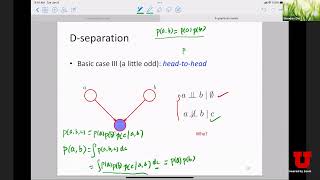
Probabilistic Graphical Models and Maximum Likelihood Estimation - Lecture 13
Dive into probabilistic graphical models, exploring likelihood estimation, Gaussian models, and network structures while learning to analyze real-world data using conditional independence concepts.

SciAgents and AI Research Idea Generation - Comparing Stanford and MIT Approaches
Explore groundbreaking research from Stanford and MIT on AI agents' capabilities in scientific discovery, idea generation, and knowledge graph reasoning, with practical Python implementations.