Task-Optimized Multi-Agent Communication Protocols with G-Designer
Explore the G-Designer framework for optimizing multi-agent AI communication through Graph Neural Networks, focusing on efficiency, scalability, and robust topology design.
AFLOW: Automating Agentic Workflows for Large Language Models
Discover how AFLOW framework optimizes LLM workflows through automated code-based representations, specialized Monte Carlo Tree Search, and reusable operators to enhance AI performance while reducing computational costs.
Neuro-Symbolic Graph Reasoning and Knowledge Graph Analysis - From Theory to Implementation
Explore neuro-symbolic AI frameworks and graph-based reasoning through practical examples, from biomedical research applications to Python implementations and logical rule learning.
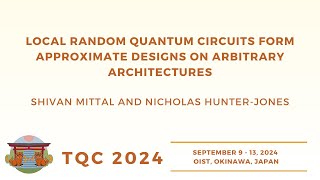
Local Random Quantum Circuits Form Approximate Designs
Delve into the mathematical foundations of random quantum circuits on arbitrary graphs, exploring how they form approximate unitary designs with polynomial-size circuits and bounded spectral gaps.
New Approaches to Complexity via Quantum Graphs
Explore groundbreaking research on quantum graph complexity theory, examining clique problems and quantum channels while comparing complexity classes QMA(2), QMA, MA, and NP.
Reversible Pebbling - Parallel Quantum Circuits with Low Amortized Space-Time Complexity
Explore parallel quantum circuit construction through reversible pebbling games, focusing on efficient space-time complexity and quantum algorithm optimization for enhanced computational performance.
Online Locality Meets Distributed Quantum Computing
Explore the intersection of locally checkable labeling problems across quantum computing models, examining theoretical advantages and limitations in distributed systems and tree structures.
Quantum Complexity of Testing Signed Graph Clusterability
Explore quantum algorithms for testing signed graph clusterability, featuring a novel approach with O(N^1/3) query complexity and proven advantages over classical methods.
An Improved Quantum Max Cut Approximation via Maximum Matching
Discover groundbreaking improvements in Quantum Max Cut approximation through maximum matching techniques, achieving a 0.595 approximation ratio using simplified 2-qubit state outputs.
Codes for Unexpected and Expected Loads in Distributed Computing Systems
Explore coding theory applications in distributed computing systems, focusing on erasure coding's role in handling unpredictable data access patterns and optimizing storage efficiency.
Link Prediction with Graph Neural Networks Using DGL and PyG
Master link prediction in graph neural networks using DGL and PyG frameworks, implementing node connectivity prediction through practical code examples and negative sampling techniques.
Innovations in Theoretical Computer Science 2020 - Session 5
Explore cutting-edge research in theoretical computer science, including secure computation, communication protocols, coding theory, and fault-tolerant algorithms presented at ITCS 2020.

Polyregular Functions on Unordered Trees of Bounded Height
Explore polyregular functions on unordered trees with bounded height, examining first-order interpretations, decidability of equivalence problems, and applications to graph classes with bounded tree-depth.
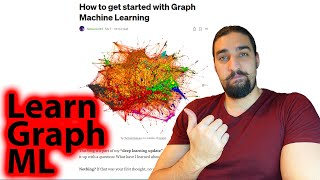
How to Get Started With Graph ML - Blog Walkthrough
Comprehensive introduction to Graph Machine Learning, covering applications, methods, and resources. Explores research challenges, GNN expressivity, and related subfields, providing a solid foundation for beginners.
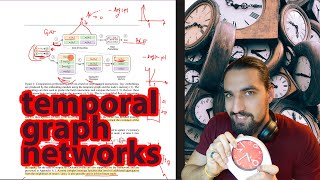
Temporal Graph Networks - GNN Paper Explained
Explore temporal graph networks and dynamic graphs, learning advanced techniques for graph machine learning, including time-based sampling, memory management, and attention mechanisms.
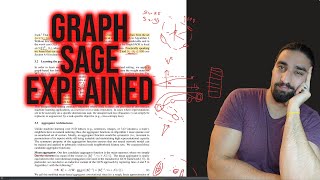
Graph SAGE - Inductive Representation Learning on Large Graphs - GNN Paper Explained
Deep dive into Graph SAGE, exploring its innovative approach to large-scale graph learning. Covers key concepts, training methods, aggregator functions, and comparisons with other graph neural networks.
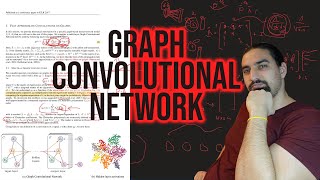
Graph Convolutional Networks - GNN Paper Explained
Comprehensive exploration of Graph Convolutional Networks, covering theory, implementation, and applications. Delves into spectral methods, Weisfeiler-Lehman perspective, and GNN depth, offering insights for both beginners and experts.
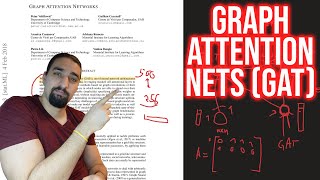
Graph Attention Networks - GNN Paper Explained
Explore Graph Attention Networks (GAT) in-depth, covering graph theory basics, GAT methodology, multi-head versions, visualizations, and applications in transductive/inductive learning scenarios.
A Brief Introduction to Algorithms, Game Theory and Risk-Averse Decision Making
Explore algorithms, game theory, and risk-averse decision making, covering shortest paths, NP-Complete problems, equilibria, and various risk frameworks for real-world applications.
Faster Algorithms and New Iterative Methods for Computing the Stationary Distribution
Explore advanced algorithms and iterative methods for computing stationary distributions, with applications in optimization and graph theory.
Graph Neural Networks Implementation in Python
Learn Graph Neural Networks implementation in Python, covering graph representations, node embeddings, message passing, and practical applications using NetworkX and PyG libraries.