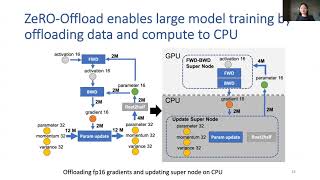
ZeRO-Offload - Democratizing Billion-Scale Model Training
ZeRO-Offload: Enabling billion-scale model training on a single GPU by offloading data and compute to CPU, minimizing data movement, and optimizing efficiency. Scales to multiple GPUs and works with model parallelism.
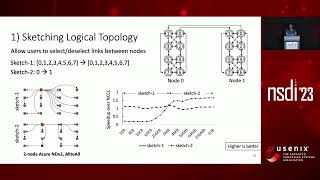
TACCL - Guiding Collective Algorithm Synthesis Using Communication Sketches
Innovative tool for synthesizing efficient communication algorithms in multi-GPU machine learning, outperforming NCCL and accelerating model training across various hardware configurations.
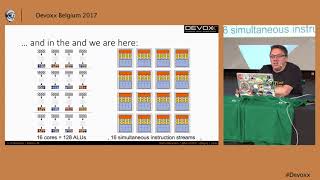
Java on the GPU - Where Are We Now?
Explore GPU utilization in Java, covering OpenGL, CUDA, and OpenCL for massive computations. Learn advantages and drawbacks of GPU computing in desktop and cloud environments.
Mnemosyne - A Distributed Bitmapped Indexing Layer for Big Data
Explore building a distributed indexing layer for big data, covering design principles, data ingestion, storage, modeling, and in-memory computing techniques for scalable, real-time querying.
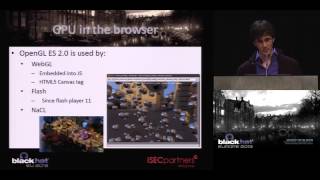
Harnessing GPUs - Building Better Browser Based Botnets
Explore browser-based botnets using GPUs for powerful computations. Learn about XSS, HTML5, and WebGL techniques to create efficient, cross-platform botnets capable of breaking strong encryption and impacting cybersecurity.

Towards Iterative Relational Algebra on the GPU
Explores GPU-based iterative relational algebra for high-performance data analytics, presenting a novel hash-join implementation with optimizations for memory access and deduplication, outperforming existing solutions.
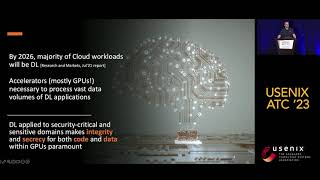
SAGE - Software-based Attestation for GPU Execution
Explore SAGE, a software-based attestation mechanism for secure GPU execution, offering code integrity, computation integrity, and data protection without hardware support.

But Mummy I Don't Want to Use CUDA - Open Source GPU Compute
Explore alternatives to CUDA for GPU computing, focusing on open-source options like OpenCL, SPIR-V, and SYCL. Discuss challenges and potential solutions for a vendor-neutral Linux compute stack.
Tensorflow on Open Source GPUs
Explore efforts to enable TensorFlow on open-source GPUs using SYCL, LLVM, and OpenCL. Learn about challenges and progress in deploying AI/ML frameworks without proprietary NVIDIA CUDA stack.
Boost.Compute - A Library for GPU - Parallel Computing
Explore Boost.Compute, a high-level API for GPU/parallel computing. Learn to write efficient C++ applications for GPUs, FPGAs, and multi-core CPUs using this portable, STL-like library.
Introduction to C++ Coroutines Through a Thread Scheduling Demonstration
Explore C++20 coroutines for efficient CPU-GPU multitasking, improving performance in heterogeneous workloads. Learn fundamental components and design a lightweight programming model with scheduling algorithm.
GPU-Accelerated Data Analytics in Python
Explore GPU-accelerated data analytics using RAPIDS libraries in Python. Learn ETL, machine learning, graph analytics, and more with familiar APIs for faster computation and model iteration.
Practical Deep Learning for Data Scientists
Hands-on PyTorch and GPU Deep Learning tutorial for data scientists. Build common architectures, evaluate performance, and leverage compute resources effectively. Ideal for those with ML basics seeking practical DL experience.
Sfrutta la potenza della GPU con PyCUDA (e compagni)
Scopri come sfruttare la potenza delle GPU per l'elaborazione parallela utilizzando PyCUDA e altre librerie Python, accelerando significativamente le prestazioni computazionali.
Exploit Your GPU Power with PyCUDA - and Friends
Harness GPU power for scientific computing using PyCUDA. Learn CUDA programming model, memory spaces, and practical applications in Python for high-performance computing tasks.
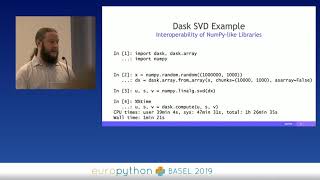
Distributed Multi-GPU Computing with Dask, CuPy and RAPIDS
Explore distributed multi-GPU computing using Dask, CuPy, and RAPIDS. Learn to leverage GPU acceleration and distributed systems for faster, more efficient data processing and analysis.
Beyond CUDA - GPU Accelerated Computing on Cross-Vendor Graphics Cards with Vulkan Kompute - AMD, Qualcomm, NVIDIA & Friends
Explore cross-vendor GPU computing with Vulkan and Kompute. Learn to write GPU-accelerated machine learning algorithms using Python and C++, applicable to various GPUs including AMD, Qualcomm, and NVIDIA.
Arbitrary Computation on the GPU Using WebGL
Explore GPU parallel processing with WebGL beyond graphics, including data handling, JavaScript integration, and potential challenges in leveraging GPU power for diverse computations.
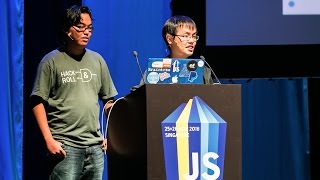
GPU.JS - GPU Accelerated JavaScript
GPU-accelerated JavaScript: Harness browser's GPU power for parallel computing. Learn about GPU.JS, its development story, API usage, and real-world applications like matrix multiplication and ray tracing.
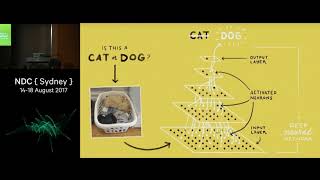
TensorFlow in Three Sentences
Explore TensorFlow's capabilities, limitations, and applications in AI. Learn key concepts, required knowledge, and practical methods for tackling computer vision and natural language processing tasks.
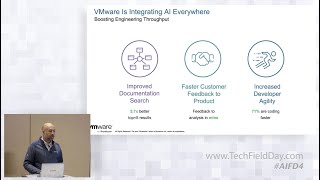
Private AI Implementation and Use Cases at VMware
Discover how VMware leverages private AI services internally, from coding assistance to document search using RAG, exploring their implementation of LLMs and cloud-smart approach to enterprise AI solutions.