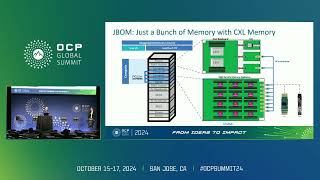
PCIe Active Electrical Cables (AECs) for Large Language Model (LLM) Computing Clusters
Explore the evolution and implementation of PCIe Active Electrical Cables (AECs) for GPU clustering in Large Language Models, focusing on retimer technology advantages and form factor considerations.
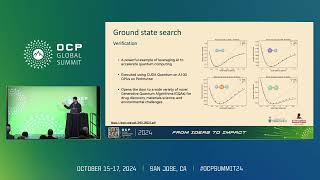
AI for Quantum Computing and NVIDIA's Quantum Computing Strategy
Discover NVIDIA's strategic approach to quantum computing and how AI technologies are being integrated into quantum computational systems.
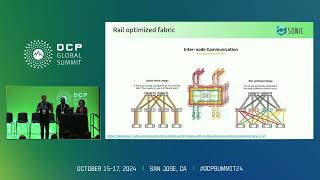
Advancing SONiC for AI - Network Architecture and Performance Optimization
Discover the latest advancements in SONiC AI Working Group's developments, focusing on network fabrics, routing design, and congestion control for AI clusters and GPU-accelerated workloads.
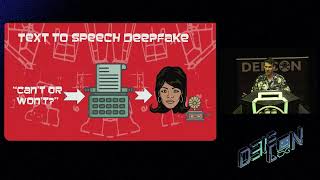
Real-Time Video and Audio Deep Fake Impersonation - A Security Demonstration
Explore real-time deepfake technology and its potential security risks through practical demonstrations of CEO impersonation using open-source tools and accessible hardware.

Squash - 딥러닝 서비스 추론 속도 개선기
Discover how Squash technology optimizes deep learning inference speed and reduces hardware costs through innovative model compression techniques for efficient AI service deployment.
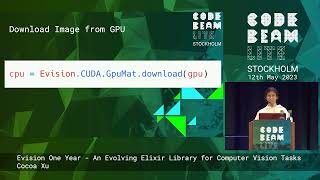
Evision: An Evolving Elixir Library for Computer Vision Tasks
Explore Evision, an evolving Elixir library for computer vision. Learn about Kino widgets, Nx integration, and performance comparisons across CPU, OpenCL, and CUDA for image processing tasks.
Migration from WebGL to WebGPU - Concepts and Implementation
Explore WebGPU migration from WebGL, covering core concepts, differences, and implementation tips. Learn about adapters, devices, shaders, and more for efficient graphics programming.
BuzzWords - How Bumble Does Multilingual Topic Modelling at Scale
Explore Bumble's innovative GPU-powered solution for multilingual topic modeling, enabling faster analysis of millions of data points using BERT-based models.
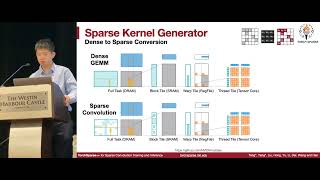
TorchSparse++ - Efficient Training and Inference Framework for Sparse Convolution on GPUs
Explore efficient GPU-based sparse convolution with TorchSparse++, an advanced framework for training and inference in deep learning applications.
MeshGraphNets.jl - Adaptation of MeshGraphNets as NeuralODE
Explore MeshGraphNets.jl: Adapt MeshGraphNets as NeuralODE for efficient simulation of physical systems. Learn design choices, GPU optimization, and industrial applications in hydraulic brake systems.
KSVD.jl: A Case Study in Performance Optimization
Explore performance optimization techniques for K-SVD algorithm implementation, including execution order adjustments, single-core optimizations, multi-threading, and distributed computing.
Preemption Chaos and Optimizing Server Startup for LLMs in Production - Part 2
Optimize GPU costs and improve uptime by leveraging preemptible instances for LLM services, overcoming challenges and maximizing savings.
Installing WSL with CUDA Support and PyTorch for Data Science and Machine Learning
Aprenda a instalar WSL con soporte CUDA y PyTorch para potenciar sus proyectos de aprendizaje automático y ciencia de datos en Windows.

Jack Dongarra's Perspective on the Exascale Computing Project
Explore computing pioneer Jack Dongarra's insights on the Exascale Computing Project's progress, achievements, and future impact on scientific research and high-performance computing.
vLLM on Kubernetes in Production - Deployment and Cost-Saving Strategies
Deploy vLLM on Kubernetes for efficient LLM inference and serving. Learn basics, local setup, and production deployment with GPU-attached nodes via DaemonSet. Includes hands-on demo and cost-saving strategies.
Managed Cloud Infrastructure for LLMs
Explore solutions for LLM infrastructure challenges, including cost reduction, GPU availability, scalability, and cloud resource management. Learn to accelerate AI development and deployment.
Deploying LLM Workloads on Kubernetes with WasmEdge and Kuasar
探索使用WasmEdge和Kuasar在Kubernetes上部署LLM工作负载,提高效率、可扩展性和稳定性。了解如何克服传统方法的挑战,实现快速、灵活、资源高效和安全的LLM应用程序开发。
Leveraging Wasm for Portable AI Inference Across GPUs, CPUs, OS and Cloud-Native Environments
Explore WebAssembly's advantages for AI inference in cloud-native ecosystems, enabling uniform performance across diverse hardware and seamless integration into frameworks for enhanced deployment and scalability.

Portable Communications Interface for Earth System Model - JuliaCon 2024
Explore ClimaComms.jl's high-level interface for Earth System Model components, enabling efficient communication patterns and distributed simulations across various architectures.

Oceananigans - An Ocean-Flavoured Fluid Dynamics Library
Explore Oceananigans, a Julia-based fluid dynamics library for oceanic modeling, featuring flexibility, GPU performance, and easy integration of custom components like sea-ice and biogeochemistry.
Developing Supercomputing Geoscience Applications Using Julia
Explore modular Julia packages for accelerating geocomputing, enabling high-performance stencil codes that scale from laptops to GPU-accelerated supercomputers for geoscience applications.