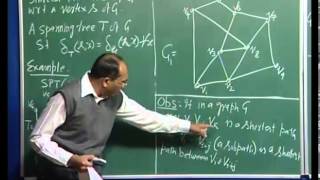
Computer Algorithms - 2
The course discusses efficient algorithms from a large number of domains. This course assumes the knowledge of data structures, the knowledge big-O notation and the concept of time and space complexity of an algorithm.
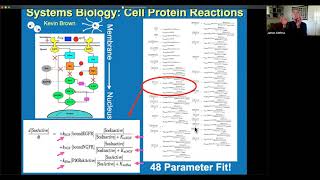
Sloppy Models, Differential Geometry, and Why Science Works
Explore how complex systems can be modeled despite parameter uncertainties, using differential geometry to understand 'sloppiness' and its implications for scientific comprehension and prediction.
Topology of Networks in Generalized Musical Spaces
Explore generalized musical spaces through network topology, examining pitch classes, scales, and chord progressions. Gain insights into rhythmic spaces, notation, and perception in music theory.
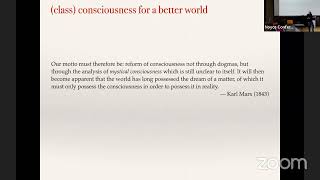
Autodiagnosis and the Dynamical Emergence Theory of Basic Consciousness
Explore the theory of basic consciousness, its emergence, and related concepts like energy landscapes and metastable states in this thought-provoking discussion on the nature of experience.
Mandelbrot, 1/f Noise, and The Mind's Eye in Complexity Science
Exploring Mandelbrot's contributions to 1/f noise, long-range dependence, and fractional models. Discusses the impact of cognitive diversity on scientific progress and the importance of visual thinking in mathematics.
The Geometry of Consonance - Music and Mathematics
Explore the fascinating intersection of music theory and geometry, uncovering how musical chords inhabit unique geometric spaces and how classical compositions trace paths through multidimensional objects.
The Shape of Music - Mathematical Order in Western Tonality
Exploring the mathematical structure of Western music, revealing hidden geometries and patterns that connect diverse musical styles from Bach to The Beatles, and their relation to complex systems science.
Topology Shapes Dynamics of Higher-order Networks
Exploring how higher-order network interactions influence non-linear dynamics, synchronization, and percolation in complex systems like brain networks and climate patterns.
The Butterfly Effect - What Does It Really Signify?
Explore chaos theory, determinism, and unpredictability through the lens of Ed Lorenz's work and the true meaning of the Butterfly Effect in meteorology and climate physics.

Geometry - Scalar Triple Product: Oxford Mathematics First Year Student Lecture
Explore scalar triple product in geometry, including its definition, properties, and applications in calculating volumes of parallelepipeds, with Oxford Mathematics professor Derek Moulton.

Knotty Problems - Marc Lackenby
Explore knot theory, topology, and unsolved mathematical problems with Professor Marc Lackenby in this engaging lecture on the fascinating world of knots and their applications.
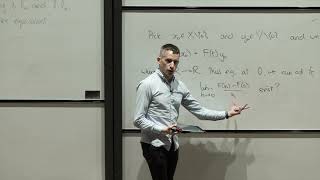
Multidimensional Analysis and Geometry - Introduction to the Derivative in Higher Dimensions - Lecture 1
Explore the derivative in higher dimensions, extending single-variable concepts to multidimensional functions and introducing the derivative as a linear map for best approximation.
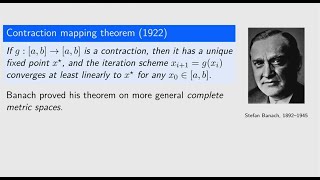
The Banach Contraction Mapping Theorem - Oxford Mathematics 1st Year Lecture
Explore the Banach contraction mapping theorem in this Oxford Mathematics lecture, focusing on guaranteeing convergence of fixed point iterations in one dimension.

Introduction to Algebraic Geometry and Commutative Algebra
Explore algebraic geometry and commutative algebra, covering topics from affine algebraic sets to integral extensions. Gain insights into key theorems and principles in this advanced mathematics course.
Introductory Non-Linear Dynamics
This course is designed to introduce students to the basic ideas of Dynamical systems, Stability, and chaos, largely using Iterative mappings as the model. The course will focus on qualitative ideas and will require students to explore dynamics through s…
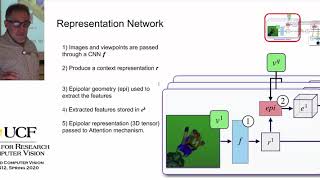
Geometry-Aware Neural Rendering for Novel View Synthesis
Explore novel view synthesis techniques and epipolar extraction in neural rendering, with a focus on geometry-aware approaches and their practical applications.

Geometry I - Prof. Dr. Cem Tezer
Comprehensive exploration of fundamental geometric concepts, covering various topics over 16 weeks. Ideal for students seeking in-depth understanding of geometry principles and applications.
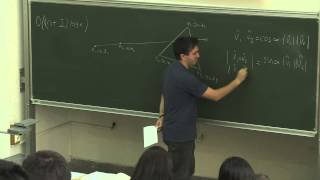
Computational Geometry
Explore fundamental concepts and advanced techniques in computational geometry through comprehensive lectures, covering various algorithms and applications in spatial data analysis.

Constructibility
Explore impossible geometry problems and field extensions, from classic constructions to Gauss' 17-gon. Learn advanced constructibility concepts using compass, straightedge, and marked ruler.
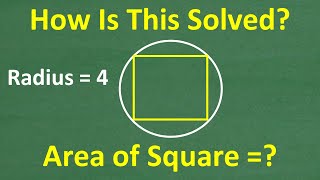
Finding the Area of a Square Inscribed in a Circle
Solve a challenging geometry problem in this 12-minute video that focuses on finding the area of a square inscribed in a circle. Explore key concepts in geometry and problem-solving techniques as you work through this engaging mathematical puzzle. Gain v…
Sparsifying Suprema of Gaussian Processes
Explore a 49-minute lecture on approximating the supremum of centered Gaussian processes using finite-dimensional Gaussian processes. Delve into the proof that shows how the approximation's dimension depends solely on the target error. Discover the corol…