Helton-Howe Trace, Connes-Chern Character, and Quantization
Explore advanced mathematical concepts connecting Helton-Howe Trace, Connes-Chern Character, and Quantization in this insightful lecture by Xiang Tang from Washington University in St. Louis.
Gnomonic Projection from Objective Flat 3-Space to Subjective Hemi-3-Sphere
Explores a novel model of visual perception using gnomonic projection to map objective 3D space onto a curved subjective space, explaining phenomena like foreshortening and straight line perception.
Consciousness - Coherence of Modalities
Explores a coherence-based theory of consciousness, proposing structured nets and dynamic mappings as key elements. Discusses data structures, neural codes, and links to mathematical concepts.
The Emergence of Geometric Worldviews in Qualia Space
Explores how cognitive capabilities, subjective experience, and macroscopic perception lead to geometric worldviews in organisms, using qualia-based measurement spaces and topological concepts.
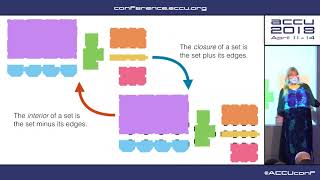
The Shape of a Program
Explore topology's application to programming, viewing code as a shape in time, space, causality, and possibility. Gain insights into program structure and design.
C++ and Linear Algebra
Explore the proposal for adding linear algebra support to C++'s standard library, discussing its importance, requirements, and potential applications in geometry and color manipulation.
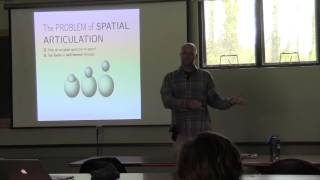
Functional Geometry - Producing Pure Spaces
Explore geometric synthesis using category theory and functional programming. Learn to model complex spatial configurations with C++14, combining Geometric Algebra and FP paradigms for dimensional fluency.
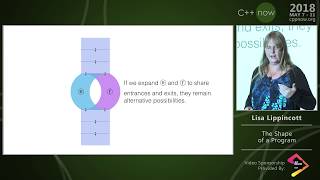
The Shape of a Program
Explore how programs can be viewed as mathematical shapes using topology, examining connections between actions, capabilities, time, and possibility in software architecture.
VPython Goes to School
Explore VPython's potential in high school education, linking programming concepts with math, physics, and chemistry through interactive 3D visualizations and simulations.
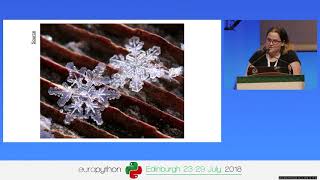
Recursion, Fractals, and the Python Turtle Module
Explore recursion through fractals using Python's Turtle module. Learn to create psychedelic designs, understand natural patterns, and discover a fun tool for teaching coding concepts.
Maths-Powered Transforms for Creating 3D Shapes
Explore 3D shape creation using CSS transforms, from basic polygons to complex polyhedra and surfaces. Learn the math behind these powerful techniques for stunning visual effects.
Polyhedra, I Choose You! Letting Your Passions Take Form
Explore the fascinating world of polyhedra through an interactive web app. Learn how ancient mathematics and modern technology combine to create beautiful 3D shapes and symmetries.
Topology, Geometry and Life in Three Dimensions
Explore hyperbolic geometry's role in mapping complex 3D spaces and its influence on digital art. Learn about mathematical approaches to describing and investigating intricate maze-like structures.
Four Dimensional Maths - Things to See and Hear in the Fourth Dimension
Explore four-dimensional shapes in a 3D world through hands-on demonstrations, including knitted hats and Mobius strips. Learn to visualize the fourth dimension with entertaining mathematical tricks and explanations.
A Model for Perceptual States
Mathematical model for 3D perception from 2D data, exploring geometric spectra and eigenstates. Proposes a framework for understanding consciousness through higher-order universality and information processing.
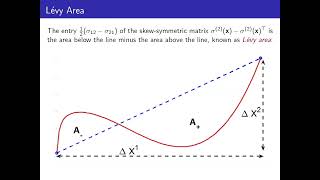
Convex Hulls of Curves, Volumes, and Signatures
Explore convex hulls of curves, volumes, and signatures in geometry, gaining insights into their mathematical properties and applications.
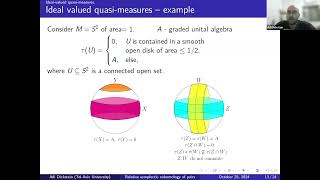
Relative Symplectic Cohomology of Pairs
Delve into advanced symplectic geometry concepts, focusing on relative symplectic cohomology's extension to subset pairs and its applications in demonstrating new symplectic rigidity phenomena.

Learning Animation in Source Filmmaker - The Absolute Basics of Animation
Comprehensive introduction to 3D animation basics in Source Filmmaker, covering key concepts like splines, tangents, and graph editing through the classic bouncing ball exercise.
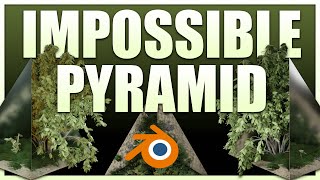
Make an Impossible 3-Worlds-In-1 Pyramid in Blender - Eevee & Cycles
Learn to create a mind-bending 3-worlds-in-1 pyramid using Blender's view layers and compositing techniques. Master non-Euclidean geometry in both Eevee and Cycles rendering engines.
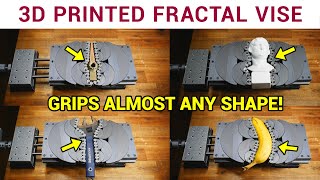
3D Printed Fractal Vise - The Coolest Tool You Didn't Know You Needed
Learn to design, 3D print, and assemble a fractal vise - a versatile tool that can clamp objects of various shapes. Explore the concept, design process, printing tips, and assembly techniques.
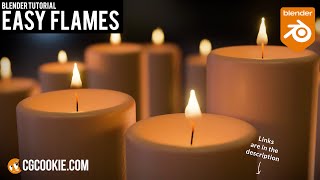
How to Make a Simple Fire Effect and Use It Now - Blender Tutorial
Learn to create a simple, effective fire effect in Blender using geometry and shaders. Perfect for beginners seeking quick, realistic flames without complex simulations.