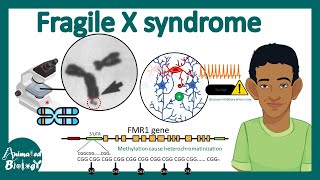
Fragile X Syndrome: Genetics, Cell Biology, and Pathology - USMLE Step 1
Explore the genetics, cell biology, and pathology of Fragile X syndrome, a crucial topic for USMLE Step 1 preparation. Gain comprehensive insights into this genetic disorder's mechanisms and clinical implications.

Marfan Syndrome - Causes, Symptoms, Diagnosis, and Treatment
Explore Marfan syndrome's genetic basis, symptoms, and treatment. Learn about its autosomal dominant inheritance, fibrillin-1 defects, and diverse clinical manifestations affecting connective tissues and organs.
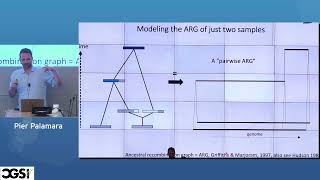
Large-Scale Inference of Ancestral Recombination Graphs for Genealogy-Based Association of Complex Traits
Explore large-scale inference of ancestral recombination graphs and its application in genealogy-based association of complex traits, advancing genomic research and population genetics.
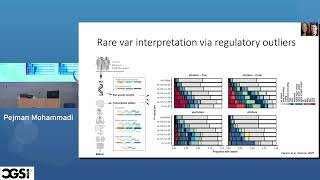
Quantitative Models of Genetic Variation in Cis-Regulation - 2022
Explore quantitative models of genetic variation in cis-regulation, focusing on haplotype-aware modeling and regulatory effect size quantification in eQTL data.
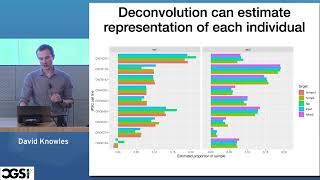
Determining the Molecular Intermediates Between Genotype and Phenotype
Explore molecular intermediates between genotype and phenotype, focusing on transcription factor binding, Mendelian randomization, and causal network discovery in genomics research.

Understanding GWAS Mechanisms with Transcriptome-Wide Association Studies
Explore GWAS mechanisms through Transcriptome-Wide Association Studies. Learn to identify genetic determinants of chromatin and quantify genetic effects on disease mediated by gene expression levels.
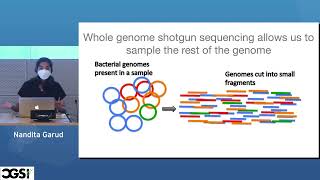
How to Detect Evolution from Microbiome Data
Explore methods for detecting microbial evolution in the gut, examining strain diversity, biogeography, and rapid adaptation. Gain insights into population genetics and its impact on microbiome ecology.
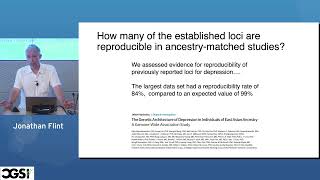
Genetics Basis of Depression - CGSI 2022
Explore the genetic foundations of depression, examining recent research findings and their implications for understanding this complex mental health disorder.
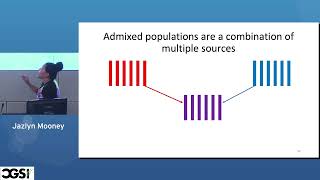
On the Number of Genealogical Ancestors Tracing to Source Groups in Admixed Populations
Explore genealogical ancestry in admixed populations through a mechanistic model. Gain insights into African American history and the impact of the Trans-Atlantic Slave Trade on genetic heritage.
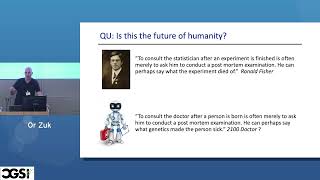
Evaluating the Potential Benefits of Embryo Screening Using Polygenic Scores for Multiple Traits
Explore the potential and limitations of embryo screening using polygenic scores for multiple traits. Analyze ethical considerations and scientific challenges in this emerging field of reproductive genetics.
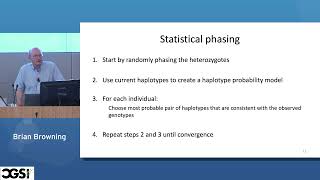
Haplotype Phasing: Methods and Accuracy
Explore haplotype phasing methods and accuracy with Professor Brian Browning. Learn about fast two-stage phasing, integrative estimation, and genotype error impacts on trio-based accuracy.

Sardinia Population History and Complex Trait Variation - CGSI 2022
Explore Sardinia's unique genetic history and its impact on complex trait variation, uncovering insights into population dynamics, selection, and disease risk.
Computational Biomedicine: Epigenetics, Liquid Biopsy, and Alternative Polyadenylation Therapy
Explore computational biomedicine, focusing on epigenetics, liquid biopsy, and alternative polyadenylation therapy. Gain insights into cutting-edge research and applications in genomics and cancer detection.
Design, Construction, and Usage of the Draft Pangenome - CGSI 2023
Explore the design, construction, and application of draft pangenomes in genomics. Learn about structural variations, gene expression impacts, and efficient genotyping techniques using cutting-edge pangenome approaches.
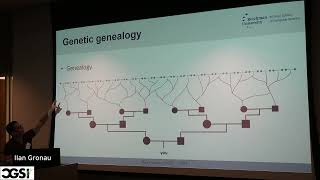
Generating Realistic Chromosome-Scale Simulations for Population Genomics Studies
Explore realistic chromosome-scale simulations for population genomics using advanced tools and techniques. Learn to generate accurate models for genetic studies and research.
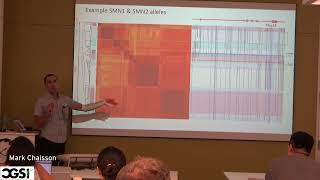
Genotyping Allele-Specific Copy Number Variants Using Pangenomes
Explore allele-specific copy number variant genotyping using pangenomes. Learn advanced techniques for analyzing complex genomic variations in human populations.
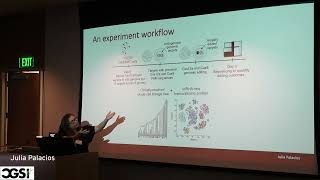
Inference from Single Cell Lineage Tracing Data Generated via Genome Editing
Explore single-cell lineage tracing via genome editing, covering inference methods, design parameters, and data analysis for understanding cellular phylodynamics and evolution.
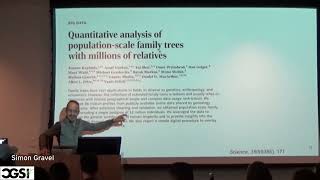
Population Genetics in Large Genealogies
Explore population genetics using large genealogies, focusing on data analysis, relationship inference, and historical insights from Quebec's French Canadian population.

Gene Regulatory Network Structure and Perturbation Effects Distribution - Simulation and Analysis
Explore gene regulatory network structure and its impact on perturbation effects. Gain insights into simulating and modeling GRNs for improved understanding of gene expression regulation.

Programmable Genomic Integration (PGI): A Technology for Large DNA Sequence Integration at Specific Genomic Locations
Explore Programmable Genomic Integration (PGI) technology for integrating large DNA sequences at specific genomic locations. Learn about its applications in primary human cells and progress in translational research.
Advancing Gene Editing Technologies with Spherical Nucleic Acids
Explore cutting-edge gene editing using Spherical Nucleic Acids. Learn how these nanomaterials enhance drug delivery, overcome biological barriers, and revolutionize diagnostics and therapeutics in disease treatment.