The Family Experience with Sudden Death - Inherited Arrhythmias Series, Part 2 - Ambry Genetics
Explore the family perspective on sudden death due to inherited arrhythmias, featuring healthcare providers and patient experiences, with a focus on evaluation, genetic testing, and support.
What's Next in Epilepsy Genetic Testing - Webinar - Ambry Genetics
Explore advancements in epilepsy genetic testing, including refined panels, precision medicine, and next-generation sequencing techniques for improved diagnosis and treatment strategies.
A New Wave for Hereditary Breast and Ovarian Cancer
Explore new research on hereditary breast and ovarian cancer, including risk factors, cancer spectrum, and genetic mutations, presented by a product manager from Ambry Genetics.
Analyzing Historical Mutations in the Cystic Fibrosis Gene - Ambry Genetics
Genetic counselors analyze CFTR gene mutations, discussing reclassified variants and implications for genetic testing in cystic fibrosis and related disorders.
Ambry Genetics - Applications of Diagnostic Exome Sequencing
Explore diagnostic exome sequencing applications in neonatal intensive care, covering methods, results, case studies, and benefits of early genetic diagnosis for newborns.
Introduction to Hereditary Sarcoma and Genetic Counselling for Sarcoma - Ambry Genetics
Comprehensive overview of hereditary sarcoma, covering subtypes, associated syndromes, genetic testing, and management strategies for healthcare professionals and genetic counselors.
Blood Types - An Introduction to the ABO and Rh Systems
Explore the biology and genetics of ABO and Rh blood systems, their history, and medical implications including transfusion reactions and newborn health.
Tracking Short-Term Evolution in a Pedigreed Wild Population
Explore short-term evolution in wild populations through pedigree analysis, examining genetic contributions, selection processes, and life-cycle stages to uncover evolutionary dynamics in nature.
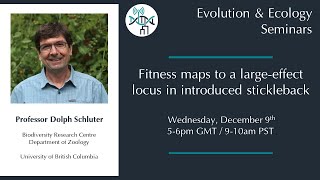
Fitness Maps to a Large-Effect Locus in Introduced Stickleback
Explore the role of large-effect loci in stickleback adaptation, focusing on fitness mapping and evolutionary dynamics in introduced populations.
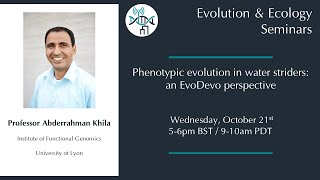
Phenotypic Evolution in Water Striders - An EvoDevo Perspective
Explore phenotypic evolution in water striders through an EvoDevo lens, examining leg length modulation, niche specialization, and evolutionary innovations like the propelling fan.

Clonal Reproduction Is Not an Evolutionary Dead End
Explore clonal reproduction's evolutionary potential, somatic genetic variation, and its impact on adaptation in modular species. Gain insights into detecting positive selection and comparing somatic and recombinant variation.
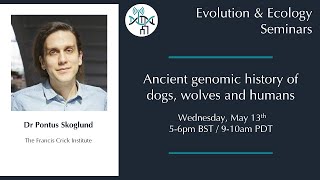
Ancient Genomic History of Dogs, Wolves and Humans
Explore the genomic history of dogs and wolves, uncovering ancient populations, gene flow patterns, and adaptive traits in modern breeds like Huskies.
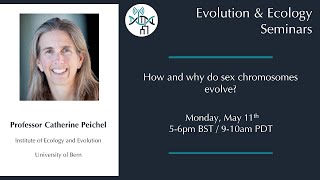
How and Why Do Sex Chromosomes Evolve?
Explore sex chromosome evolution, focusing on sticklebacks. Learn about conservation, diversity, and evolutionary models, with insights into gene expression and reproductive isolation.

Cell Biology - Translation: Protein Synthesis
Comprehensive exploration of protein synthesis, covering genetic code, tRNA, ribosomes, and translation processes in prokaryotes and eukaryotes. Ideal for deepening understanding of cell biology.

Cell Biology - Zellweger Syndrome, Refsum's Disease, Adrenoleukodystrophy
Comprehensive exploration of peroxisome functions and related disorders, including Zellweger syndrome, Refsum's disease, and adrenoleukodystrophy. Covers key metabolic pathways and cellular processes.
Dynamical Systems Biology of Cancer Metastasis by Mohit Kumar Jolly
Explore cancer metastasis through systems biology, focusing on EMT/MET processes, hybrid cell states, and their clinical implications. Gain insights into cellular plasticity and tumor progression mechanisms.
How Do Cells of Saccharomyces Cerevisiae Behave in a Medium Containing Repressing and Including Carbon Sources
Explore Saccharomyces cerevisiae's behavior in mixed carbon sources, focusing on GAL genetic switch evolution, paradoxes in adaptation, and implications for yeast metabolism and nutrient decision-making.
Drift, Inbreeding, and Ne
Explore genetic drift, inbreeding, and effective population size through probability theory, distributions, and evolutionary concepts. Gain insights into population genetics and its applications in evolutionary biology.
GWAS in Structured Populations by Magnus Nordborg
Explore genome-wide association studies in structured populations, covering linkage mapping, population structure confounding, and fine mapping challenges. Insights on heritability and adaptation across species.
Introduction to the Coalescent Theory - Lecture 3
Explores coalescent theory in population genetics, covering selection models, detecting selection, local adaptation, and challenges in interpreting genetic data for evolutionary insights.
Sexual Selection in Females by Kavita Isvaran
Explores sexual selection in females, challenging traditional male-focused views. Examines evidence from various species, discussing competition, signaling, and aggression in female mating strategies.