MixupE: Understanding and Improving Mixup from Directional Derivative Perspective - Oral Session 1
Explore MixupE, an improved data augmentation technique for deep neural networks. Gain insights into its theoretical foundations and practical applications across various domains.

Challenges in Aligning Language Models
Explore challenges in aligning language models with developer intent. Analyze finetuning's impact on truthfulness and feedback-tuned models' effects on co-writing applications.

Informative Example Selection for In-Context Learning
Explore efficient approaches for selecting informative examples in In-Context Learning, enhancing large language model performance without additional training.
Introduction to Machine Learning - Lecture 1
Discover the foundational concepts of machine learning, exploring its core principles, learning protocols, and real-world applications in this introductory lecture.
Early Alignment in Two-Layer Networks Training: A Two-Edged Sword
Explore early alignment in two-layer network training, examining its dual nature as both beneficial and potentially problematic for neural network performance.

Overfitting: Benign, Tempered and Harmful - Lecture on Machine Learning Regularization
Explore the nuanced understanding of overfitting in neural networks, examining benign, tempered, and harmful effects on model performance based on data properties and training conditions.
Reliable AI: Successes, Challenges, and Limitations
Explore mathematical approaches to reliable AI, including generalization guarantees, explainability, and applications in imaging and physics, while discussing limitations and connections to novel computing.
Reliable AI: From Applied Harmonic Analysis to Quantum Computing
Explore reliable AI through generalization in graph neural networks and explainability using applied harmonic analysis. Delve into limitations of digital hardware and connections to quantum computing.

Mehler's Formula, Branching Processes, and Compositional Kernels of Deep Neural Networks
Explore deep neural networks through compositional kernels and branching processes. Gain insights into activation functions, network limits, and memorization capacity. Learn about eigenvalues and a new random features algorithm.
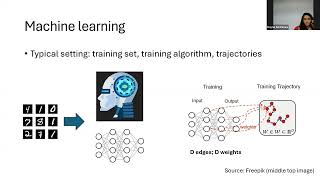
Metric Space Magnitude and Generalization in Neural Networks
Exploring metric space magnitude in neural networks: new topological complexity measures for assessing generalization capabilities, with applications to transformers and deep graph networks.

Deep Learning with Noisy Labels
Explore techniques for training deep learning models with noisy labels, addressing challenges in data collection and annotation across various domains, including medical imaging.
Modern Paradigms of Generalization - The Heliocentric Model of Aristarchus
Explore modern generalization paradigms and historical scientific models in this insightful lecture on machine learning theory and its historical parallels.
The Elusive Generalization: Classical Bounds to Double Descent to Grokking
Explore the evolution of generalization in machine learning, from classical bounds to double descent and grokking, challenging traditional assumptions and practices in the field.
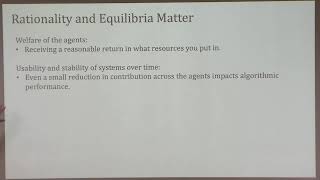
A Theory of Multi-objective Machine Learning
Explore multi-objective learning as a unifying paradigm for robustness, collaboration, and fairness in machine learning, with technical tools and empirical evidence.
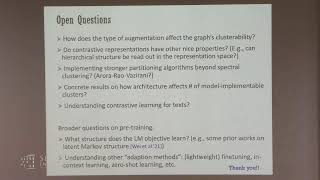
Understanding Generalization from Pre-training Loss to Downstream Tasks
Explore the mystery of pre-trained models' effectiveness, examining contrastive loss, embedding spaces, and the roles of inductive bias and optimizers in generalization to downstream tasks.
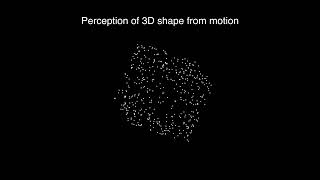
In Search of Invariance in Brains and Machines
Explore mathematical frameworks for robust AI perception, focusing on Lie theory to model hierarchical structures and transformations in real-world object recognition.

Robust Optimization and Generalization
Explore robust optimization's history and its modern machine learning applications, focusing on performance certification and practical challenges in ML systems.
The Elusive Generalization and Easy Optimization in Machine Learning - Part 1
Explore generalization in machine learning and optimization by gradient descent, focusing on recent developments and empirical findings in neural networks that challenge traditional theoretical foundations.
The Elusive Generalization and Easy Optimization - Part 2
Explore generalization in machine learning and optimization of non-convex systems through gradient descent, focusing on recent developments and empirical findings in neural networks.
Open Problems in the Theory of Deep Learning - Panel Discussion
Explore cutting-edge perspectives on deep learning theory with leading experts, addressing unresolved questions and future research directions in this dynamic field.
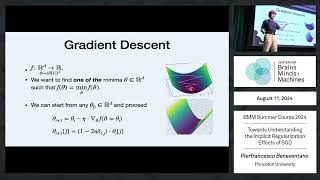
Towards Understanding the Implicit Regularization Effect of SGD
Explore the implicit regularization effect of Stochastic Gradient Descent, uncovering its impact on optimization and generalization in machine learning models.