Generalization vs. Specialization as a Graphic Designer With Chris Do
Explore the debate between generalization and specialization in graphic design with Emmy-winning designer Chris Do, gaining insights on positioning, expertise, and career strategies.
Machine Learning from a Stability Point of View
Explore machine learning through a stability lens, examining how mathematical principles enhance algorithm robustness and reliability in real-world applications.
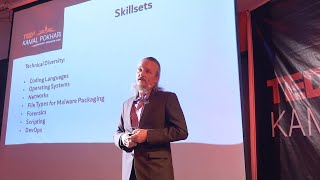
The Value of Generalizing in Cybersecurity Careers
Explore the benefits of a generalist approach in cybersecurity, covering evolving threats, essential skills, and AI's impact. Gain insights from an experienced professional on navigating this dynamic field.

RT-2: Vision-Language-Action Models Transfer Web Knowledge to Robotic Control
Explore vision-language-action models for robotic control, enhancing generalization and semantic reasoning through Internet-scale data integration and end-to-end training.

A General-Purpose Robotic Navigation Model
Explore advancements in general-purpose robotic navigation models, including data sharing across robots, generalization capabilities, and applications like kilometer-scale navigation and open-vocabulary instruction following.
Foundational Models for Robot Control
Explore recent advancements in using large pretrained networks for robot control, from basic concepts to practical applications in robotics research.
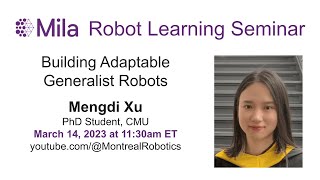
Building Adaptable Generalist Robots
Explore cutting-edge approaches for building adaptable generalist robots, focusing on in-context learning, unsupervised reinforcement learning, and leveraging foundation models for improved generalization and task versatility.
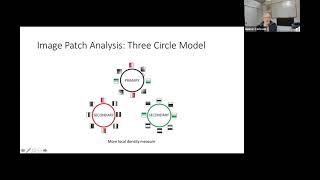
Gunnar Carlsson - Topological Deep Learning
Explore TDA-inspired approaches to deep learning, addressing issues like data hunger and generalization. Discover topological methods for building neural networks and analyzing weight spaces across various datasets.
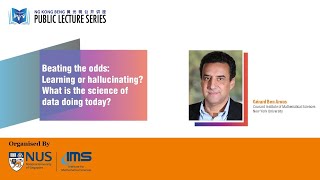
Beating the Odds - Learning or Hallucinating? The Science of Data Today
Explore the intersection of data science, learning, and hallucination with insights from a renowned mathematician on current trends and challenges in the field.
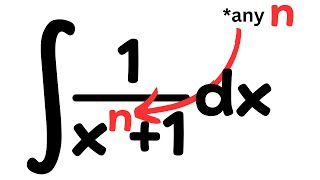
Generalizing a Calculus 2 Integral
Explore a generalized approach to solving a complex Calculus 2 integral, enhancing your problem-solving skills and deepening your understanding of advanced integration techniques.
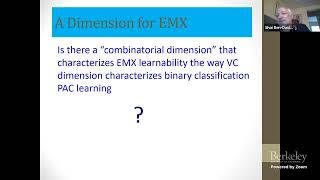
Learning Probability Distributions: What Can and Can't Be Done
Explore statistical learning, focusing on guaranteed generalizations from finite samples and characterizing learnable distribution families. Gain insights into modern paradigms in generalization.
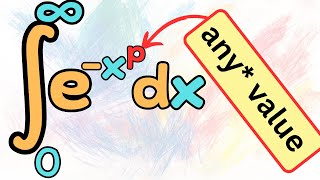
Generalizing the Internet's Favorite Integral
Explore a mathematical journey generalizing a popular integral, delving into advanced techniques and uncovering surprising connections in calculus and analysis.
A Bayesian View of Inductive Learning in Humans and Machines - 2004
Explore how humans make successful generalizations from limited evidence through Bayesian inferences constrained by implicit domain theories, with applications to machine learning.
Next-generation Frameworks for AI and Science, and Trust - Lecture 8
Explore next-gen AI frameworks in science, examining their potential benefits, safety concerns, and trust mechanisms through recent advancements and scientific applications.

Transform ER Model to Relational Model - ER-Diagram to Tables
Learn to convert ER models to relational models, covering entity types, attributes, relationships, and practical examples like Facebook's schema. Gain essential database design skills.

Understanding Grokking - A New Performance Phase in Large Language Models
Discover how extended training of LLMs leads to "grokking" - a breakthrough phase where models develop superior generalization abilities and form geometric patterns in embedding spaces.
Meta-Learning Dynamics Forecasting Using Task Inference
Explore meta-learning dynamics forecasting using task inference to improve generalization across heterogeneous domains in deep learning models for predicting complex systems.
Overview of Statistical Learning Theory - Part 2
Explore fundamental concepts in statistical learning theory, including capacity control, generalization, and optimization techniques. Gain insights into classic theory and modern applications.
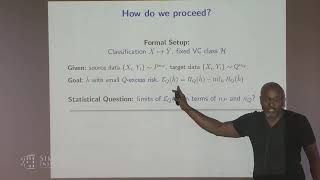
Measures of Relatedness in Domain Adaptation and Related Problems
Explore unstructured distribution shifts, discrepancy measures, and adaptation techniques in domain adaptation and transfer learning settings.
Overview of Statistical Learning Theory - Part 1
Explore fundamental concepts of statistical learning theory, including capacity control, generalization, and optimization techniques. Gain insights into classic theories and their relevance to modern machine learning paradigms.
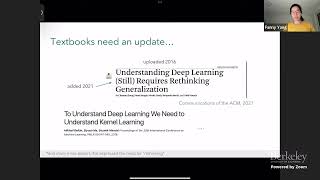
Reconsidering Overfitting in the Age of Overparameterized Models
Explore modern machine learning paradigms, focusing on overparameterized models' ability to generalize well despite near-zero training error, challenging classical overfitting concepts.