
Game Theory and Economics
The course would introduce to the fundamental tools of game theory, a few equilibrium concepts, apart from numerous exercises and applications.
Engineering Crypto-Economies Through the Lens of Complex Systems
Explore cryptoeconomics through complex systems, covering agent-based modeling, game theory, and optimization. Includes live demo of DAO simulation based on Ising model in statistical mechanics.
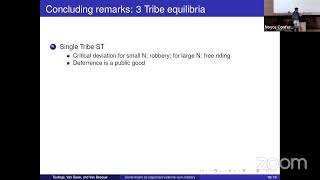
The Emergence of Government as Organized Violence-Cum-Robbery
Explore the evolution of organized government through the lens of violence and resource control, examining key societal shifts and equilibria in human history.

The Ecology of Society - Complex Adaptive Systems in Nature and Human Societies
Explore ecological and economic systems as complex adaptive systems, examining emergent behaviors, critical transitions, and evolutionary forces shaping resource allocation and cooperation.

A Cooperative Species: Why Policies Designed for "Wicked Men" Fail - Part 3
Explore how ethical dispositions and cooperative motivations impact societal challenges, challenging Machiavelli's approach and examining the interplay between policy and human behavior.
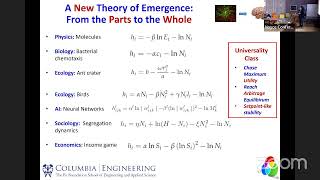
Arbitrage Equilibrium and the Invisible Hand in Self-organizing Dynamics of Biological Systems
Explore how economic concepts like arbitrage apply to biological systems. Learn about a novel game-theoretic framework integrating survival-driven behavior with statistical mechanics in active matter systems.
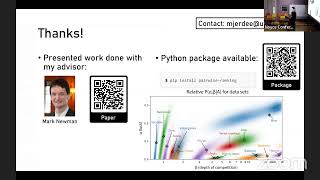
Luck, Skill, and Inequality in Games and Social Hierarchies
Explore the interplay of luck, skill, and inequality in games and societal structures, examining their impact on hierarchies and outcomes.

How Can We Understand Our Complex Economy?
Explore complex systems approach to economics, blending insights from physical and natural sciences to predict and mitigate economic crises, offering a new perspective on global financial challenges.
Game Theory
The aim of this course is to introduce the following topics at a basic level: combinatorial games, zero-sum games, non-zero sum games and cooperative games. At the end of the course, the student should be able to • Model and analyse conflicting situation…

Auctions: Empirical Models and Applications - Lecture 23
Explore the evolution of empirical auction models and their applications in industrial organization, focusing on recent developments and practical insights.
Operations Research
Learn essential Operations Research techniques: linear programming, network analysis, integer programming, nonlinear optimization, game theory, Markov chains, and inventory management. Gain practical skills using AMPL software.

Signaling Effort: Information Structures in a Principal-Agent Model
Explore a dynamic games seminar presentation on signaling effort in principal-agent relationships. Delve into a model where only information messages are contractible, and agents can design signals about their effort. Examine how principals may access ou…

On Difference Games in Infinite-Horizon
Explore infinite-horizon difference games governed by difference equations or inequalities in this 55-minute webinar presented by Naila Hayek from Université Panthéon-Assas, Paris II, France. Delve into various Nash-equilibrium concepts and examine Pontr…
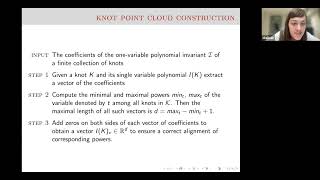
The Shape of Relations: Knots and Other Stories in Topological Data Analysis
Explore the fascinating world of Topological Data Analysis in this 59-minute conference talk by Radmila Sazdanovic, presented by the Applied Algebraic Topology Network. Discover how TDA tools can uncover relevant features in data by analyzing the shape o…

Evolution
Comprehensive exploration of evolutionary biology, covering natural selection, phylogenetics, historical context, biodiversity, adaptation, and various evolutionary mechanisms and theories.
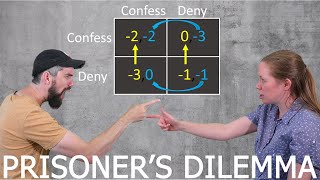
Game Theory
Explore game theory's powerful applications in economics, biology, and politics, from basic concepts to advanced strategies like Nash Equilibrium and the Evolution of Cooperation.
Uncertainty Over Power - Bargaining and War
Explores uncertainty over power in bargaining and war, analyzing decision-making processes, optimal demands, and the risk-return tradeoff in international conflicts.
Uncertainty Over Costs - Bargaining Over War
Explore game theory's impact on conflict resolution, focusing on how uncertainty about costs can lead to war and the strategic considerations in making demands during negotiations.
Game Theory 101 - Chain Store Paradox
Explore the chain store paradox in game theory, analyzing how firms use price wars strategically to deter market entry and maximize profits across multiple markets.

Will Covid Cause War or Peace? A Game Theory Investigation
Explore game theory's insights on COVID-19's impact on global conflict, analyzing bargaining dynamics, uncertainty, and unexpected consequences for international relations and peacekeeping efforts.

Game Theory
Explore optimal solutions in conflict situations through game theory, with applications in economics, sociology, and political science.