The Tension Between Expediency and Correctness
Explore tradeoffs between expediency and correctness in programming, discussing their implications for software development and introducing Elixir's advantages in building robust systems.
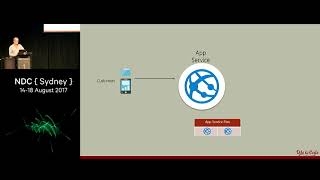
Building Resilient Applications in Microsoft Azure
Learn patterns and Azure features for building highly available, fault-tolerant systems that can withstand disasters, including Traffic Manager and Service Bus.
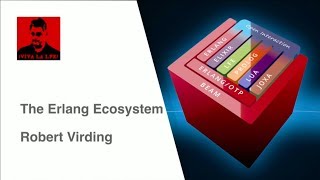
The Erlang Ecosystem
Explore Erlang's history, design principles, and ecosystem. Learn about its concurrency model, error handling, and scalability for distributed systems, plus new languages in the Erlang environment.
Just What Is a "Service Mesh", and If I Get One Will It Make Everything OK?
Explore service mesh technology with Istio, understanding its features, benefits, and potential complexities in distributed applications, from microservices to legacy monoliths.
System Stable - Robust Connected Applications with Polly
Discover how to build resilient .NET applications using Polly framework. Learn reactive and proactive strategies to handle faults and outages, from simple retries to advanced bulkhead isolation.
Bulletproof Transient Error Handling with Polly
Learn to handle network interruptions and transient errors in connected applications using Polly, an open-source library that implements retry policies and circuit breaker patterns for robust system recovery.
Real-Time, Distributed Applications with Akka.NET, Kubernetes, .NET Core, and Azure Kubernetes Service
Learn to build real-time, distributed applications using Akka.NET, Kubernetes, .NET Core, and Azure. Explore fault tolerance, scalability, containerization, and cloud orchestration for modern .NET development.
RAILS_ENV=demo - Creating Reliable and Testable Demo Deployments - Lecture
Learn techniques for creating reliable, testable demo deployments using stateful fakes and personas, ensuring smooth presentations and production-like uptime.

SAGA Design Pattern: Orchestration-based Implementation with Spring Boot
Master orchestration-based saga design pattern for transaction management in Spring Boot, ensuring data consistency across microservices.

SAGA Design Pattern: Orchestration-based Saga Implementation with Spring Boot
Implement Orchestration-based saga pattern for transaction management in Spring Boot, ensuring data consistency across distributed systems.
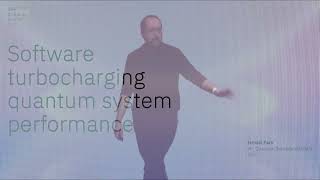
Software Turbocharging Quantum System Performance
Explore cutting-edge quantum software tools and AI-driven improvements for large-scale fault-tolerant quantum systems, enhancing performance and tackling complex problems.
Onyx: Functional, Distributed Data Processing for Clojure
Explore Onyx's masterless coordination for distributed data processing in Clojure. Learn about its architecture, consensus mechanisms, and fault tolerance in network partitions and machine failures.
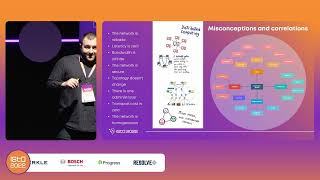
The Distributed Era of Computing - Challenges and Solutions
Explore distributed systems' real-world applications, challenges, and solutions in modern computing, focusing on practical implementations and limitations.
Automating the Deployment of DPDK-based Network Functions on Kubernetes with Fault Tolerance
Discover how to automate DPDK-based network functions deployment in Kubernetes, focusing on fault tolerance, SR-IOV integration, and cloud-native network function testing using TRex packet generation.
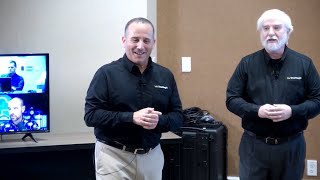
HPE MicroServer and StorMagic SvSAN High Availability Demonstration
Experience a live demonstration of SvSAN's high availability capabilities using HPE MicroServers, showcasing continuous application uptime during server failures and automatic VM restoration.

CAP Theorem: Understanding Consistency, Availability and Partition Tolerance in System Design
Explore the fundamental principles of CAP theorem in distributed systems, understanding trade-offs between consistency, availability, and partition tolerance for optimal system design.
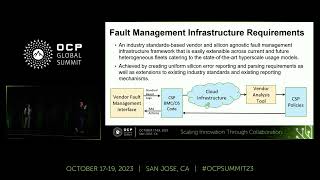
Hardware Fault Management Standards and Interfaces - Project Update
Discover the latest developments in hardware fault management standards, including RAS API workstream, FMFM initiatives, and industry approaches to error injection standardization.
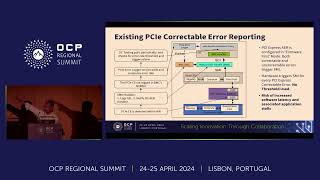
PCIe Express Error Handling and RAS Solutions for AI/ML Training Clusters
Discover innovative approaches to managing PCIe correctable errors at scale, focusing on fault handling solutions for AI/ML training clusters with multiple PCIe devices.
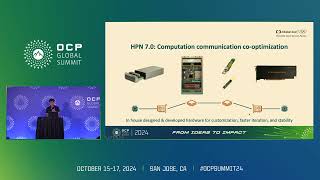
Alibaba HPN - Data Center Network Architecture for Large Language Model Training
Explore the innovative HPN architecture designed for large language model training, featuring dual-plane design, efficient path selection, and enhanced fault tolerance for high-performance computing.
Parallel Window Decoding for Scalable Fault-Tolerant Quantum Computation
Discover how parallel window decoding solves scalability challenges in quantum error correction, enabling faster and more efficient fault-tolerant quantum computations.
Transversal Diagonal Logical Operators of Stabiliser Codes
Delve into quantum error correction codes, focusing on transversal diagonal logical operators in CSS codes and their implementation through advanced algorithms and gate operations.