
Finding Fairness - Incorporating Societal Values in Computer Algorithms
Exploring algorithmic fairness and privacy in computer science, addressing concerns about incorporating societal values into technology as it increasingly impacts our lives.

Kathleen Creel- Arbitrariness, Fairness, and Opportunity in Algorithmic Decision-Making Systems
Explore the ethical implications of algorithmic decision-making, focusing on arbitrariness at scale, its moral and legal issues, and potential technical solutions to mitigate harm.

Machine Learning and Social Norms - Balancing Fairness and Accuracy
Machine learning's impact on social decisions: Exploring fairness, privacy, and accountability in algorithmic decision-making across various domains. Discusses recent research and challenges in embedding social norms into predictive algorithms.
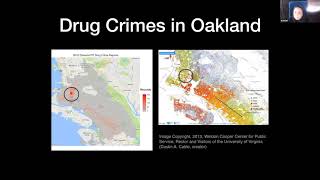
Fairness, Accountability, and Transparency in Predictive Models for Criminal Justice
Explore fairness, accountability, and transparency in predictive modeling for criminal justice, with examples highlighting their importance in real-world applications.
Configurable Fairness for New Item Recommendation Considering Entry Time - SIGIR 2024
Explore configurable fairness in recommender systems, focusing on new item recommendations and entry time considerations for enhanced algorithmic equity.
Fair Recommendations with Limited Sensitive Attributes - A Distributionally Robust Optimization Approach
Explore distributionally robust optimization for fair recommendations with limited sensitive attributes in RecSys, enhancing fairness in machine learning applications.
Going Beyond Popularity and Positivity Bias: Correcting Multifactorial Bias in Recommender Systems - M1.7
Explore techniques for addressing multiple biases in recommender systems, focusing on fairness and accuracy beyond popularity and positivity.
CaDRec: Contextualized and Debiased Recommender Model - Fairness in RecSys
Explore a contextualized and debiased recommender model for fair and accurate recommendations in information retrieval systems.
Fair Sequential Recommendation without User Demographics - SIGIR 2024
Explore fair sequential recommendation techniques without relying on user demographics, enhancing ethical AI practices in recommender systems.
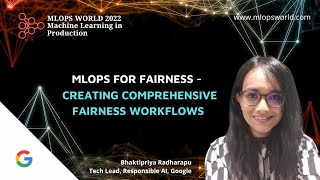
MLOps for Fairness - Creating Comprehensive Fairness Workflows
Explore MLOps techniques for identifying, measuring, and mitigating bias in ML systems at scale. Learn to create comprehensive fairness workflows using Python tools for industry-level challenges.
Evaluating Fairness in ChatGPT - OpenAI Research Overview
Explore OpenAI's latest research on assessing fairness in ChatGPT, gaining insights into AI ethics and evaluation methodologies for large language models.
A Taxation Perspective for Fair Re-ranking - SIGIR 2024
Explore a taxation perspective for fair re-ranking in information retrieval, examining fairness considerations and algorithmic approaches.
AI in Radiology: Pattern Detection, Fairness, and Clinical Applications - Lecture Series
Explore AI's ability to detect hidden patterns in X-ray images and its implications for radiologists. Delve into fairness considerations in chest X-ray diagnosis models and their potential impacts on clinical practice.

Live Responsible AI Dashboard: One-Stop Shop for Operationalizing RAI in Practice - Episode 43
Explore the Responsible AI Dashboard, a comprehensive toolkit for ethical machine learning development. Learn about model debugging, fairness assessment, and responsible decision-making in AI systems.
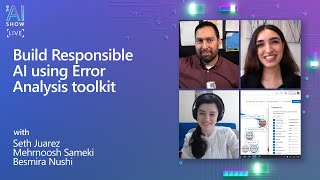
Build Responsible AI Using Error Analysis Toolkit
Explore Microsoft's Error Analysis toolkit for responsible AI, identifying model errors, diagnosing root causes, and building reliable solutions through interpretability, fairness, and debugging techniques.
How Will Artificial Intelligence Change Ethics? - Pedro Domingos
Explore AI's impact on privacy, fairness, work, ethics, warfare, governance, and social media, examining how it challenges our understanding of human uniqueness.

Designing Size Inclusive Fashion Assortments
Explore innovative strategies for balancing revenue and size inclusivity in fashion retail assortments. Gain insights into advanced analytics, choice modeling, and fairness measures to optimize product offerings.

Beyond Bias Audits: Bringing Equity to the Machine Learning Pipeline
Explorez les approches pour intégrer l'équité dans l'apprentissage automatique appliqué aux soins de santé, en abordant les biais algorithmiques et les disparités en matière de santé.

Transparency in Algorithmic Decision-Making - Karen Yeung, Birmingham Law School
Exploring transparency in algorithmic decision-making, focusing on legal, ethical, and social implications of AI and automated systems in light of GDPR implementation and its impact on data protection.

The Primitives of Legal Protection Against Data Totalitarianisms - Professor Mireille Hildebrandt
Explore legal protections against data-driven totalitarianism, examining concepts like consent, purpose limitation, and contestability in the context of AI and data processing regulations.

Privacy and Fairness
Explore differential privacy, stochastic optimization, and fairness in algorithms. Learn about new techniques, applications, and the importance of interaction in privacy-preserving machine learning.