
Measurement Uncertainty in Physics
Explore measurement uncertainty in physics, focusing on experimental techniques, error analysis, and data interpretation to enhance research skills and scientific accuracy.
Evidence vs. Pseudoscience: Ensuring Students Understand How Science Is Done - JMBE Live
Explore how Course-based Undergraduate Research Experiences (CUREs) provide students with hands-on scientific discovery, fostering understanding of evidence-based practices and distinguishing science from pseudoscience.
What Scientists Actually Do - Part 1
Explore the process of scientific inquiry, including formulating questions, developing hypotheses, and understanding the multifaceted nature of a scientist's work.
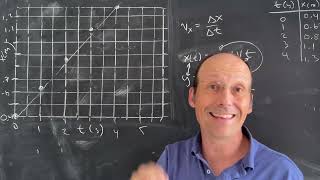
Physics Lab: Using Data to Plot Linear Functions
Learn to create linear graphs for physics labs using Vernier's Graphical Analysis software, enhancing data visualization and analysis skills.
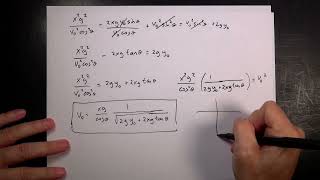
Physics Lab: Does the Launch Velocity Depend on Launch Angle?
Explore the relationship between launch velocity and angle in physics experiments using ball launchers, deriving equations and analyzing data plots.
Immunophenotyping Unleashed - A Partner in Panel Design
Explore multicolor flow cytometry advancements, panel design strategies, and optimization techniques for complex immunophenotyping experiments in this comprehensive webinar.
Reshaping Cell Biology Experiments for Automation
Discover how automation can revolutionize cell biology experiments, increasing efficiency, reproducibility, and scalability while reducing manual labor and enhancing traceability in laboratory workflows.
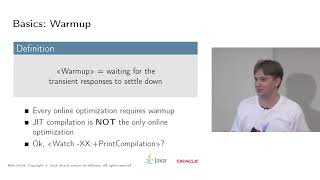
JVM Benchmarking Techniques and Pitfalls - Lecture by Aleksey Shipilev
Explore JVM benchmarking techniques with expert Aleksey Shipilev, covering optimization, performance analysis, and common pitfalls in Java performance testing.

Rowing Beyond: Investigating Steering Methods for VR Rowing Locomotion
Exploring innovative steering techniques for rowing-based locomotion in 2D and 3D virtual reality environments, comparing head, hand, and feet movements for performance, user experience, and VR sickness.
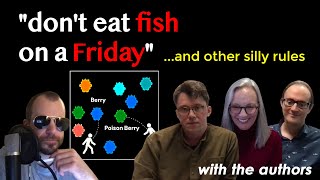
Spurious Normativity Enhances Learning of Compliance and Enforcement Behavior in Artificial Agents
Explore how arbitrary social norms enhance learning of rule enforcement in AI agents, with insights on societal implications and potential applications in artificial general intelligence.
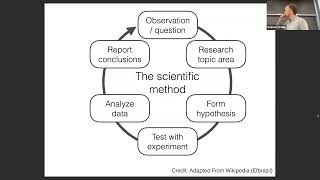
CMU Advanced NLP: Experimental Design
Learn advanced NLP research techniques, from formulating questions to conducting experiments, with a focus on scientific methods and practical applications in natural language processing.
Differentiable Programming for End-to-end Optimization of Experiments - Lecture 6
Explore differentiable programming for optimizing experiments in high-energy physics, focusing on end-to-end solutions and advanced machine learning techniques.
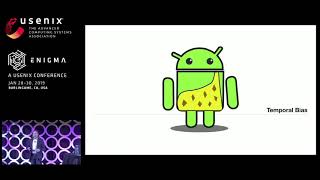
When the Magic Wears Off - Flaws in Machine Learning for Security Evaluations
Explores biases in machine learning for malware classification, proposing constraints and metrics for realistic evaluation. Introduces TESSERACT framework to improve classifier performance and ensure fair comparisons.
Overly Optimistic Prediction Results on Imbalanced Data - Flaws and Benefits of Over-sampling
Explore flaws and benefits of over-sampling in imbalanced datasets, examining prediction results and comparing studies to improve machine learning model performance.
Boundary Conditions for Language in Biological and Artificial Neural Systems
Explore computational requirements for language processing in neural systems, focusing on hierarchical structures, neural oscillations, and integrating linguistic insights with neural computation principles.
Differentiable Programming for End-to-end Optimization of Experiments - Lecture 5
Explore differentiable programming for optimizing experiments in high-energy physics. Learn advanced techniques to enhance data analysis and improve experimental design in particle physics research.
Differentiable Programming for End-to-End Optimization of Experiments - Lecture 7
Explore differentiable programming for optimizing experiments in high-energy physics. Learn advanced techniques to enhance data analysis and improve experimental design in particle physics research.

What Careers Are There in Clinical Microbiology
Explore diverse career paths in clinical microbiology, from laboratory diagnostics to public health interventions, and learn about the field's impact on individual and community health.
Evaluating the Effects of Feedback Type on Older Adults' Performance in Mid-Air Pointing and Target Selection
Investigates feedback types for improving older adults' mid-air pointing and target selection performance, revealing visual-audio combination's effectiveness and target location's significance in gesture-based interfaces.
Increased Scaffolding and Inquiry in an Introductory Biology Lab Enhance Experimental Design Skills
Explore how increased scaffolding and inquiry in introductory biology labs enhance experimental design skills and scientific confidence, with insights from a research study and course redesign.
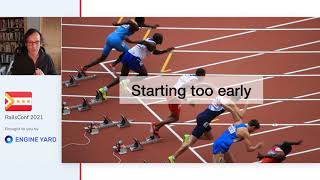
How to A/B Test with Confidence
Learn to conduct accurate A/B tests, avoid common pitfalls, and make data-driven decisions confidently. Discover practical tips for setup, implementation, and analysis to ensure trustworthy results.