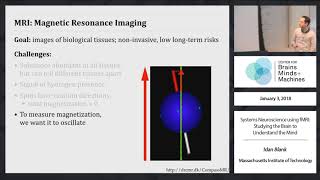
Systems Neuroscience Using fMRI - Studying the Brain to Understand the Mind
Explore fMRI principles and applications in neuroscience, including experiment design, intuitive physical inference, and the neural basis of social rejection and physical pain.
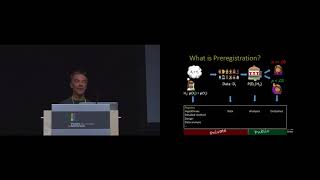
HARK No More - Preregistration of CHI Experiments
Explores preregistration of experiments in HCI research to prevent post-hoc hypothesizing, discussing its adaptation and benefits for improving the discipline's scientific rigor.
From Big Data to Right Data - Dr. Lior Horesh, IBM
Explore a hybrid approach combining first-principles and machine learning for meta-level optimization, shifting focus from big data to right data in experimental design and inverse problems.
Robot Scientist - Exploring Artificial Intelligence in Research
Explore cutting-edge research in robotics and artificial intelligence with insights from a leading expert in the field.
Ideas on Conducting Experiments in AI and ML
Explore various experimental approaches in AI and ML, focusing on methodologies used in cutting-edge research and practical applications.
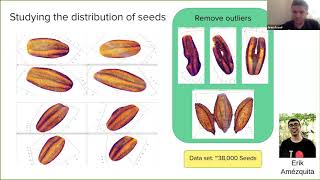
Topological Data Analysis for Quantifying Plant Morphology
Explore topological data analysis for plant morphology using persistent homology and Euclidean Distance Transform. Learn applications in hurricane video data and XRay CT scans of plants.
Kaemika App - Simulating Reaction Networks and Digital Protocols
Explore integrated descriptions for automated scientific processes, extracting models and protocols for analysis and execution using the Kaemika app across multiple platforms.
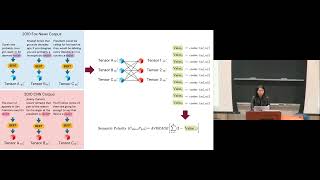
Words Matter: How Language Choices Predict Societal Trends and Outcomes in Media, Health and Policing
Explore how language patterns in media, health discussions, and police interactions predict societal trends and outcomes. Gain insights into communication challenges and their real-world implications.
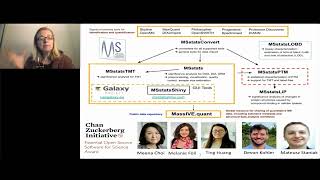
Multilevel Statistical Modeling for Proteomic Experiments With Complex Designs and Isobaric Labeling
Learn advanced statistical modeling techniques for complex proteomic experiments using isobaric labeling, focusing on multilevel designs and time-series data analysis.

Learning from Data: The Two Cultures
Explore statistical and task modeling approaches in AI, their strengths, limitations, and the importance of integrating principles from both cultures for more robust and responsible machine learning.
A Causal Inference Framework for Combinatorial Interventions
Explore a novel latent factor model for estimating causal effects of combinatorial interventions, addressing challenges in factorial experiments and recommendation systems.
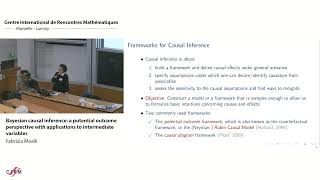
Bayesian Causal Inference: A Potential Outcome Perspective with Applications - Lecture
Explore Bayesian causal inference from a potential outcome perspective, with practical applications and insights from Fabrizia Mealli's conference talk.
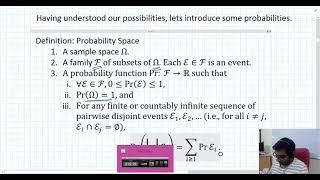
Basic Definitions in Probability Theory - Introduction and Experiment
Learn fundamental probability concepts through clear definitions and practical experiments, enhancing your understanding of statistical principles.
Issues in Hypothesis Testing - Part 1
Explore key issues in hypothesis testing, including error types, biases, and experimental design strategies for more robust scientific research.
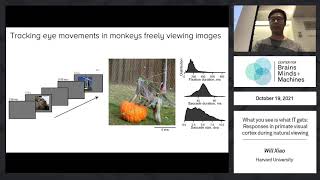
What You See Is What IT Gets - Responses in Primate Visual Cortex During Natural Viewing
Explores primate visual cortex responses during natural viewing, revealing how neurons in the interior temporal cortex react to faces and repeated fixations, providing insights into our stable visual perception.
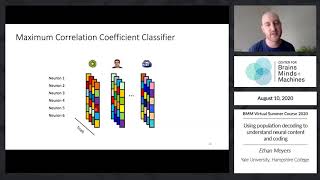
Using Population Decoding to Understand Neural Content and Coding
Explore neural population decoding to uncover abstract representations in the brain, analyzing experiments on invariance and information processing in visual cognition.
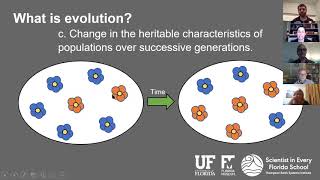
SEFS Webinar - Dr. Durkin - Nature of Science
Explore the nature of science through Dr. Durkin's PhD research, covering evolution, experimental design, and artificial selection in parasitic mites and their attachment to flies.
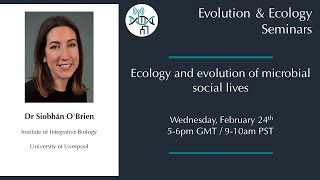
Ecology and Evolution of Microbial Social Lives
Explore microbial social dynamics, cooperation, and adaptation in diverse environments. Discover evolutionary strategies and ecological impacts of microbial interactions.
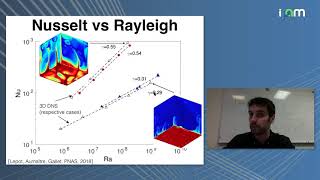
Heat Transport Efficiency Beyond the So-Called 'Ultimate' Regime
Explores innovative approaches to thermal convection, challenging traditional Rayleigh-Bénard models with radiative heating techniques to achieve more efficient heat transport in turbulent flows.
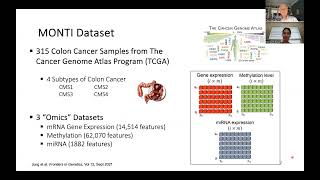
TUSCA: A Method for Tucker3 Modeling with ASCA+ - Webinar
Explore TUSCA, a novel method combining Tucker3 and ASCA+ for analyzing multi-way datasets from designed experiments, enhancing interpretation and visualization of complex data structures.
Debugging Genomic Profiling Experiments and Predictive Models with Interpretation Tools
Explore deep learning models in genomics, uncovering latent biases and technical artifacts. Learn to design efficient models that correct biases and reveal novel insights into gene regulation.