Biostatistics and Design of Experiments
The course encompasses topics such as distribution of data, sample size, tests of significance, data reduction, regression analysis, comparison of performance of drugs in clinical trials, design of experiments, screening and second order designs.
Talking Science - Life, Through a Lens Featuring Sanford M. Simon
Explore cellular biophysics through advanced imaging techniques, experimental insights, and scientific philosophy with Dr. Sanford M. Simon in this engaging lecture for high school students.
Collective Behavior of Honeybees & Fireflies
Explore collective behavior in honeybees and fireflies, revealing how diversity and self-organization lead to emergent intelligence and adaptive swarm dynamics in insect communities.
Helena Miton on Cultural Evolution in Music and Writing Systems
Explore cultural evolution in music and writing systems, examining how material constraints and cognitive factors shape the development of rhythms and letter forms across societies and time.
James Evans on Social Computing and Diversity by Design
Exploring social computing's impact on scientific research, team diversity, and human-AI collaboration in the pursuit of novel insights and wisdom.

InterPlanetary Festival - Opening Remarks and Sandbox Thinking Panel
Explore innovative sandboxes for thinking and playing, featuring insights from experts on creative problem-solving and interactive learning environments.
Statistics
Explore advanced statistical design techniques including Latin squares, Plackett-Burman designs, and factorial experiments. Learn to analyze complex data using GLM, ANOVA, and regression methods.
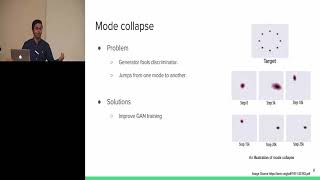
Multi-Agent Diverse Generative Adversarial Networks
Explore diverse generative adversarial networks, focusing on multi-agent systems, mode collapse prevention, and competing objectives in machine learning.
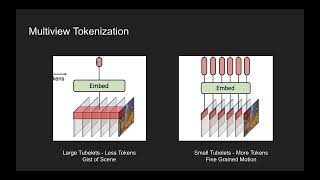
Computer Vision: Tokens and Cross-View Fusion - Lecture 22
Explore tokens, cross-view fusion, and attention in computer vision, examining experimental results and innovations in multi-view learning techniques.
Generative AI for Modeling Single-Cell Responses
Explore generative AI applications in single-cell response modeling, covering data integration, representation learning, and multiomics analysis for biomedical insights.
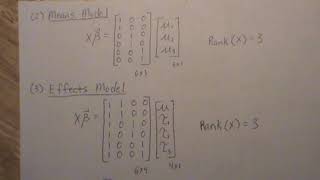
General Linear Models - Design of Experiments
Comprehensive exploration of general linear models and experimental design, covering ANOVA, factorial designs, and advanced statistical concepts with practical examples and R software illustrations.
Biostatistics
Explore advanced biostatistics techniques, from ANOVA to experimental design, enhancing your ability to analyze scientific data and interpret research papers effectively.

Experimental Typography Design Critique
Explore experimental typography techniques, from digital to analog, to create expressive and unique designs. Learn from industry experts through critiques and hands-on demonstrations of innovative typographic approaches.
Fundamentals of Biostatistics
Learn to design studies, analyze data, and interpret results for biology research, healthcare, and public health applications using statistical tools and methods.
Research Methods - Psychology A-Level - AQA Paper 2
Comprehensive revision of research methods for AQA A-level Psychology Paper 2, covering experimental designs, data collection techniques, statistical analysis, and scientific principles.
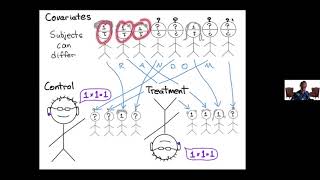
Using Discrepancy Theory to Improve the Design of Randomized Controlled Trials - Daniel Spielman
Explore discrepancy theory's application in randomized controlled trials, enhancing experimental design and statistical analysis for more accurate and efficient research outcomes.
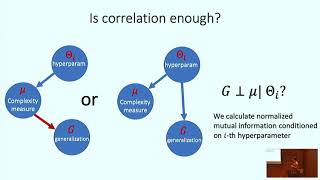
Toward a Causal Analysis of Generalization in Deep Learning - Behnam Neyshabur
Explore causal factors behind deep learning generalization, examining measures like path norm, flatness, and gradient noise to predict and understand model performance.
The Primacy of Experiment - Kyle Cranmer
Explore the interplay between physics and mathematics, focusing on experimental validation and the potential for unifying theories in understanding the universe's fundamental laws.
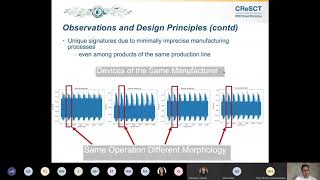
EM Fingerprints - Identifying Unauthorized Hardware Substitutions in the Supply Chain Jungle
Explore electromagnetic fingerprinting techniques to detect unauthorized hardware substitutions in supply chains, enhancing security against sophisticated attacks.
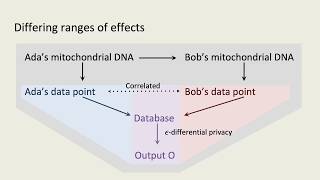
SoK- Differential Privacy as a Causal Property
Explores differential privacy as a causal property, offering a simple characterization without data independence assumptions and resolving prior disagreements about its consequences and applications.
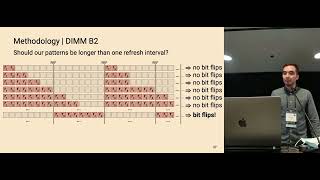
Blacksmith- Compromising Target Row Refresh by Rowhammering in the Frequency Domain
Explore frequency-domain Rowhammer attacks bypassing Target Row Refresh, with insights on mitigations, experiments, and scalable solutions for compromising DRAM security.