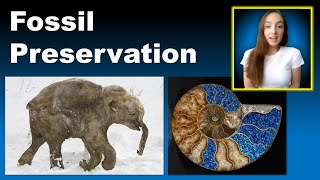
Invertebrate Paleontology
Comprehensive exploration of invertebrate fossils, covering preservation, taxonomy, evolution, and major phyla. Dive into Earth's ancient life forms and their significance in paleontology.
Phylogenetics: Recovering Evolutionary History - Lecture 1
Explore evolutionary history reconstruction through phylogenetics. Learn techniques for analyzing genetic data to understand species relationships and evolutionary processes over time.
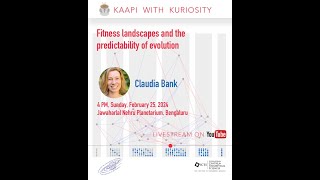
Fitness Landscapes and the Predictability of Evolution by Claudia Bank
Explore fitness landscapes' role in evolutionary predictability, their applications, and the interplay between theory and experiments in understanding evolutionary dynamics.

How the Brain Changes of Motherhood Help Human Survival
Explore how maternal brain changes contribute to human survival, challenging the notion of "mom brain" as a deficit and revealing its evolutionary advantages.

Selection, Genetic Covariances, and Network Position Predict Gene Expression
Explore how selection, genetic covariances, and network position influence gene expression in polygenic adaptation, integrating theoretical and empirical approaches to understand phenotypic variation.
The Evolutionary Sweet-Spot for Cognition
Explores the evolutionary factors influencing cognitive complexity across species, challenging traditional views and proposing a "sweet spot" theory for the development of advanced cognition.
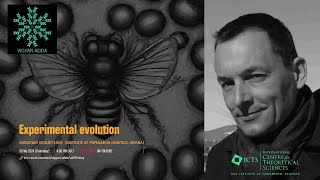
Experimental Evolution: Unraveling Genetic and Environmental Interactions
Explore the fascinating world of experimental evolution, uncovering how multiple generations and controlled conditions reveal the interplay between genetics, environment, and natural selection.
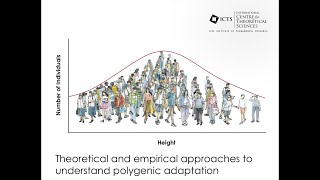
The Genetic Architecture of Repeated Local vs. Global Adaptation in Plants
Explore genetic architecture in plant adaptation, focusing on local vs. global patterns. Gain insights into polygenic traits and their role in evolutionary biology.
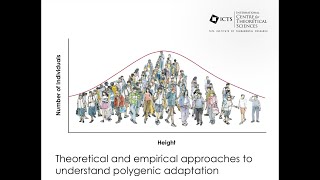
Polygenic Adaptation - Lecture 2
Explore polygenic adaptation in evolutionary biology, integrating diverse perspectives on adaptive dynamics and genetic variation's role in phenotypic traits. Gain insights into quantitative frameworks and empirical data analysis.
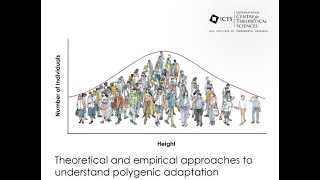
Ecology and Perpetual Evolution in High Dimensions
Explore ecological dynamics and evolutionary processes in complex, high-dimensional systems. Gain insights into adaptive mechanisms and their impact on biological diversity and ecosystem stability.
Modeling Polygenic Barriers to Gene Flow Between Species
Explore genetic architecture of phenotypic traits and polygenic adaptation through lectures, seminars, and discussions. Integrate diverse perspectives on adaptive dynamics in evolutionary biology.
Polygenic Adaptation - Lecture 1
Explore polygenic adaptation in evolutionary biology, integrating diverse perspectives on genetic variation's role in phenotypic traits and adaptive dynamics.
GWAS and Quantitative Genomics
Explore genetic architecture of polygenic traits, integrating adaptive dynamics theories and empirical data to understand phenotypic variation in biological evolution.
Drift and the Concept of Effective Population Size - Lecture 1
Explore genetic drift and effective population size in evolutionary biology, examining their impact on genetic variation and adaptation in populations.
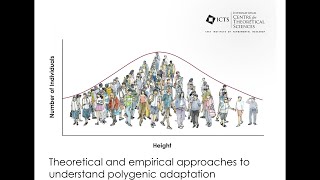
Adaptation at the Levels of Fitness and Traits
Explore polygenic adaptation in biological evolution, integrating diverse perspectives on adaptive dynamics and relating theoretical frameworks to empirical data.
Drift and the Concept of Effective Population Size - Lecture 2
Explore genetic drift and effective population size concepts in evolutionary biology, examining their impact on genetic variation and adaptation in populations.
Understanding a Flower Colour Hybrid Zone from a Polygenic Perspective - Lecture 4
Explore genetic variation in flower color hybrid zones through a polygenic lens. Gain insights into adaptive dynamics and phenotypic traits influenced by multiple genetic variants.
Oligogenic Adaptation - Between Sweeps and Shifts
Explore oligogenic adaptation, bridging the gap between genetic sweeps and shifts. Gain insights into phenotypic variation and its underlying genetic architecture in biological evolution.
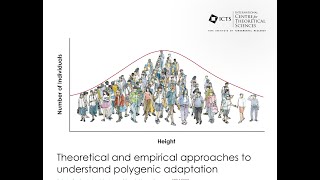
Adaptation of Complex Traits - Insights from Evolution Experiments in Drosophila
Explore insights from Drosophila evolution experiments on complex trait adaptation, focusing on polygenic changes and their implications for understanding phenotypic variation and adaptive dynamics.
Phenotypic Plasticity and Adaptation to Variable or Novel Environments
Explore phenotypic plasticity and adaptation in variable environments. Learn how organisms adjust to changing conditions and novel challenges through genetic and non-genetic mechanisms.
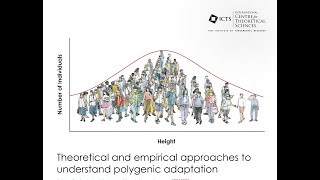
Adaptation to Changing Environments
Explore genetic mechanisms of adaptation to environmental changes, focusing on polygenic traits and integrating various evolutionary perspectives for a comprehensive understanding.