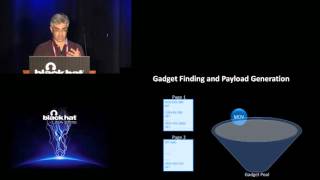
Return to Where? You Can't Exploit What You Can't Find
Explore advanced techniques for detecting and preventing memory corruption vulnerabilities, including execute-only memory and code pointer hiding, to enhance software security against sophisticated exploitation methods.
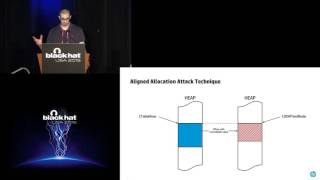
Abusing Silent Mitigations - Understanding Weaknesses Within Internet Explorer
Explore Internet Explorer's silent exploit mitigations, their weaknesses, and potential attack vectors. Learn techniques to bypass these security measures and gain insights into hardening browser defenses.
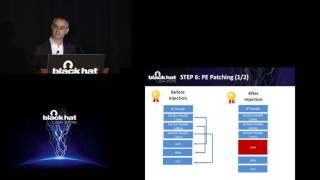
ROPInjector - Using Return Oriented Programming for Polymorphism and Antivirus Evasion
Explore advanced polymorphism techniques using Return Oriented Programming for antivirus evasion, with practical demonstrations of the ROPInjector tool and its effectiveness against detection methods.
Social Engineering the Windows Kernel - Finding and Exploiting Token Handling Vulnerabilities
Explore Windows kernel token handling vulnerabilities, learn to identify and exploit them for privilege escalation, and understand patterns for conducting security reviews.
Universal Android Rooting Is Back
Explore universal Android rooting through kernel exploitation, focusing on a Use-After-Free bug affecting all Linux versions. Learn about innovative techniques for 64-bit devices and bypassing modern kernel mitigations.

Attacking Hypervisors Using Firmware and Hardware
Explore vulnerabilities in hypervisors through firmware and hardware emulation, demonstrating attacks and their impacts. Learn about firmware rootkits and new testing modules for hypervisor security.

Winning the Online Banking War
Explore advanced techniques to combat banking malware, including evasion methods and a novel Zero Knowledge Protocol-based approach for securing client-server communications.
Bar-Mitzvah Attack - Breaking SSL with 13-Year Old RC4 Weakness
Uncover SSL vulnerabilities using RC4 cipher weaknesses. Learn about passive eavesdropping attacks on TLS connections and techniques to recover secret data from encrypted communications.
I'm Not a Human - Breaking the Google reCAPTCHA
Explore techniques to bypass Google's reCAPTCHA using risk analysis manipulation, deep learning for image recognition, and automated solving methods. Discusses implications for CAPTCHA security.

Hey, Your Parcel Looks Bad - Fuzzing and Exploiting Parcelization Vulnerabilities in Android
Explore Android's Binder IPC vulnerabilities through fuzzing and exploitation techniques. Learn to identify, analyze, and exploit "BadParcel" issues for privilege escalation in high-privilege processes.
Break Out of The Truman Show - Active Detection and Escape of Dynamic Binary Instrumentation
Explore active detection techniques for Dynamic Binary Instrumentation, focusing on exploiting weaknesses and escaping control. Learn to identify and overcome DBI environments in cybersecurity.
Rapid Radio Reversing
Explore wireless security research techniques combining SDR and non-SDR tools. Learn efficient reverse engineering processes for analyzing and decoding radio signals in this hands-on demonstration.
A New CVE-2015-0057 Exploit Technology
Explores CVE-2015-0057 vulnerability, User Mode Callback mechanism, and new exploit techniques in Windows kernel. Analyzes exploit methodology, vulnerability detection, and implications for system security.
Hacking a Professional Drone
Explore vulnerabilities in professional drones and learn how to exploit them to take control. Discover practical fixes and remediation approaches for these security compromises.
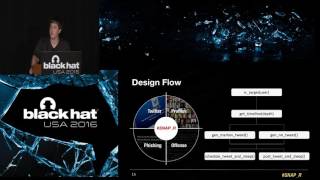
Weaponizing Data Science for Social Engineering - Automated E2E Spear Phishing on Twitter
Automated spear phishing on Twitter using machine learning and social engineering techniques. Explores target profiling, content generation, and high-value target identification for more effective phishing campaigns.
Over the Edge - Silently Owning Windows 10's Secure Browser
Exploiting Windows 10's memory deduplication feature to silently compromise Microsoft Edge, bypassing security measures and gaining arbitrary memory access through JavaScript-based attacks.
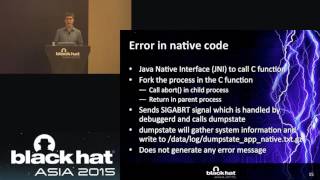
Resurrecting the Read Logs Permission on Samsung Devices
Exploit allowing non-privileged apps to access sensitive log data on Samsung devices, bypassing Android's READ_LOGS permission restrictions. Reveals private information from notifications and system logs.
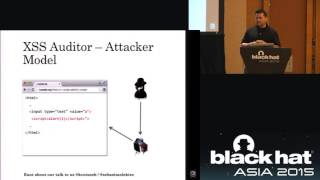
Client-Side Protection Against DOM-Based XSS Done Right
Comprehensive analysis of Chrome's XSS Auditor, revealing vulnerabilities and proposing an improved filter design using client-side taint tracking for robust DOM-XSS protection.

Silently Breaking ASLR in the Cloud
Exploit memory deduplication to defeat ASLR in cloud environments, leaking randomized base addresses of libraries and executables in neighboring VMs using a side-channel attack.
The Kali Linux Dojo Workshop - Kali USB Setups With Persistent Stores And LUKS Nuke Support
Learn to set up Kali Linux on USB with persistent storage and LUKS Nuke support. Explore live boot options, create persistence files, and handle emergency situations for secure, portable penetration testing.
The Kali Linux Dojo Workshop - Rolling Your Own - Generating Custom Kali Linux ISOs
Learn to generate custom Kali Linux 2.0 ISOs, tailoring the powerful penetration testing platform to your specific needs and preferences.