
Emerging Diseases, Deadly Lessons - Preventing Future Epidemics
Insights from recent epidemics on preventing future outbreaks, exploring ecological, social, political, and economic factors in disease spread and their implications for global health security.
Measuring Social Networks for Disease and Health Behavior Dynamics
Explore innovative methods for analyzing social networks to understand disease spread and health behaviors, with insights from cutting-edge research in network science and epidemiology.
Tracking and Curbing the Next Pandemic - Future Directions in Infectious Disease Research
Explore modern plagues, interdisciplinary efforts, and innovative methods for predicting and curbing pandemics through network analysis, animal studies, and advanced computational techniques.

Reverse Engineering Complexity - Dynamics, Architecture, and Robustness in Complex Systems
Explore robustness, tradeoffs, and feedback in complex systems through computational models. Discover applications in earthquakes, wildfires, biomaterials, infectious diseases, and more, emphasizing dynamics, architecture, and adaptation.
Fractal Inequality and the Complexity of Repair - Part 1
Exploring how complex systems science can address societal inequalities, from vaccine distribution to economic opportunities. Insights on repairing structural inequities using network analysis and modeling to protect vulnerable populations.

Phylodynamics and Markov Genealogy Processes
Explore phylodynamics and Markov genealogy processes to infer disease transmission from genomic data. Learn about a unified approach using exact likelihood expressions and dynamic genealogy evolution.
On the Shape of Epidemics
Explore the patterns and dynamics of epidemic spread, examining factors that influence their shape and progression through populations.
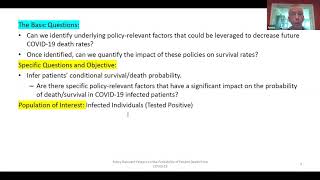
Effect of Universal TB Vaccination and Other Factors on Probability of Patient Death from COVID-19
Explore how universal TB vaccination, air pollution, and health expenditure impact COVID-19 survival rates across countries, with quantified probability changes by age and sex using information-theoretic methods.
Better Scientific Modeling for Ecological and Social Justice
Exploring how mathematical models can encode blind spots and create externalities, emphasizing the need for rigorous empiricism to achieve ecological and social justice through better scientific modeling.
Embracing Complexity for Systemic Interventions - Transmission Series Episode 5
Explore how embracing complexity in systems can lead to better interventions in various fields, from epidemiology to conservation, and improve decision-making under uncertainty.

Science in the Time of COVID - Lessons from the Pandemic
Insights from network epidemiologists on COVID-19's impact on scientific research, institutional interactions, and societal norms. Explores surprises, lasting effects, and future implications of the pandemic.
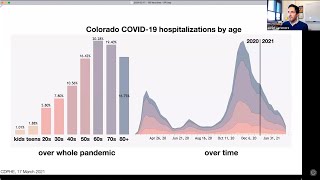
Vaccination Strategies - Prioritization, Dose Sparing, and Decisions Under Uncertainty and Inequity
Explore vaccination strategies for COVID-19, including prioritization and dose-sparing, considering uncertainties in variants, human behavior, and global inequities through mathematical models.

Testing Our Way Out of COVID-19: A Bumpy but Possible Path Forward
Explore how frequent, widespread testing with lower sensitivity could dramatically reduce COVID-19 spread and potentially end the pandemic while reopening the economy.
Epidemic Spread Through Segregated Spaces - Racial Disparities in COVID-19
Explore racial disparities in COVID-19 impact, examining structural factors and spatial segregation. Learn how to improve epidemic models by incorporating multi-scale spatial interactions and socio-economic factors.

Networks, Complexity, and Disease Dynamics
Explore the intricate relationship between network structures, complex systems, and the spread of diseases in this insightful seminar by Dirk Brockmann from Humboldt University.

On Coronavirus, Crisis, and Creative Opportunity
Exploring how crises reshape opportunities, this talk examines evolutionary strategies for navigating disruptions and the potential for innovation amidst catastrophe in a post-coronavirus world.

Halting the Spread of COVID-19 - Network Epidemiology and Containment Measures
Network epidemiology insights on COVID-19 spread, discussing contagion across scales, co-infections' impact, and evidence supporting containment measures. Explores complexities of pandemic modeling and intervention strategies.

Improving COVID-19 Surveillance and Response
Explore challenges in monitoring and preventing COVID-19 spread, from ethical concerns to academic research limitations, with Harvard epidemiologist Caroline Buckee.
Modeling Disease Transmission and Interventions - Sam Scarpino Interview
Explore epidemiological modeling, interventions, and complex interactions of biological and behavioral contagions in the context of the Covid-19 pandemic with expert Sam Scarpino.

After the First Wave - Strategies for Public Health and Economic Recovery Post-COVID-19
Experts discuss strategies for public health and economic recovery post-COVID-19, exploring testing, modeling, interventions, and balancing epidemiological and economic concerns for future pandemic waves.
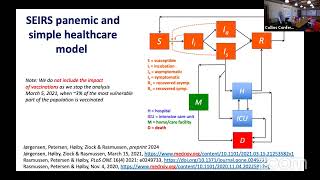
SARS-CoV-2 Infection Tracing Efficiency in Denmark Before Vaccine Impacts
Explore Denmark's pre-vaccine SARS-CoV-2 infection tracing strategies, analyzing their effectiveness and impact on pandemic control measures.