Mental Health and the COVID-19 Crisis: Impact and Policy Response
Explore the impact of COVID-19 on mental health in Australia, examining community profiles and evaluating the effectiveness of national policy responses like the coronavirus supplement.

Life Beyond Coronavirus - Flattening the Curve and Expert Perspectives
Expert panel discusses COVID-19 impacts, including flattening the curve, economic consequences, historical context, and future outlook, offering insights on public health measures, vaccine development, and societal changes.
COVID-19 Online Panel Discussion - March 2020
Expertos discuten la respuesta a la pandemia de COVID-19, abordando pruebas, inmunología, modelado, intervenciones, desarrollo de vacunas y dimensiones socioeconómicas.
The HIV and COVID-19 Global Pandemics - Lessons for Responding to Both Viruses
Explore global pandemics, HIV treatment advancements, and COVID-19 response strategies. Learn about emerging infectious diseases, gene therapy, and innovative therapeutic approaches from a leading expert.
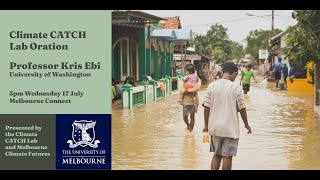
Climate Change and Health Risks - Planning for Future Generations
Renowned epidemiologist Prof. Kris Ebi discusses intersectoral policies for managing future health risks of climate change, focusing on protecting Australia's most vulnerable populations.
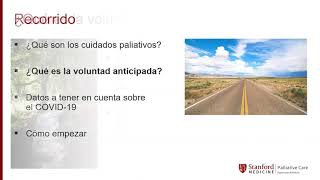
Guía para Tomar Decisiones Médicas en Tiempos de COVID-19 - Voluntad Anticipada
Guía sobre voluntad anticipada y decisiones médicas durante la pandemia de COVID-19, incluyendo cómo planificar y comunicar sus deseos de atención médica en caso de enfermedad grave.
Transboundary Problems in Infectious Diseases
Explore global infectious disease challenges, behavioral impacts on epidemics, and strategic approaches to healthcare. Learn about international case studies and innovative solutions in disease control.

Seminal Role of Social Networks and Cities in Pandemics, Innovation & Sustainability - Geoffrey West
Explore the role of social networks and cities in pandemics, innovation, and sustainability with Geoffrey West. Gain insights into complex adaptive systems and their impact on global challenges.
Andy Dobson on Disease Ecology & Conservation Strategy
Exploring disease ecology, conservation strategies, and complex systems thinking to address global challenges in biodiversity, economics, and public health through interdisciplinary research and innovative approaches.
Andy Dobson on Epidemic Modeling for COVID-19
Explore epidemic modeling for COVID-19 with Princeton epidemiologist Andy Dobson. Learn about mathematical models, herd immunity, endemic infections, and the interplay between epidemiological and economic systems.
Rigorous Uncertainty: Science During COVID-19 with David Krakauer
Exploring COVID-19's impact through complexity science, discussing citizen-based medicine, data challenges, group size recommendations, and out-of-equilibrium thinking to reveal hidden interconnections in modern life.
COVID-19 and Complex Time in Biology and Economics with David Krakauer
Explore complex systems insights on COVID-19, including timing's role in biology and economics, network dynamics, and societal adaptation to rapid change.
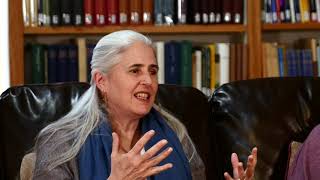
Complex Time- Aging & Adaptation in Infectious Diseases II
Explore aging and adaptation in infectious diseases with SFI experts Carlson and Pascual, discussing key areas and insights from their research on complex time and disease dynamics.

Environment X Everything Interactions - From Evolution to Epidemics and Beyond
Explore environment-actor interactions across various fields, from evolution to epidemics, using mathematical frameworks and simulations to understand complex systems and their impacts.
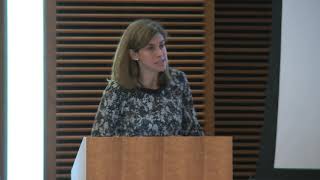
The Science of Pandemics - C4 Public Lecture
Explore global pandemics, influenza threats, and the role of mathematical modeling in disease surveillance and control through advanced computing techniques.
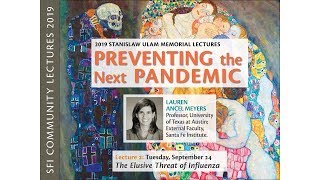
Preventing the Next Pandemic
Exploring influenza forecasting challenges, from predicting seasonal epidemics to anticipating pandemics, using network models and diverse data sources to improve public health preparedness and vaccine development.
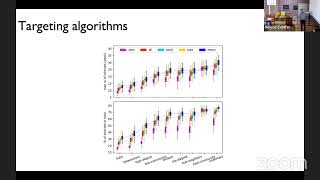
Social Dilemma of Disease Control
Explore disease control's social dilemma through integrating top-down and bottom-up perspectives, examining contagions, immunity, social distancing, and vaccination behaviors.
Frontiers of Computational Social Science - Agent-Based Modeling and Artificial Societies
Explore agent-based modeling in computational social science, from playground simulations to global epidemic models, with insights on future developments in neuro-cognitive agents and their applications.

The Swine Flu and You: Predicting and Controlling the H1N1 Pandemic
Explore the H1N1 pandemic: its impact, control strategies, and mathematical modeling for prediction and prevention. Learn about public health responses and the science behind epidemic management.
Pathogen Diversity from an Ecological Perspective
Explore pathogen diversity through an ecological lens, examining the complex interactions between microorganisms and their environments in disease dynamics and evolution.
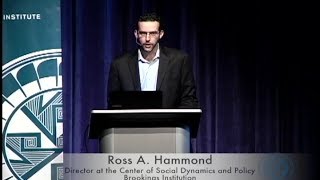
The Challenge of Obesity and a Systems Approach to Solutions
Explore the complex obesity epidemic, its global impact, and innovative systems approaches for prevention and policy solutions. Learn about multifaceted factors and cutting-edge research in this field.