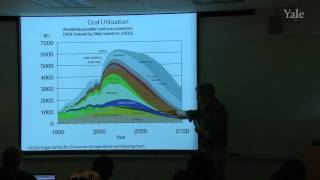
Energy Resources and Renewable Energy - Lecture 33
Explora recursos energéticos actuales, incluyendo carbón, petróleo, gas natural, energía nuclear e hidroeléctrica. Analiza su uso, impacto ambiental y tendencias futuras en la producción de energía.
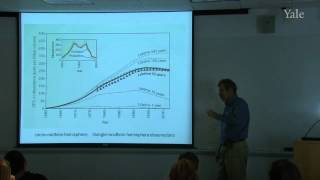
The Ozone Layer - Stratospheric Protection and Environmental Impact
Explore the ozone layer's importance, formation, and depletion. Learn about CFCs, the ozone hole, and global efforts to protect this crucial atmospheric shield through the Montreal Protocol.
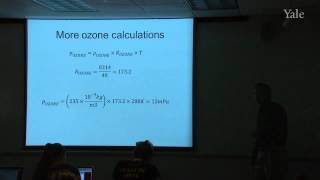
The Two Ozone Problems in the Atmosphere - Tropospheric and Stratospheric
Explore the dual ozone challenges: tropospheric smog and stratospheric depletion. Learn about ozone properties, photochemical reactions, EPA limits, and pollution sources in this atmospheric science lecture.
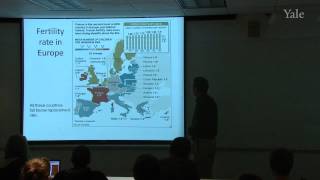
Climate Sensitivity and Human Population - The Atmosphere, Ocean and Environmental Change
Explore climate sensitivity, feedbacks, and global population trends. Analyze sustainable population, urbanization, and demographic transitions in developed vs. developing areas.

Global Warming: Emissions Scenarios and Climate Impacts - Lecture 29
Explore greenhouse gas emissions scenarios, climate warming projections, and potential impacts. Discuss advantages, disadvantages, and mitigation strategies for global warming.

Population and the Environment - Global Problems of Population Growth
Explore the complex relationship between population growth and environmental challenges, examining projections, impacts, and potential solutions for a sustainable future.

Human and Environmental Impacts of Population Growth
Explore population growth's impact on the environment and global economy, examining overconsumption, poverty, and the challenges of balancing development with sustainability.

Renewable Energy Policies and Challenges - Lecture 23
Explores renewable energy policies, focusing on wind power challenges and benefits. Examines the Cape Wind project, addressing siting issues, environmental impacts, and property rights conflicts.

Energy and Matter Flow in Ecosystems - Lecture 30
Explore energy and matter flow in ecosystems, from producers to consumers, and learn about biogeochemical cycles of vital compounds like carbon, nitrogen, and phosphorus in this comprehensive lecture.

Climate and the Distribution of Life on Earth - Principles of Evolution, Ecology and Behavior
Explore how climate shapes life on Earth, from biomes to weather patterns, and learn about the impact of phenomena like El Niño on global ecosystems and biodiversity.

Major Events in the Geological Theatre - Principles of Evolution, Ecology and Behavior
Explore how geology and climate have shaped life's evolution, from atmospheric changes to mass extinctions, and how life has impacted Earth's geology through various processes.

Environmental Politics and Law: Reflection and Lessons - Lecture 24
Explore environmental politics successes, challenges, and future directions. Analyze land management, regulation, and societal impacts. Gain insights on effective environmental stewardship and personal action.

Managing Coastal Resources in an Era of Climate Change - Environmental Politics and Law
Explore legal and economic strategies for coastal management amid climate change, examining property rights, ecosystem protection, and insurance policies in vulnerable areas.

Property Rights and Public Lands Management in Environmental Politics and Law - Lecture 18
Explores property rights' impact on public lands management, addressing authority, wilderness perceptions, permit processes, and resource access conflicts in environmental policy.

Land Use and Conservation Law - The Adirondack History
Explore Adirondack Park's conservation history, land use strategies, and stakeholder conflicts in protected areas. Learn about regulations balancing ecological preservation with development and resource management.

Global Warming and Climate Change in the Holocene - Lecture 28
Explore climate fluctuations from the Medieval Warm Period to modern global warming, examining natural and anthropogenic factors shaping Earth's temperature and environment over time.

Seasons and Climate - Factors Affecting Earth's Climate Systems
Explore factors influencing Earth's climate: latitude, terrain, continentality, and seasonality. Learn about precipitation patterns, ocean currents, biomes, and the impact of Earth's rotation on climate variations.
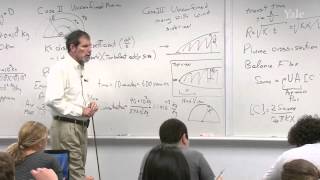
Horizontal Transport in Atmospheric Mixing - Lecture 8
Explore atmospheric pollutant mixing through confined, unconfined, and wind-influenced scenarios. Learn about diffusion, wind effects, and temperature changes with altitude in this comprehensive lecture.
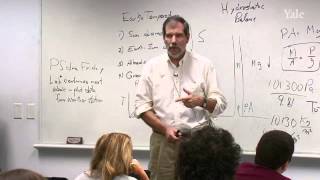
Hydrostatic Balance in Atmosphere and Ocean - Lecture 7
Explore hydrostatic balance in the atmosphere and ocean, including calculations, experiments, and real-world applications of the hydrostatic law.
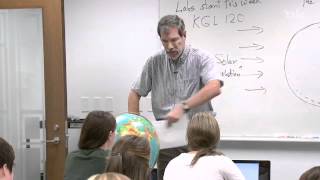
Greenhouse Effect and Earth's Energy Balance - Lecture 6
Explore Earth's energy balance, black body radiation, and the greenhouse effect. Learn about planetary energy budgets and the role of greenhouse gases in atmospheric dynamics.
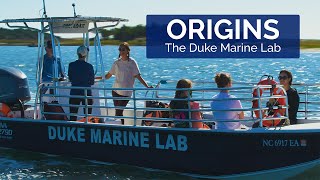
Origins of the Duke Marine Lab
Explore Duke Marine Lab's 85-year journey: groundbreaking research, innovative teaching, and community impact in Beaufort. Discover its evolution, from early days to cutting-edge drone technology and climate initiatives.