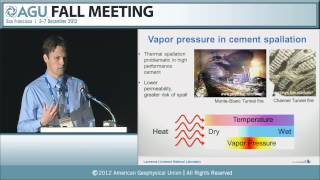
Shallow and Deep Geothermal Systems - 2012 AGU Fall Meeting
Explore cutting-edge research on geothermal systems, including fluid-rock interactions, sustainability enhancements, thermal spallation drilling, and integrated CO2 storage approaches for renewable energy development.
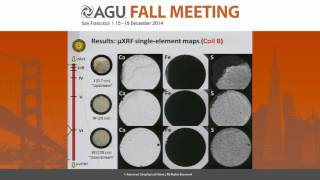
Effects of CO2-Induced Reaction on Transport Properties of Debonded Well Cement-Casing Interfaces
Explores CO₂-induced reactions on debonded well cement-casing interfaces through reactive flow-through experiments, examining permeability changes and microstructural effects for carbon storage applications.
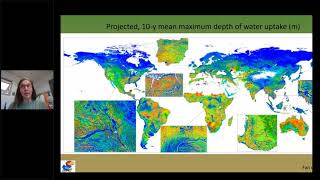
Soil Carbon Sequestration: Increasing Carbon Stocks in Deep Soil - Part 6
Explore strategies for increasing deep soil carbon stocks through historic rooting depth changes and crop breeding, featuring insights from experts on soil development and root characteristics.
Limestones: An Essential User Guide to Sediments That Dissolve, Precipitate and Grow
Explore limestone formation, importance, and applications in climate studies and sustainable solutions. Learn about carbonate sedimentology's role in understanding Earth's history and future environmental challenges.
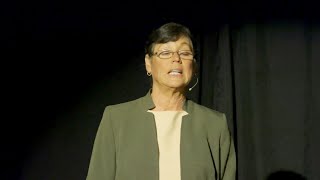
Putting Carbon Where It Belongs - Rebalancing Carbon Distribution for Climate Solutions
Explore innovative solutions to rebalance carbon distribution in ecosystems and combat climate change through forest restoration and biochar implementation.
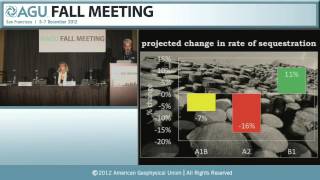
Carbon Storage in Western U.S. Ecosystems - USGS Report Findings
Explore USGS findings on carbon storage in Western U.S. ecosystems, covering 2 million square miles. Learn about current sequestration rates and future projections under various scenarios.
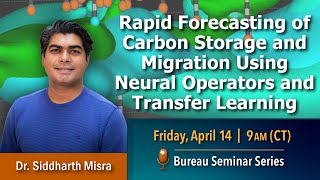
Rapid Forecasting of Carbon Storage and Migration using Neural Operators and Transfer Learning
Leverage Fourier Neural Operators and Transfer Learning to predict CO2 migration in storage reservoirs efficiently, reducing computational time and data requirements for accurate analysis.
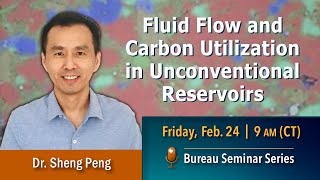
Fluid Flow and Carbon Utilization in Unconventional Reservoirs
Explore fluid dynamics in shale reservoirs, focusing on multiphase flow, rock-fluid interactions, and carbon storage potential. Gain insights into permeability, wettability, and fracture-matrix interactions for enhanced oil recovery.
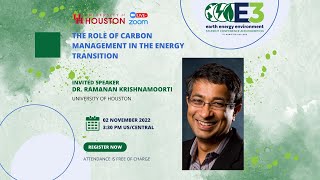
The Role of Carbon Management in the Energy Transition
Explore carbon management's crucial role in the energy transition, focusing on innovative strategies and technologies for a sustainable future.

Kenya: Africa's Great Carbon Valley
Explore Kenya's potential as a global leader in carbon removal, leveraging renewable energy and favorable geology. Learn about opportunities and challenges in East Africa's emerging CDR industry.
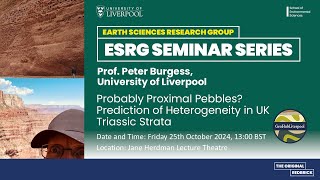
Prediction of Heterogeneity in UK Triassic Strata Through Pebble Distribution Analysis
Explore the complex sediment sources of UK Triassic strata through pebble abundance analysis, revealing multiple tributary systems and their implications for subsurface prediction and storage projects.
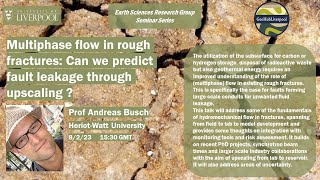
Predicting Fault Leakage Through Upscaling: From Lab to Reservoir
Explore hydromechanical flow in fractures, from lab to reservoir, for improved subsurface utilization in energy and waste storage applications.

Open-Ocean Seaweed Farming for Climate Mitigation | Mar Fernández Méndez | TEDxHochschuleBremerhaven
NOTE FROM TED: This talk represents the speaker's personal business approach to and understanding of aquafarming and carbon sequestration, which remains an ongoing field of study. For more information, see the footnote below. TEDx events are independently organized by volunteers. The guidelines we g

Carbon Storage: From Paradox to Possibility | Sarah Gasda | TEDxØygarden
NOTE FROM TED: This talk only represents the speaker's personal views and understanding of carbon capture and storage (CCS), sustainability, and the environment which remains an ongoing field of study. TEDx events are independently organized by volunteers. The guidelines we give TEDx organizers are