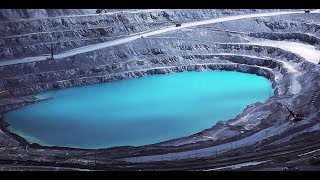
MAR for Mining
Explore how Managed Aquifer Recharge (MAR) is revolutionizing water management in mining, benefiting groundwater users and the environment through innovative reinjection techniques.
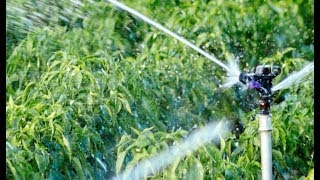
Community Wastewater Reuse with High Rate Algal Ponds
Innovative high rate algal pond technology for efficient wastewater treatment and reuse in small communities, offering faster turnaround and benefits for irrigation in dry regions.
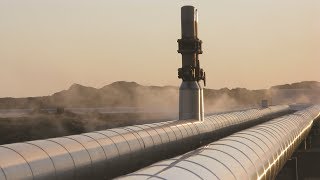
Science Protecting Water in Hydraulic Fracturing
Explore best practices for sustainable water management in unconventional gas extraction, focusing on environmental protection, risk mitigation, and maintaining water quality for various uses.
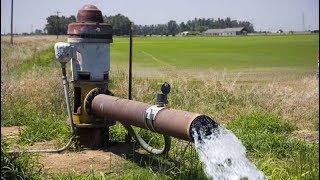
Accessing Nationally-Consistent Groundwater Information
Explore Australia's national groundwater resources through interactive tools and datasets, supporting informed decision-making for water management and environmental assessments.
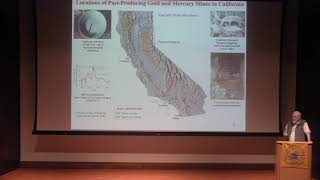
The Environmental Legacy of Mercury, Gold, and Asbestos Mining - Evaluation of Long-Term Impacts
Explore long-term environmental impacts of mercury, gold, and asbestos mining, focusing on sustainable development and future challenges in mineral resource management.
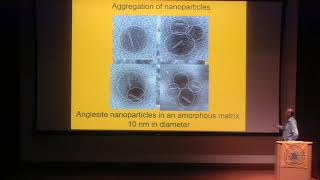
Nano-Mineralogy - A New Dimension to Understand the Fate of Metal(loids) in the Environment
Explore how nanomineralogy impacts metal behavior in confined environmental spaces, offering insights into geochemical processes and environmental fate of elements.
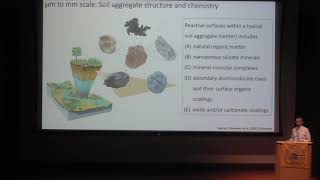
From Atoms to Mountains - New Frontiers in X-ray Science
Explore cutting-edge X-ray techniques in geoscience, from atomic-scale mineral interactions to landscape-level processes, revealing new insights into metal transport, soil formation, and environmental contaminants.

All the Types of Sand and Why There's So Many Colors - Geo Girl
Explore the diverse world of sand, from quartz to olivine, and learn about its various compositions, colors, and origins in beaches and deserts. Discover sand's uses for humans and wildlife.
Everything You Could Ever Want to Know About Ice - GEO GIRL
Explore the fascinating world of ice, from its unique properties to its various forms. Discover how ice impacts Earth and potentially alien life, and learn about atmospheric ice formations like snowflakes and hail.

What Is Carbon Sequestration, Why Is It Important, and How Does It Work? - GEO GIRL
Explore carbon sequestration's importance in mitigating climate change, focusing on soil health, regenerative farming, and long-term storage methods like mineral weathering. Learn how to contribute to carbon reduction efforts.
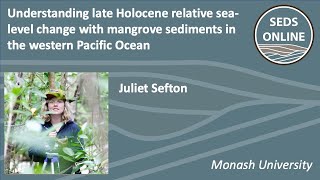
Late Holocene Relative Sea-Level Change with Mangrove Sediments in the Western Pacific Ocean
Explore late Holocene sea-level changes using mangrove sediments, discussing global distribution, proxy reconstructions, and implications for cultural heritage in the western Pacific.
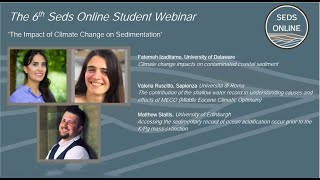
The Impact of Climate Change on Sedimentation
Explore climate change's impact on coastal sediments, ocean acidification, and ancient warming events through expert presentations on cutting-edge research and novel geochemical techniques.
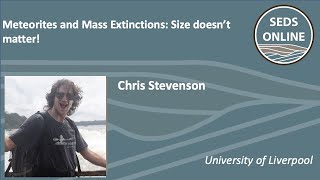
Meteorites and Mass Extinctions - Size Doesn’t Matter!
Explore the surprising link between meteorite impacts, rock mineralogy, and mass extinctions, challenging conventional theories about impact size and extinction intensity.
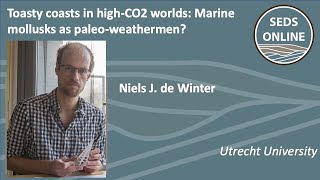
Toasty Coasts in High-CO2 Worlds - Marine Mollusks as Paleo-Weathermen?
Explore how mollusk shells serve as archives for past climate and ecosystem changes, revealing insights into extreme weather patterns and seasonality in high-CO2 environments.
Microbes and Lacustrine Carbonates - The Good, the Bad and the Ugly?
Explore the complex interplay between microbes and lacustrine carbonates, examining biotic and abiotic processes in modern environments from the Andes to the Alps and their implications for fossilized microbialites.
130 Years of Natural & Anthropogenic Modifications of the Venice Lagoon - Evolution of Tidal Meanders
Explores tidal meander evolution in Venice Lagoon over 130 years, examining hydrodynamic changes, morphology, and sediment transport using diverse data and modeling techniques.
What Is Left After Tsunami Disasters? – A Sedimentological Perspective
Explore tsunami deposits, their identification challenges, and new research methods. Gain insights into recent tsunamis and their geological impacts through sedimentological studies and innovative approaches like paleogenetics.
How, When and Where Do Ocean Currents Control Sedimentation in Deep-Water Environments?
Explore ocean currents' impact on deep-sea sedimentation, focusing on contourites and their formation processes. Gain insights into oceanographic influences on seafloor morphology and sediment distribution.
Jurassic Environmental Perturbations: A Shallow-Water Perspective
Explore Jurassic environmental changes and their impact on shallow marine ecosystems, focusing on early Toarcian and Bajocian periods using geological evidence from Morocco's Central High Atlas Basin.
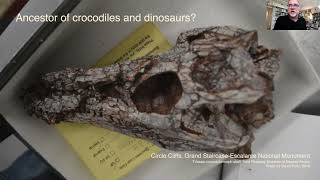
Palaeontology and U.S. National Monuments - Implications for Science and Public Lands
Explore Utah's Grand Staircase-Escalante and Bears Ears National Monuments, their paleontological significance, and the political controversies surrounding their status as protected lands.
Global Warming and Society
Explore the complex interplay between global warming, politics, and society in this thought-provoking presentation by Dr. Jerry Osborn, addressing key issues and institutional influences.