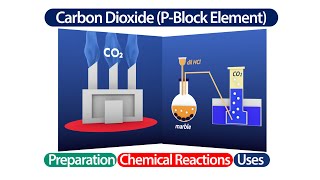
Carbon Dioxide - Properties, Preparation, and Applications
Explore carbon dioxide's properties, preparation, and applications in this comprehensive animated guide to CO2 as a p-block element in inorganic chemistry.
Openscapes: Supporting Better Science for Future Us
Discover how Openscapes fosters collaboration and efficiency in environmental research through mentoring and promoting code reuse in NASA and NOAA projects.
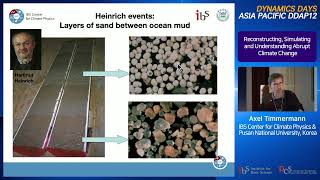
Reconstructing, Simulating and Understanding Abrupt Climate Change
Explore abrupt climate changes through Korean cave data and climate simulations. Uncover a 16,000-year-old cooling event and its global impacts. Discover advances in modeling glacial cycles and millennial-scale variability.
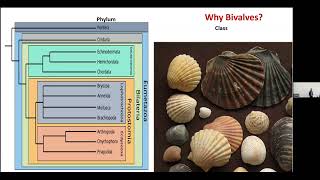
Revisiting Paleogene Through the Migration Pattern of Bivalvia
Explore bivalve migration patterns during the Paleogene, examining impacts of major geological events on their distribution and diversity across oceanic regions.
Reading Genetic Tea Leaves: Predicting Traits and Adaptations from Genetic Data
Explore genetic diversity's role in predicting traits and adaptations. Understand the challenges of separating genetic and environmental factors in population genetics and climate change research.
Soil to Foil: Aluminum and the Quest for Industrial Sustainability
Explore aluminum's pivotal role in scientific inquiry, technological innovation, and sustainability. Uncover its impact on resource stewardship and environmental challenges through expert insights.
In Search of Thoreau's Flowers - Art, Science, and Climate Change
Explore the intersection of art and science in understanding climate change's impact on biodiversity through Thoreau's plant specimens and innovative digital art techniques.
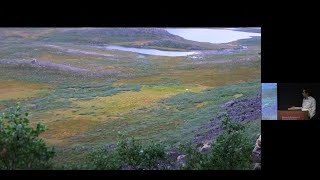
Restoring Ecosystems in a Time of Ongoing Global Change
Explore ecosystem recovery after human disturbance, examining traditional assessment methods and their limitations. Learn about comprehensive approaches to enhance restoration strategies and environmental policies.

Uncovering Earth's Ancient Mysteries - Exploring Geological Evidence of Giant Asteroid Impacts
Uncover Earth's ancient history through geological evidence of asteroid impacts, exploring their effects on the planet's surface and the origins of life.
Fish Athletes: Energy Use and Environmental Adaptation in Fish
Explore fish swimming efficiency, energy use, and environmental impacts with cutting-edge research techniques. Gain insights into climate change and food supply policy implications.

Our Planet, Our Health - Lafayette Health Awareness Forum 2022
Explore connections between human health and planetary well-being with experts in climate change, nature prescriptions, and forest ecology. Enjoy performances by the Lafayette String Quartet.
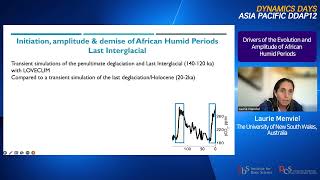
Drivers of the Evolution and Amplitude of African Humid Periods
Explore drivers of African Humid Periods' evolution and amplitude. Analyze climate processes, AMOC's role, and ice-sheet impacts using Earth system model simulations across different geological periods.
Climate Meets Complex Systems: Exploring Predictability of Extreme Climate Events via Complex Networks
Explore complex network approaches for analyzing and predicting extreme climate events. Uncover underlying structures in climate systems to improve forecasting of phenomena like monsoons and tropical cyclones.
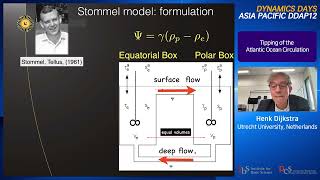
Tipping of the Atlantic Ocean Circulation
Explore the Atlantic Meridional Overturning Circulation's sensitivity to freshwater, its potential collapse, and climate impacts through ocean-climate model analyses.
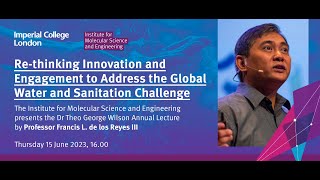
Re-thinking Innovation and Engagement to Address the Global Water and Sanitation Challenge
Explore innovative approaches to tackle global water and sanitation issues, focusing on rethinking engagement strategies and technological solutions for sustainable development.
The Need for Science in a Carbon Constrained World
Explore climate change insights with Professor Jim Skea, Chair of the IPCC, as he discusses the crucial role of science in addressing global carbon constraints.
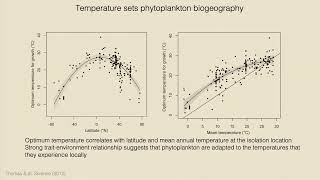
Microbial Ecology - Class 9
Explore microbial ecology concepts with experts Martina Dal Bello and Jacopo Grilli in this advanced quantitative biology and ecology training session.
Structural Instabilities of Ecosystem Dynamics
Explore ecosystem dynamics and structural instabilities with insights from mathematical modeling and ecological theory. Gain understanding of complex environmental systems.
Squaring the Circle: Measuring and Modeling How to Lower Energy Demand as Part of Climate Mitigation
Explore strategies for reducing energy demand as a crucial aspect of climate change mitigation, focusing on measurement and modeling techniques.
Effect of Temperature Change on the Functioning of Natural Communities
Explore the impact of temperature fluctuations on natural community dynamics and ecosystem functioning. Gain insights into climate change effects on biodiversity.
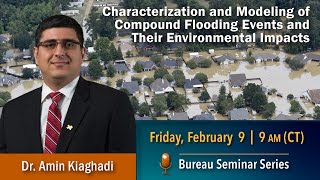
Characterization and Modeling of Compound Flooding Events and Their Environmental Impacts
Explore compound flooding events, their environmental impacts, and advanced modeling techniques for coastal hazard assessment and mitigation strategies.