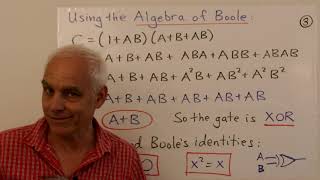
How the Algebra of Boole Simplifies Circuit Analysis - Math Foundations - N J Wildberger
Explore how the Algebra of Boole simplifies circuit analysis, comparing it with traditional Boolean algebra for encoding logic gates and solving engineering problems.
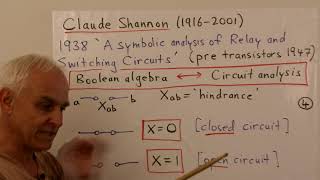
Boolean Algebra and Shannon's Circuit Analysis - Math Foundations - N J Wildberger
Explores Boolean algebra's connection to circuit analysis, focusing on Huntington's formulation and Shannon's groundbreaking 1938 paper linking the two fields.
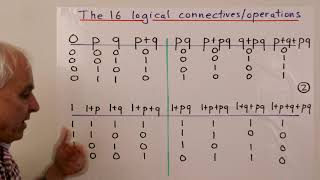
Implication and Logical Operations - Math Foundations - N J Wildberger
Explore 16 logical operations, including AND, OR, XOR, and implication, with applications to Boolean algebra and circuit analysis. Gain insights into Modus Ponens and Boole's algebra for solving electrical engineering problems.
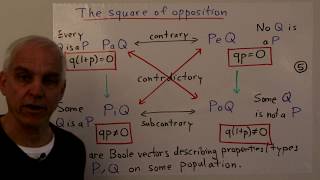
The Algebra of Boole is Not Boolean Algebra - Math Foundations - N J Wildberger
Exploring the Algebra of Boole, its relation to Boolean algebra, and its role in logic and circuit analysis. Discusses syllogisms, the Square of Opposition, and Boole's proofs of Aristotle's arguments.

Solving Systems of Differential Equations with Eigenvalues and Eigenvectors
Learn to solve systems of linear ODEs using eigenvalues and eigenvectors. Covers problem setup, solution methods, and intuitive interpretation, with code examples in Python and MATLAB.
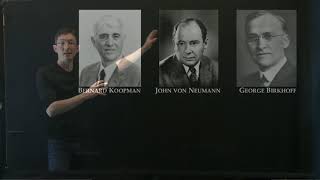
Koopman Spectral Analysis - Overview
Explore Koopman operator theory for dynamical systems, its recent resurgence, and applications like Dynamic Mode Decomposition in this comprehensive overview.
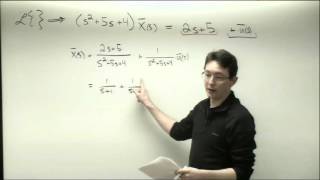
Laplace Transform and ODEs with Forcing and Transfer Functions
Explore Laplace transforms, ODEs, and transfer functions in engineering mathematics, focusing on spring-mass-damper systems and frequency response analysis.

FFT and Image Compression
Explore FFT-based image compression techniques, including natural image analysis, compression algorithms, and practical examples for efficient data representation.

Fourier Transforms
Explore the powerful Fourier transform, its applications in engineering, and its connection to orthogonal basis functions and Fourier series in this comprehensive mathematical lecture.
Solving High Dimensional HJ Equations Using Generalized Hopf-Lax Formulas vs Using Machine Learning
Explore advanced techniques for solving high-dimensional Hamilton-Jacobi equations, comparing generalized Hopf-Lax formulas with machine learning approaches in control and differential games.
Alexander Volberg: The Probability of Buffon Needle to Land Near Cantor Set
Explore the probability of Buffon's needle landing near Cantor sets, delving into unexpected connections with various mathematical fields and theories.
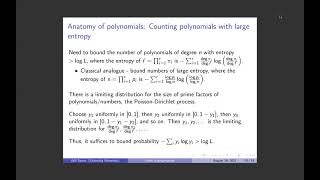
Sums in Progressions to Squarefree Moduli Among Polynomials Over a Finite Field
Explore polynomial sums in progressions to squarefree moduli over finite fields, covering Fourier analysis, polynomial anatomy, and arithmetic functions.
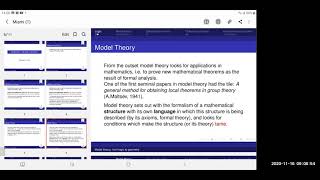
Model Theory - From Logic to Geometric Stability Theory and O-Minimality I
Explore model theory principles, focusing on o-minimality and stability theory, with applications to complex geometry and arithmetic aspects.
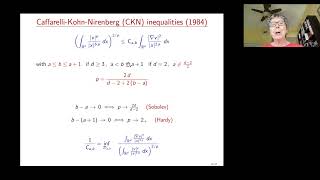
Functional Inequalities and Improvements: Stability - Part 2
Explore functional inequalities, their optimal constants, and stability properties. Learn strategies for addressing these issues and recent developments in improved inequalities for non-optimizers.
Splines and Imaging - From Compressed Sensing to Deep Neural Networks
Explore splines in imaging, from compressed sensing to deep neural networks. Unser demonstrates spline optimality in inverse problems and their connection to deep learning, offering insights into ReLU architecture and activation optimization.
Introduction to Dynamical Systems - Lecture 1
Explore dynamical systems, from linear ODEs to nonlinear chaos. Learn about equilibrium points, eigenvalues, attractors, and bifurcations. Gain insights into Lorenz systems, Poincaré maps, and iterative methods.
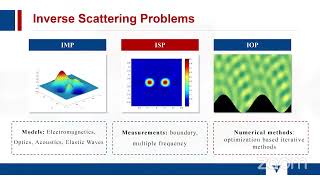
Mathematical Analysis and Numerical Methods for Inverse Scattering Problems
Explore mathematical analysis and numerical methods for inverse scattering problems, covering applications, challenges, algorithms, and recent progress in stability analysis and deep learning approaches.
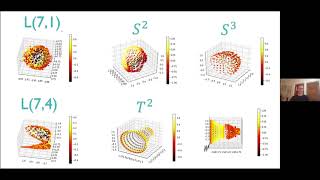
Intrinsic Topological Transforms via the Distance Kernel Embedding
Explore topological transforms for abstract metric spaces using distance kernel embedding, combining persistent homology with Euclidean embeddings for enhanced shape analysis and discrimination.
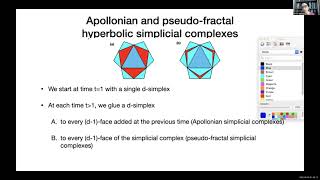
The Topological Dirac Operator and the Dynamics of Topological Signals
Explore topological signals, higher-order Laplacians, and the Dirac operator in network science. Learn about spectral properties, diffusion dynamics, and topological synchronization in simplicial complexes and multiplex networks.
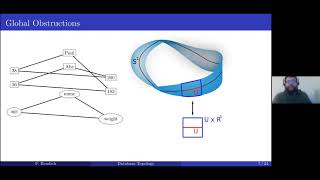
Data Complexes, Obstructions, Persistent Data Merging
Explore data complexes, topological obstructions in database JOIN operations, and persistence levels in data alignment. Learn about measure theory, homotopy, and homology in the context of data integration.
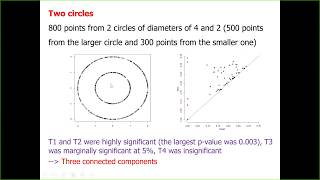
Modeling and Replicating Persistence Diagrams
Explore modeling and replicating persistence diagrams for statistical inference in topological data analysis. Learn about RST approach, parametric modeling, and improvements for clustered data.