
Modern Embedded APIs
Explore modern embedded APIs and their applications in software development for resource-constrained systems at this insightful conference lecture.
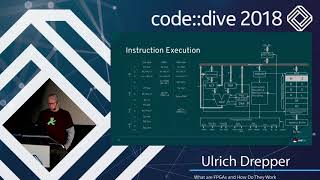
What Are FPGAs and How Do They Work
Comprehensive exploration of FPGA technology, covering architecture, programming, and execution processes. Compares FPGAs to traditional processors and discusses their growing role as accelerators in various computing environments.
C++ - λ Demystified
Explore C++ lambdas: implementation, compiler-generated code, and practical applications. Gain insights for efficient coding, especially in embedded systems.
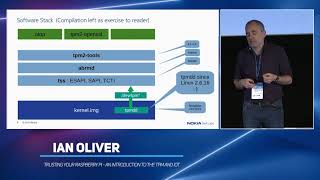
Trusting Your Raspberry Pi - An Introduction to the TPM and IoT
Explore TPM and IoT security using Raspberry Pi. Learn about trusted computing, chain of trust, and mitigating firmware attacks for building secure IoT systems.

Embedded Systems 101
Comprehensive introduction to embedded systems, covering their importance, challenges, and development techniques. Ideal for computer science graduates seeking organized knowledge in this field.
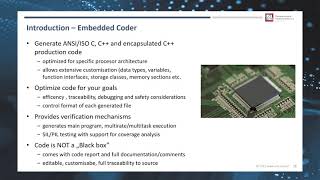
Automating Code Generation for Embedded Systems
Explore automated code generation for embedded systems, transforming high-level algorithms into optimized C/C++ code. Learn about enhancing efficiency, ensuring traceability, and meeting safety standards in software development.
Implementing Innovations in a Safe and Secure Way
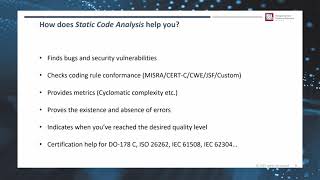
Explore automated static code analysis for software safety and security. Learn to prove absence of runtime errors using formal methods and tools like Polyspace for exhaustive testing.
Implementing a Modern C++ MQTT Client for Embedded Devices
Explore the design and implementation of a modern C++14 MQTT client library for embedded systems, showcasing efficient techniques for IoT devices and discussing adaptability across various platforms.
C++11's Quiet Little Gem - System Error
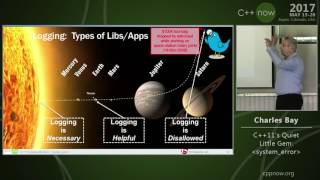
Explore C++11's <system_error> header, focusing on std::error_code and std::error_condition. Learn their design, intended use, and potential for extensibility in error handling and reporting across platforms.

Modern C++ in Embedded Systems
Explore modern C++ in embedded systems, covering decision-making, tool support, language features, and practical applications for bare-metal and small-OS projects.
Embedded Domain Specific Languages for Embedded Bare Metal Projects
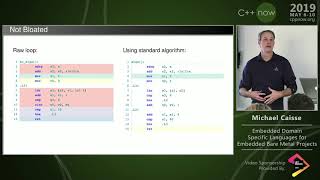
Exploring embedded domain-specific languages for bare metal projects, focusing on benefits, resource costs, and implementation techniques using C++14/17 features.
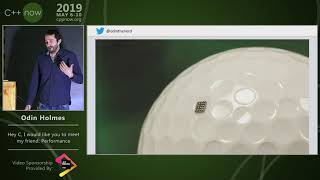
Hey C, This Is What Performance Looks Like - Manually Generating Optimal Assembly at Compile Time
Explore optimizing C++ for exotic hardware through metaprogramming, outperforming industry standards while enhancing safety and usability. Learn DSL techniques for ARM Cortex SoCs to achieve exceptional performance.
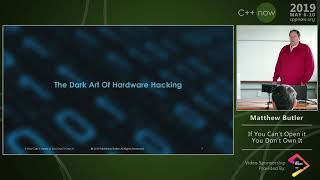
If You Can't Open It, You Don't Own It
Exploring hardware vulnerabilities and their impact on C++ systems, this talk delves into side-channel attacks, physical penetrations, and supply chain risks, offering insights for securing modern C++ designs.

Message Handling in Embedded - A Declarative, Modern C++ Approach
Explore a declarative approach to message handling in embedded systems using modern C++, covering bit mapping, filtering, and dispatching for efficient asynchronous communication.
Embedded Logging Case Study - From C to Shining C++
Explore modern C++ techniques for efficient embedded logging, overcoming constraints of tiny CPUs and memory while achieving optimal performance and usability in firmware development.

What is Low Latency C++? - Part 1
Explore low latency C++ across industries, examining challenges and techniques for efficient programming in time-critical systems like finance, audio, and gaming.
Composition on Tiny Embedded Systems in C++
Explore composable firmware for embedded systems through a live demo, covering hardware access, interrupts, logging, and safe arithmetic while building an RGB lighting controller.
Extending the Python Ecosystem to Xilinx
Explore PYNQ: Python-based platform integrating microprocessors, microcontrollers, and FPGAs. Learn to leverage programmable system-on-chips for embedded development using familiar Python ecosystem and Jupyter notebooks.
Testing Spacecraft with Pytest
Explore spacecraft software testing using pytest, comparing it to web services and examining real-world examples from Varda Space Industries. Learn about safety-critical systems and verification techniques.
Next Level Machine Learning with TinyML and Python
Explore TinyML: machine learning on microcontrollers. Learn about hardware options, frameworks, and real-world applications in agriculture, health, ecology, and more using Python for embedded systems.
Supercharging C++ Code with Embedded Python
Discover techniques to enhance C++ performance by integrating Python, exploring innovative ways to boost efficiency and functionality in software development.