
Internet of Things Security Challenges and Approaches - 2016
Explore challenges and approaches for securing Internet of Things (IoT) devices, including heterogeneous environments, data gathering, and working with project sponsors to identify and resolve security issues.
Arduino Pong - Ball Movement and Collision Detection - Part 2
Learn to create Pong on Arduino, focusing on ball collision detection, movement, and game mechanics using efficient binary operations and clever algorithms.
Arduino Pong Game Development on LCD Panel - Part 9
Learn to create Pong on a 16x2 LCD panel using Arduino. Covers drawing, paddle movement, user input processing, and problem-solving techniques through live coding.

Arduino Programming Tutorial - Core C Language for Microcontrollers
Learn Arduino programming essentials: variables, loops, functions, data types, and more. Create projects, manipulate hardware, and master core C language concepts for microcontroller development.
Designing Secure IoT Products
Practical guide to IoT product security: threat modeling, PSA Certified framework, and nRF Connect SDK implementation. Covers security principles, hardware/firmware specifications, and certification process.

How Hardware Timers Work in CPUs
Explore CPU hardware timers: their function, implementation, and role in controlling execution timing. Gain insights into low-level computer architecture and timing mechanisms.

Hardware Interrupts in 6502 Computer Architecture
Explore hardware interrupts in 6502 computers, learning their implementation and significance in computer architecture and programming.
Connecting an LCD to a 6502 Computer - Part 4
Learn to connect an LCD display to a 6502-based computer, exploring hardware interfacing and low-level programming techniques for embedded systems and retro computing enthusiasts.

Building a Basic Computer with 6502 Microprocessor - Part 1: "Hello, World" from Scratch
Explore computer fundamentals by building and programming a basic 6502 microprocessor-based computer, starting with the first steps towards creating a "Hello, world" program from scratch.

Build an Arduino EEPROM Programmer
Learn to construct an Arduino-based EEPROM programmer, simplifying the process of programming 28C16 and similar EEPROMs. Gain hands-on experience with Arduino Nano and shift registers.
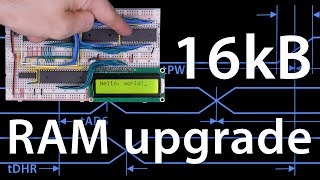
Subroutine Calls with RAM - 6502 Part 7
Explore subroutine calls and RAM usage in 6502 assembly programming. Learn advanced techniques for efficient memory management and code organization in retro computing.
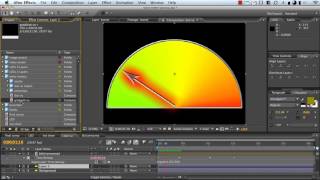
Noise Meter Tutorial - LED Lights and Animation
Create a noise meter with LED lights and Arduino, learning animation techniques and exploring housing options for your project.
Raspberry Pi Pico and RP2040 - The Deep Dive
Explore Raspberry Pi Pico and RP2040 architecture, including memory mapping, GPIO control, and SDK usage. Hands-on demonstrations cover simulation, debugging, and register manipulation for embedded systems enthusiasts.
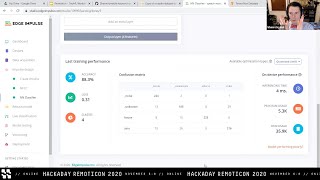
TinyML - Using Machine Learning on Microcontrollers to Recognize Speech
Learn to implement speech recognition on microcontrollers using TinyML. Train a neural network, convert it to TensorFlow Lite, and deploy it on an ARM board for real-time wake word detection.
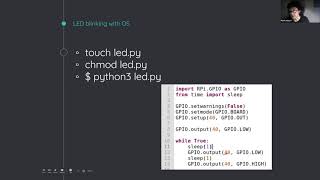
Linux + Electronics: A Raspberry Pi Course - Class 4
Explore GPIO, LED blinking, servo control, and I2C communication on Raspberry Pi. Hands-on lessons for integrating Linux with electronics and hardware interfacing.

OLED Displays with Arduino - I2C and SPI OLEDs
Learn to integrate OLED displays with Arduino using I2C and SPI protocols. Build a temperature and humidity meter while exploring various OLED types and their advantages over traditional displays.
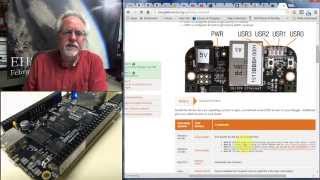
Beaglebone Black - Getting Started
Learn to boot and connect to Beaglebone Black using Putty or TightVNC. Set up remote desktop access for easy configuration and follow-along in future lessons.

Speech-to-Intent on MCU: TinyML for Efficient Device Control - Lecture 6
Learn efficient speech-to-intent techniques for MCUs, focusing on direct parsing of user utterances into actionable output. Explore model training, deployment, and testing on Wio Terminal.

Wio Terminal TinyML Weather Prediction with TensorFlow Lite and LVGL GUI - Course 4
Create an intelligent meteostation using Wio Terminal and TensorFlow Lite for Microcontrollers to predict weather and precipitation based on local environmental sensor data, with LVGL GUI integration.
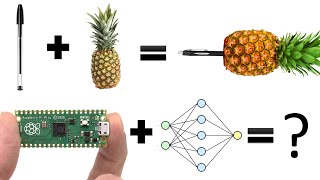
Machine Learning Inference on Raspberry Pi Pico 2040 via Edge Impulse
Learn to implement machine learning inference on Raspberry Pico 2040 using Edge Impulse, covering environment setup, sample data inference, sensor data processing, and porting details.

Introduction to TinyML on Wio Terminal - Machine Learning on Microcontrollers
Introduction to TinyML on Wio Terminal: Learn to implement machine learning on microcontrollers using Arduino IDE, covering data gathering, processing, model training, and deployment.