Getting Started in Cryo-EM
Comprehensive introduction to cryo-electron microscopy, covering theory, equipment, sample preparation, data collection, and analysis techniques for various biological imaging applications.
Materials Characterization
Comprehensive exploration of materials characterization techniques, covering optical and electron microscopy, X-ray diffraction, and transmission electron microscopy, with hands-on demonstrations and practical applications.
Foundational Tools, Techniques, and Materials for Modern Nanotechnology
Explore foundational tools, techniques, and materials driving the nanotechnology revolution, presented by Chad Mirkin from Northwestern University.

Pathology - Presented by Dr Mike Osborn and Dr Brian Hanley
Explore histopathological features of COVID-19, including diffuse alveolar damage, viral tropism, and case presentations with expert pathologists Dr Osborn and Dr Hanley.

Hyperspectral Neutron Imaging and Tomographic Reconstruction - Challenges and Methods
Explore advanced tomographic reconstruction techniques for neutron CT and cryoEM, focusing on challenges, model-based approaches, and applications in materials science and chemical mapping.

Cryo-Electron Microscopy and Single Particle Analysis - Webinar 3
Explore cryo-electron microscopy for high-resolution imaging of biosamples, including principles, challenges, and advanced reconstruction techniques like CryoGAN for structural analysis.
Structure Investigations of Oriented Systems at Nanoscale
Explore nanoscale structure investigations of oriented systems, focusing on advanced techniques and applications in condensed matter physics.

Atoms in Action with Professor Pratibha Gai
Explore atomic-level chemical reactions with Prof. Gai's groundbreaking microscope. Discover applications in medicine, energy, and more as she reveals the fascinating world of atoms in motion during crucial processes.
Allen Institute Large-Scale Datasets and Modeling Tools
Explore large-scale datasets and modeling tools for brain research, covering transcriptomics, connectome mapping, visual coding, and human neuron studies to advance our understanding of brain function.
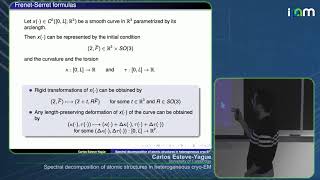
Spectral Decomposition of Atomic Structures in Heterogeneous Cryo-EM
Innovative approach to recover 3D atomic structures of flexible macromolecules from cryo-EM data, combining biological knowledge with spectral analysis to estimate conformational variations.
Inference Poses for Reconstruction of 3D Molecular Volumes from Cryo-EM Images
Explore innovative techniques for reconstructing 3D molecular structures from cryo-EM data, focusing on the cryoAI algorithm that combines machine learning and physics-based approaches for efficient processing of large datasets.
Molecular Structure Extrapolation to Zero Dose with CryoEM - IPAM at UCLA
Explore zero-dose extrapolation in cryoEM, enhancing structural detail and insights into radiation damage for improved molecular visualization and atomic model refinement.
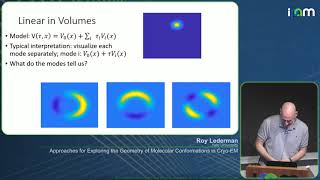
Approaches for Exploring the Geometry of Molecular Conformations in Cryo-EM
Explore advanced techniques for analyzing molecular conformations in cryo-electron microscopy, focusing on emerging approaches for complex conformational heterogeneity and associated challenges.
Machine Learning for Determining Protein Structure and Dynamics from Cryo-EM Images
Explore machine learning techniques for analyzing cryo-EM images to determine protein structure and dynamics, focusing on the cryoDRGN algorithm and its applications in structural biology.
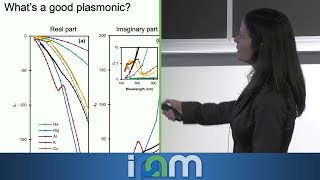
Electron and Optical Microscopy of Magnesium Nanoparticles - IPAM at UCLA
Explore advanced microscopy techniques for analyzing magnesium nanoparticles, including tomography, electron diffraction, and hyperspectral optical spectroscopy, with insights on plasmon resonances and photothermal effects.
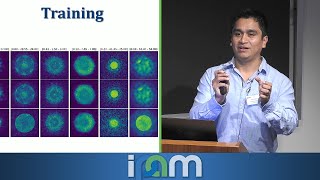
Application of Machine Learning to Electron Microscopy Data - IPAM at UCLA
Explore machine learning applications in electron microscopy, focusing on data modeling and neural networks for distortion compensation in experimental datasets.
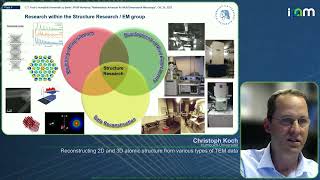
Reconstructing 2D and 3D Atomic Structure From Various Types of TEM Data
Explore advanced techniques for reconstructing atomic structures using transmission electron microscopy data, comparing phase imaging methods and discussing recent experimental results in 2D and 3D materials analysis.
Bits and Atoms - Exploring the Intersection of Machine Learning and Microscopy
Explore the intersection of machine learning and microscopy, focusing on AI models for active learning in materials discovery, automated experiments, and physics discovery through advanced microscopy techniques.
Unbiasing Procedures for Scale-Invariant Multi-Reference Alignment - IPAM at UCLA
Explore unbiasing techniques for scale-invariant multi-reference alignment in signal processing, focusing on applications in cryo-electron microscopy and distribution learning from biased, sparse batches.
Detection of Objects in Cryo-Electron Micrographs Using Geometric Deep Learning
Explore geometric deep learning techniques for object detection and segmentation in cryo-electron micrographs, focusing on unsupervised methods and graph-based transformers for complex structures.
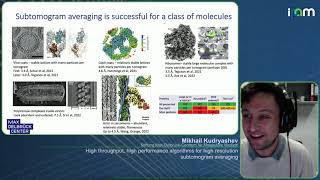
High Throughput, High Performance Algorithms for High Resolution Subtomogram Averaging
Explore high-performance algorithms for subtomogram averaging in cryo-electron microscopy, focusing on tools like TomoBEAR and SUSAN to enhance throughput and resolution in structural biology.