Materials Characterization
Comprehensive exploration of materials characterization techniques, covering optical and electron microscopy, X-ray diffraction, and transmission electron microscopy, with hands-on demonstrations and practical applications.
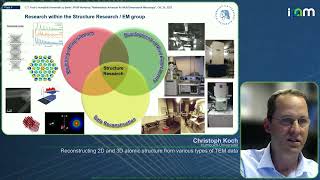
Reconstructing 2D and 3D Atomic Structure From Various Types of TEM Data
Explore advanced techniques for reconstructing atomic structures using transmission electron microscopy data, comparing phase imaging methods and discussing recent experimental results in 2D and 3D materials analysis.
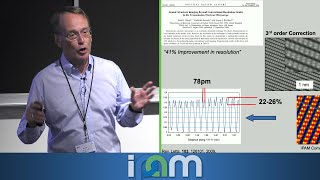
Strategies for Quantitative Imaging and Reconstruction from High Speed-Low Dose Data
Explore quantitative imaging techniques using AI/ML for analyzing large datasets of electron microscopy images, focusing on defect mapping in graphene and industrial catalyst studies.
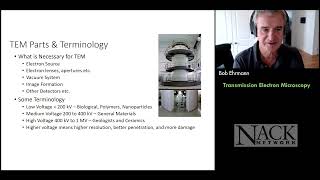
Transmission Electron Microscopy - Principles and Applications - Lecture 2
Explore transmission electron microscopy fundamentals, including microscope components, image formation, sample preparation techniques, and applications in materials science and biology.
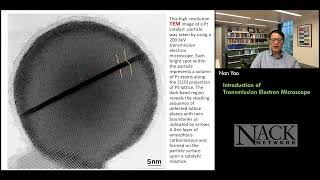
Introduction to Transmission Electron Microscopy - Lecture 1
Explore transmission electron microscopy's principles, components, and applications in nanotechnology. Learn about electron sources, lenses, aberration correction, and cutting-edge imaging techniques for nanomaterial characterization.
3D Imaging of Fruit Fly Neurons and Muscles - NCI Seminar
Explore cutting-edge 3D imaging techniques used to map fruit fly motor neurons and muscles, revealing insights into neural networks controlling locomotion and posture.
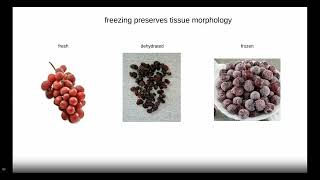
Time-resolved Electron Microscopy: Synaptic Ultrastructure Millisecond by Millisecond with High-Pressure Freezing
Explore time-resolved electron microscopy techniques for capturing synaptic ultrastructure at millisecond intervals using high-pressure freezing, revealing native cellular architecture at nanometer resolution.
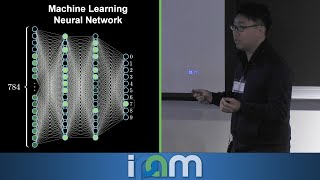
AI Inroads in Imaging Sciences for Materials Research - IPAM at UCLA
Explore deep learning applications in materials research, focusing on convolutional neural networks for transmission electron microscopy and tomographic imaging advancements.

Investigating the Cell Biology of Invasive Growth by the Rice Blast Fungus Magnaporthe Oryzae
Explore the cell biology of rice blast fungus infection, focusing on disease mechanisms, host responses, and molecular pathways involved in this devastating crop pathogen.
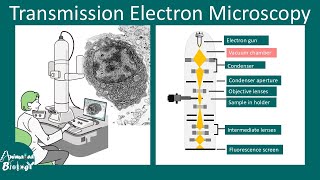
Transmission Electron Microscopy (TEM) - Principles, Applications, and Limitations
Explore transmission electron microscopy principles, applications, and limitations. Gain insights into this powerful imaging technique for studying cellular structures at high resolution.
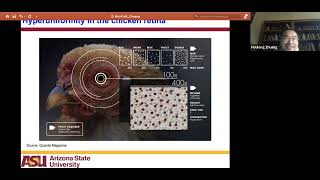
Disordered Hyperuniformity in Two-Dimensional Materials
Explore disordered hyperuniformity in 2D materials, its impact on electronic structures, and role of topological defects in preserving hyperuniformity in amorphous materials.