How to Extract the Fourier Transform with Python
Extract and visualize Fourier Transform from audio using Python and Numpy. Compare magnitude spectra of the same note on different instruments, with practical code examples provided.
Discrete Fourier Transform Explained Easily
Explore the Discrete Fourier Transform's adaptation for digital signals, its visual interpretation, and practical hacks for time and frequency domains in audio signal processing.
Defining the Fourier Transform with Complex Numbers
Explore complex numbers in Fourier transform, including coefficients, visual interpretation, and inverse transform. Gain insights into elegant mathematical representations for audio signal processing.
Demystifying the Fourier Transform - The Intuition
Gain intuitive understanding of the Fourier Transform for audio signal processing through visual explanations, avoiding complex math while focusing on practical applications in frequency domain analysis.
How to Extract Root-Mean Square Energy and Zero-Crossing Rate from Audio
Explore audio feature extraction using Python: learn to calculate Root-Mean Square Energy and Zero-Crossing Rate, and analyze their variations across music genres and audio sources.
How to Extract Audio Features
Explore acoustic feature extraction from audio signals, covering time and frequency domains, spectral leakage, windowing, frames, and hop length for enhanced audio processing understanding.
Preparing the Speech Dataset
Learn to preprocess voice data by extracting MFCCs and saving them in JSON format, essential for speech recognition and audio analysis projects.
The Most Inspiring Music Tech Projects You've Seen in a While
Explore innovative AI music projects from The Sound of AI Hackathon, covering diverse areas like music recommendation, audio generation, DJ-ing, and denoising.
Extracting Mel Spectrograms with Pytorch and Torchaudio
Master Mel Spectrogram extraction using PyTorch and torchaudio. Learn key audio transformations, resampling techniques, and practical implementation for audio processing tasks.

Automatic Song Remixes With Audio Signal Processing and Simple Machine Learning
Explore Python-based Infinite Remixer for automatic song remixes using beat tracking and Nearest Neighbours search. Learn system design, usage, experiments, and potential improvements for innovative music creation.

Sound Generation with Deep Learning - Approaches and Challenges
Explore deep learning approaches for sound generation, including raw audio and spectrogram methods. Learn about challenges, architectures, and inputs used in creating AI-generated audio.
How Electricity Works - Understanding Electrical Engineering
Explore the foundations of electromagnetic energy through Maxwell's Equations, understanding voltage, current, and magnetism. Discover practical applications in nuclear fusion, solar energy, and everyday electrical devices.
The Future of Connected PCB
Explore Fusion 360's electronic design features, including schematic simulation, manual routing, PCB outlines, and e-cooling, for comprehensive product design in a single platform.
Electromechanical Workflows Using Fusion 360 Electronics
Comprehensive overview of Fusion 360's electronic design capabilities, covering schematic creation, PCB layout, 3D integration, and collaboration features for electromechanical projects.
E-CAD + M-CAD Workflows and Tips
Explore efficient E-CAD and M-CAD workflows using Autodesk Eagle and Fusion 360. Learn time-saving techniques for electronic component cut-outs and PCB design integration.
Routing for High Speed Designs
Analyze high-speed signal routing, learn guidelines, and explore Fusion Electronics tools for efficient PCB design and impedance control.
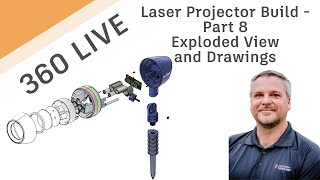
Fusion 360 Live - Laser Projector Project - Creating Exploded View and Drawings
Learn to create exploded views and detailed drawings of a complex laser projector assembly, including techniques for component manipulation, storyboarding, and technical documentation in Fusion 360.
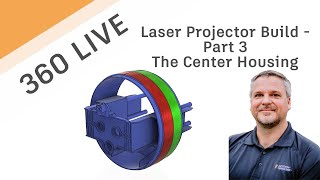
Laser Projector Build - The Center Housing
Detailed walkthrough of creating a laser projector's center housing, covering injection molding, PCB integration, and assembly techniques in Autodesk Fusion 360.

Model Based Deep Learning - Applications to Imaging and Communications - Yonina Eldar
Explore model-based deep learning for imaging and communications, merging parametric models with optimization tools for efficient, interpretable networks applicable to various real-world problems.

Safety and Robustness for Deep Learning with Provable Guarantees - Marta Kwiatkowska - Oxford
Explore techniques for ensuring safety and robustness in deep learning systems, focusing on automated certification methods, Bayesian learning, and causality in critical applications.
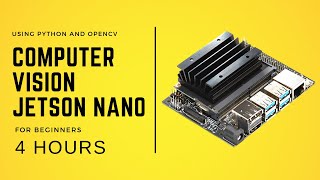
Learn Computer Vision with Jetson Nano Using Python
Learn computer vision fundamentals and apply them to real-world projects using Jetson Nano. Develop skills in eye tracking, self-driving car simulation, and face recognition with hands-on experience.