Industrial Drives - Power Electronics
Comprehensive exploration of power electronics in industrial drives, covering rectifiers, converters, PWM control, motor speed control, and vector control for enhanced performance.
Power Electronics
Comprehensive exploration of power electronics through 43 lectures, covering fundamental concepts, applications, and advanced topics in electrical engineering.
Advanced Power Electronics and Control
This course describes modern topics of Power Electronics in terms of switches, topologies and control. Moreover, the proposed course explains the application of Power Electronics in drives, Power Systems and Renewable Energy and other utility.
Pulse Width Modulation for Power Electronic Converters
Comprehensive exploration of pulse width modulation techniques for power electronic converters, covering DC-DC, DC-AC, and multilevel converters, with analysis of harmonics, losses, and applications.
Power Electronics
The course discusses power processing electronic circuits like rectifiers, AC voltage controllers, Frequency converters, DC-DC converters and inverters apart from introducing the basics of power semiconductor devices like SCRs, power BJTs, IGBTs, and MOS…
Fundamentals of Power Electronics
The course introduces the basics of power electronic devices and converters. Basic working principles, operating modes and analysis of DC-DC, DC-AC, AC-DC, and AC-AC converters would be covered. Control of power electronic converters is explained
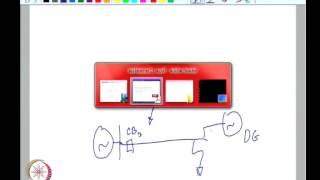
Power Electronics and Distributed Generation
Comprehensive exploration of distributed generation technologies, power electronics, and distribution systems, covering protection, islanding, inverters, and economic evaluation for modern electrical grids.
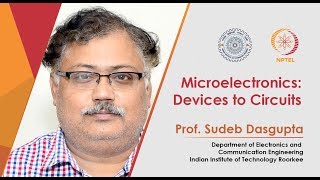
Devices to Circuits
Comprehensive exploration of microelectronics, covering BJTs, MOSFETs, amplifiers, and circuit analysis. Focuses on device physics, operational modes, and practical applications in analog and digital circuits.
DC Microgrid and Control System
Explore DC microgrid systems, their architecture, dynamics, control strategies, and applications. Learn about power electronics, renewable energy integration, and stability analysis in microgrid environments.
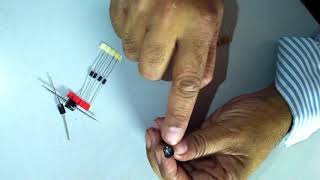
Fundamentals of Power Electronics
Explore power electronics fundamentals, covering diodes, BJTs, MOSFETs, and circuit simulation. Gain practical skills in component analysis, thermal management, and using industry-standard tools.
Introduction to Robotics
This course is a bridge course for students from various disciplines to get the basic understanding of robotics. The mechanical, electrical, and computer science aspects of robotics is covered in this introductory course.
Power Quality Improvement Technique
The power quality of modern power distribution systems is vulgarized due to the increased use of distributed sources, adjustable speed drive, nonlinear load and unbalanced load. These aspects are discussed in this course.

Inverters and Fourier Series in Power Electronics - Lecture 17
Explore Fourier Series, waveform characteristics, and single-phase full-bridge inverters in power electronics. Learn techniques to control AC output in DC-to-AC conversion.

Magnetics in Power Electronics - Modeling Practical Transformers - Lecture 11
Explore practical transformer modeling, including 2-winding and many-winding systems, with circuit models and inductance matrices. Learn about the extended cantilever model for advanced magnetic analysis.

Three-Phase Inverters and Pulse-Width Modulation - Lecture 23
Explore three-phase inverter implementation and pulse-width modulation techniques for three-phase systems in this advanced power electronics lecture from MIT.

Soft Switching for Inverters - Lecture 34
Explore soft switching techniques for inverters, including resonant pole and ARCP inverters. Examine impacts on filter design and EMI emissions in power electronics.

EMI Filters - Common-Mode and Differential-Mode Signals - Lecture 30
Explore common-mode and differential-mode signals in EMI filtering, learning design techniques for noise reduction in power electronics systems.

Resonant Power Conversion - Part 2 - Lecture 36
Explore resonant power converters, including Fundamental Harmonic Approximation method and characteristics of resonant tanks, inverters, and rectifiers in this advanced power electronics lecture.

Power Electronics: State Space Averaging and Linearization - Lecture 25
Explore state space averaging for modeling switching converters and linearization of nonlinear averaged models to realize control-to-output transfer functions in power electronics.

Load Regulation in Rectifiers - Lecture 3
Explore rectifiers' DC characteristics and load regulation, focusing on the impact of AC-side commutating reactance in power electronics systems.

Three-Phase Systems: Origins and Applications - Lecture 21
Explore the origins and advantages of three-phase power systems in this comprehensive lecture, covering polyphase concepts and their practical applications in electrical engineering.