Tips for Motivating Elementary School Kids During Distance Learning
Practical strategies for parents to motivate elementary students during remote learning, including goal-setting, curiosity-sparking, and effective reward systems.
Tips for Motivating Students During Distance Learning
Discover research-backed strategies to boost student motivation in distance learning, including goal-setting, collaboration, and building relationships for educational success.
Privacy, Stability, and Online Learning
Explore the intersection of privacy, stability, and online learning, focusing on sample complexity, private learnability, and mistake-bounded learning in classification algorithms.

Agile, Lean & Rugged - The Paper Edition
Explore how academic papers can enhance computer science practice, with insights on finding relevant research and bridging the gap between theory and application.
Five Reasons Educators Need to Embrace Live Video
Discover how live streaming can transform education, build global networks, enhance engagement, bridge academia-industry gaps, and equip students with future-ready skills and mindsets.
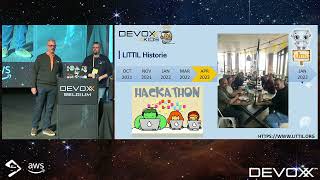
LITTIL Step for Man, Big Step for Mankind
Discover LITTIL, an open-source initiative bringing IT volunteers to primary schools for Devoxx4Kids programming days. Learn about its development, impact, and potential for global expansion.
Natural Language Digital Assistants in Higher Education
Explore the potential of digital assistants in higher education, covering key use cases, real-life examples, and implementation strategies for improved customer service and efficiency.

Advice for Artists with Kids - Balancing Art and Parenting
Discover strategies for balancing parenthood and artistic pursuits. Learn how to incorporate art into family life, explore options for artists with children, and get advice on nurturing creativity.

Learning Erlang and Elixir through Exercism and Advent of Code
Explore effective methods for learning Erlang and Elixir using Exercism and Advent of Code. Compare these resources, understand their strengths, and choose the best approach for your programming skill level.

Grappling Hooks on the Ivory Tower - This Year in Practical Academic Research
Explore practical applications of academic research in cybersecurity, including experiment testing, paper analysis, and interdisciplinary approaches. Learn to leverage academic tools for real-world problem-solving.
5 Years of Teaching C++ - A Retrospective
Insights and lessons learned from teaching C++ to undergraduates, offering valuable perspectives for educators in classroom settings.

Reimagining Science and Society: Inclusive Excellence in STEM Education
Dr. Hrabowski explores reimagining science and society, emphasizing inclusive excellence, STEM education, and cultivating empowering institutional cultures for academic success and diversity in higher education.
Metacognition in Cyber-Physical Systems
Explore metacognitive approaches in cyber-physical systems and their integration with AI, focusing on advanced system control and decision-making processes in modern computing environments.
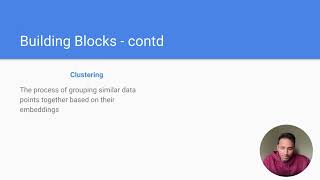
Generative AI Design Patterns - Five Key Patterns for Enhanced AI Systems
Explore five essential generative AI design patterns - RAG, Cluster Pulse, State Based Agents, Guard Rails, and Auto-Prompting - through their practical application in developing a personalized K-8 tutoring system.
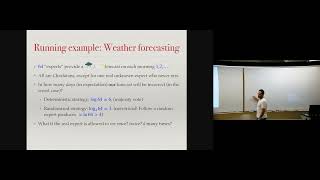
Optimal Prediction Using Expert Advice and Randomized Littlestone Dimension
Delve into optimal prediction strategies and online learning theory through exploration of expert advice systems and the randomized Littlestone dimension, focusing on practical applications in weather forecasting and image classification.
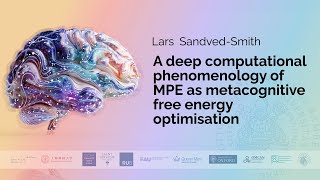
A Deep Computational Phenomenology of MPE as Metacognitive Free Energy Optimization
Explore the computational modeling of minimal phenomenal experience through Bayesian mechanics and free energy principles, examining belief dynamics and metacognitive processes.
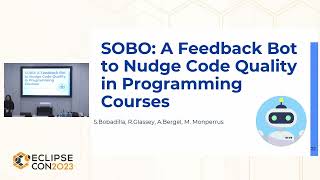
SOBO - Automatic Feedback Bot for Code Quality in Programming Courses
Discover how SOBO, an automated feedback bot, enhances code quality learning by providing real-time feedback to programming students, with insights from successful implementation at KTH Royal Institute.
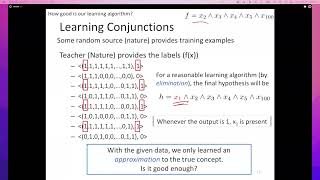
Machine Learning: Computational Learning Theory and Batch Learning - Lecture 12
Delve into formal models of learnability, focusing on batch learning concepts, mistake bound models, and PAC learning theory in machine learning applications.
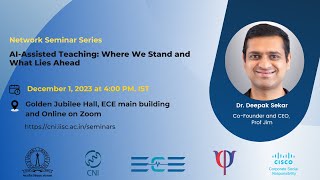
AI-Assisted Teaching: Where We Stand and What Lies Ahead
Discover how AI is revolutionizing education through automated generation of teaching materials, with demonstrations of cutting-edge technology and insights into future applications in educational settings.
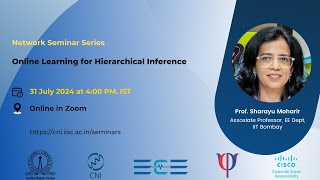
Online Learning for Hierarchical Inference
Explore hierarchical inference optimization through online learning algorithms, focusing on efficient distributed inference between edge devices and cloud servers using confidence metric thresholds.

Gender Imbalance in Higher Education, Physics, Engineering, and Photonics
Explore critical insights into gender imbalance in STEM fields, focusing on networking opportunities for women scientists and creating inclusive academic environments in Indian institutions.