Ecological Impacts of the Deepwater Horizon Oil Spill - 2011 AGU Fall Meeting
Researchers discuss long-term effects of Deepwater Horizon oil spill on Gulf ecosystems, including heavy metal contamination in oysters, impacts on coastal marshes, and changes in bacterial populations.
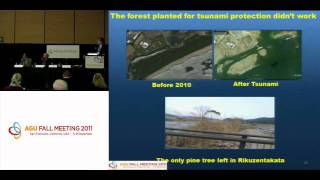
The 11 March 2011 Japan Tsunami - New Insights and Impacts - Press Conference
Insights from the 2011 Japan tsunami: wave behavior, coastal impacts, and global effects. Scientists discuss new findings on tsunami dynamics, damage patterns, and ecological consequences.
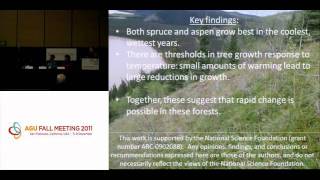
Small Climate Changes, Big Ecological Impacts - Fall Meeting 2011
Exploring how small climate changes can trigger rapid ecosystem shifts, including potential impacts on boreal forests and arctic tundra, and historical examples of regime shifts affecting megafauna.
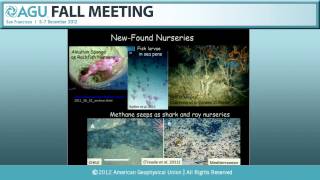
Deep Margins Under Pressure - Climate Change and Human Impacts on Continental Slopes
Exploring deep continental margins: their ecological importance, vulnerability to climate change, and challenges from human exploitation. Calls for improved stewardship of these crucial deep-ocean ecosystems.
Disturbance Impacts and Responses in Forest Ecosystems - 2012
Explore forest ecosystem responses to climate change, droughts, fires, and other disturbances. Gain insights into carbon dynamics, plant hydraulics, and community structure across various scales and regions.
The Last Arctic Sea Ice Refuge - Projections and Implications
Exploring potential year-round Arctic sea ice refuges and their importance for polar ecosystems. Research on ice formation, currents, and habitat requirements for Arctic wildlife preservation.
Geoscience Grab Bag: Diverse Earth and Space Science Research - Part 2
Diverse Earth and space science discoveries: iceberg travel, drone-based landmine detection, Sun's interior, invasive crayfish impacts, and space-based volcano monitoring. Experts present cutting-edge research across geosciences.
The Great Pacific Garbage Patch - Size, Composition, and Policy Implications
Explore the Great Pacific Garbage Patch's size, composition, and impact. Learn about research findings and potential policy solutions to address this growing environmental concern.
Rachel Carson Lecture - Ocean Science Perspectives
Explore ocean dynamics and climate change impacts with MIT's Paola M Rizzoli in this insightful lecture honoring Rachel Carson's legacy in marine science and environmental awareness.
Sharks - Predator or Prey?
Explore the fascinating world of sharks, examining their role as both predators and potential prey in marine ecosystems. Gain insights into shark biology, behavior, and conservation.
A Comparative Approach to Thermal Biology by Sean Tomlinson
Explore thermal biology through a comparative lens, examining how different organisms adapt to temperature variations and the implications for conservation efforts.
How Poor Land Management Contributes to Flooding
Ecologist Fezile Mhlanga explores the link between improper land use management and flooding, offering a fresh perspective on addressing this global issue through sustainable practices and soil rehabilitation.
Maps, Networks and Mechanisms: System Modeling and Analysis of Disease Maps
Explore disease map modeling and analysis techniques for understanding complex biological systems and their applications in cancer research and treatment strategies.
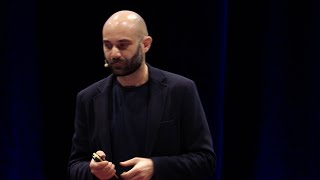
The Unseen World Around Us - Combating Plant Blindness
Discover the hidden wonders of plants, their remarkable abilities, and crucial role in our world. Learn to combat "plant blindness" and appreciate the significance of flora in daily life and future innovations.
Modulation of Ensemble-level TNFR1 Mediated Apoptosis Response - Lecture 2
Explore ensemble-level TNFR1 mediated apoptosis response modulation, delving into advanced concepts of cancer cell death mechanisms and potential therapeutic implications.
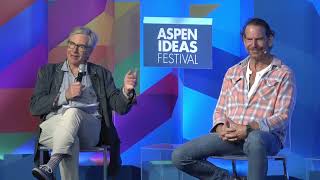
Wolves at Our Doorstep - Wildlife Education and Wolf Reintroduction in Colorado
Explore wildlife education and Colorado's wolf reintroduction plan, featuring insights from Fat Bear Week's creator and ecologists, with a special wolf presentation.
Dynamics of Biological Systems - Lecture 4
Explore biological dynamics using physics tools to model predator-prey oscillations, ecosystem chaos, and microbial swimming. Learn to predict species competition, population changes, and collective behavior in fluids.
Dynamics of Biological Systems - Lecture 1
Explore biological dynamics using physics tools to model complex living systems, from predator-prey oscillations to bacterial motility, in this introductory course for undergraduates.
Dynamics of Biological Systems - Lecture 2
Explore biological dynamics using physics tools to model predator-prey oscillations, ecosystem chaos, and microbial swimming. Learn to predict species competition, population changes, and collective behavior in fluids.
Dynamics of Biological Systems - Lecture 3
Explore biological dynamics using physics tools to model predator-prey oscillations, ecosystem chaos, and microbial swimming. Learn to predict species competition, population changes, and collective behavior in fluids.
Ecology and Perpetual Evolution in High Dimensions
Explore ecological dynamics and evolutionary processes in complex, high-dimensional systems. Gain insights into adaptive mechanisms and their impact on biological diversity and ecosystem stability.