An Introduction to OSL Dating and Luminescence Signals
Explore the fundamentals of Optically Stimulated Luminescence dating, its applications in sedimentology, and how luminescence signals provide insights into transport-deposition processes.
Observing Turbidity Currents in the Wild - New Insights from Direct Field-Scale Measurements
Explore new insights into turbidity currents, powerful underwater sediment avalanches, through recent field-scale measurements. Learn about their impact on marine ecosystems and infrastructure.
The World's Most Unloved Sedimentary Structures - A New Process Model for Flutes and Tool Marks
Explore a new process model for flutes and tool marks in deep-marine environments, challenging long-standing theories and examining implications for sedimentology and flow dynamics.
Sequence Stratigraphy of Late Paleozoic Cyclothems
Explore the formation, characteristics, and sequence stratigraphy of cyclothems in Carboniferous and Permian paleotropical successions, examining their depositional environments and debating their origins.
Marine and Near Surface Diagenesis in Carbonate Systems
Explore marine and near-surface carbonate diagenesis through expert presentations on biogeochemical drivers, karst geobody extraction, microporosity distribution, and petrophysical properties of calcitic and aragonitic deposits.
The Carbonate Forum - Platform Scale and Fault Controlled Fluid Flow
Explore platform-scale fluid flow and fault-controlled dolomitization in carbonate systems through expert presentations on isotope analysis, localization controls, and reactive transport modeling.
Advent of the Anthropocene Epoch - Quantifying Drivers and Impacts Since 1950 CE
Explores the Anthropocene epoch's onset around 1950, examining human energy consumption, population growth, and their profound impacts on Earth's systems and stratigraphic record.
Microtidal Meanders and Their Deposits - Lessons from the Venice Lagoon, Italy
Explore microtidal meanders in the Venice Lagoon, examining morphodynamics, sedimentary processes, and depositional patterns in this unique Mediterranean coastal environment.
Limestones: An Essential User Guide to Sediments That Dissolve, Precipitate and Grow
Explore limestone formation, importance, and applications in climate studies and sustainable solutions. Learn about carbonate sedimentology's role in understanding Earth's history and future environmental challenges.
A Guide to Earth, Life, and Terrestrial Carbonates for the Intergalactic Sedimentologist
Explore Earth's terrestrial carbonates through time, from soil to hot springs. Discover their role in studying planetary evolution and life's interplay with environments across the galaxy.
Extreme Events Archived in the Geological Record of Deep-Sea Trenches
Explore ultra-deep hadal trenches to unravel earthquake history and understand sediment mass and carbon transfer in this rarely-studied environment of our planet.
Magnitude and Drivers of Short-Term Sea Level Fluctuations in the Cretaceous - A Review
Explore Cretaceous sea level changes, their magnitudes, and driving forces. Discover the impact of aquifer eustasy and the role of glacio-eustasy in shaping Earth's ancient oceans.
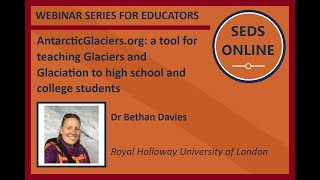
Teaching Glaciers and Glaciation with AntarcticGlaciers.org - Resources for High School and College Educators
Explore AntarcticGlaciers.org, a comprehensive resource for teaching glaciers and glaciation. Learn how to utilize its content, case studies, and activities to enhance your lessons for high school and college students.

The Evolution of Grasslands - What Plant Fossils Reveal About a Major Ecosystem Change
Explore the evolution and spread of grasslands over 30 million years through microscopic plant fossils, revealing insights into this major ecological transformation.

Ecosystem Jenga - What Tiny Fossils Tell Us About a Massive Extinction
Explore the dinosaur extinction debate through microfossil research in Saskatchewan, examining the role of the bolide impact and its implications for understanding modern climate change.
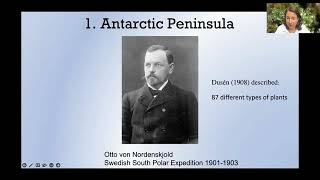
Ancient Floras of Antarctica as Indicators of Past Climate
Explore Antarctic vegetation history and its role in revealing past climate changes, from greenhouse to icehouse conditions, through fossil records and sediment analysis.
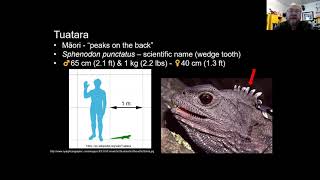
The Evolutionary History of Tuatara and its Extinct Relatives
Explore the fascinating evolution of Tuatara and its extinct relatives, uncovering new insights from a fossil discovery in Wyoming that sheds light on the morphology and history of these ancient reptiles.
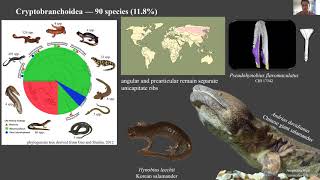
Salamanders from the Mesozoic Yanliao and Jehol Biotas of Northern China
Explore ancient salamander fossils from China's Jurassic and Cretaceous periods, revealing insights into their diversity, life histories, and evolutionary relationships.
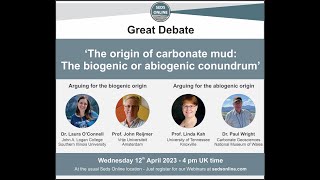
The Origin of Carbonate Mud - Biogenic vs Abiogenic Theories
Explore the debate on carbonate mud formation: biogenic vs. abiogenic theories. Examine evidence, processes, and environmental factors influencing this crucial marine sediment's origin.
The Complexity of Processes, Deposits and Stratigraphic Architecture in Gravity Current Systems
Explore diverse gravity current processes in coarse-grained flows on steep slopes, examining outcrop examples from Greece and their implications for sediment transport and deposition.
What Does the Sedimentary Record Tell Us About the Future of Rivers?
Explore how river sedimentary facies serve as proxies for past precipitation patterns, offering insights into future climate-driven changes in river systems.