The Potential of Fluvial Carbonates as Archives of Climate and Environmental Conditions
Exploring fluvial carbonates as sensitive indicators of past climate and environmental conditions, comparing present and past records from various basins to uncover high-resolution multiproxy data.
Paleotempestology - Using Sedimentary Deposits to Reconstruct Storm Impacts over Millennial Timescale
Explore paleotempestology: learn how sedimentary deposits reveal long-term storm impacts and climate patterns, offering insights beyond short-term instrumental records.

Carbonate Forum 2022 - Advances in Carbonate Geology Research
Explore cutting-edge research on carbonate systems, from geological modeling to diagenesis. Gain insights into depositional processes, microbialite morphology, and innovative applications of AI in carbonate sedimentology.
Carbonate Diagenesis: Insights from Experimental Work
Explore carbonate diagenesis through field, analytical, and experimental approaches, examining case studies from speleothems to burial diagenetic carbonates and discussing state-of-the-art research implications.
Reef Carbonate Production and Measuring Reef-Derived Sediment Generation Rates
Explore recent research on coral reef carbonate production, ecological impacts on reef growth, and challenges in quantifying sediment generation rates for reef-building and coastal environments.
Microbial Carbonates and High-Relief Carbonate Platforms
Explore microbial carbonates' dominance during biotic crises and environmental changes, examining high-relief platforms' facies, geometry, and architecture in ancient carbonate systems.
Flooding and Its Sedimentological Footprint
Explore the sedimentological impacts of flooding events, examining how water-driven processes shape landscapes and leave lasting geological evidence.
Controls on Submarine Landslide Formation: The Key Role of Weak Layers
Explore the formation of submarine landslides, focusing on weak layers' impact. Integrates multi-scale datasets to investigate sediment structure and composition in underwater slope stability.
Marine Carbonate Factories: Sedimentation Patterns and Sequence Stratigraphy
Explore marine carbonate sediment production systems, their controlling factors, and unique sequence stratigraphic patterns for different carbonate factories in various environmental settings.
A Geoarchaeological Perspective on Mississippi Delta Communities - Challenges and Trajectories
Explores human-landscape interactions in the Mississippi Delta through geoarchaeological research, offering insights into prehistoric settlements and future challenges for coastal communities.
Viruses in Carbonate Precipitation - The New Frontier in Earth Sciences
Explore the geological history of viruses, their preservation in fossils, and their environmental roles. Discover the surprising impact of these microscopic entities on Earth's history and ecosystems.
3D Architecture and Along-Bend Sediment Distribution of a Hypertidal Point Bar in France
Explore 3D architecture and sediment distribution of a hypertidal point bar in Mont-Saint-Michel Bay, examining depositional patterns, tidal influences, and geomorphological processes shaping coastal landscapes.
Carbonate Diagenesis: Recent Advances and Paradigm Shifts
Explore advancements in carbonate diagenesis, from analytical techniques to observation-based studies, revealing paradigm shifts in marine, meteoric, and burial processes.
Discontinuity in Equilibrium Wave-Current Ripple Dimensions on Mixed Clay-Sand Substrates
Investigates ripple formation on mixed sand-clay beds, revealing clay content thresholds and their impact on ripple size, shape, and bed stability under combined flow conditions.
Evolution in a Rapidly Changing World - Human Impact on Evolutionary Trajectories
Explore how human activity is altering the evolutionary trajectory of life on Earth, with insights from Dr. Sarah Otto of the University of British Columbia.
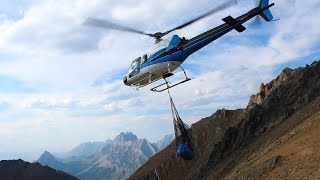
An Ankylosaur from the Foothills of Alberta - Oldest Dinosaur Fossil in Western Canada
Explore the discovery of western Canada's oldest dinosaur fossil - an ankylosaur from Alberta's foothills. Dr. James Campbell discusses this significant paleontological find.
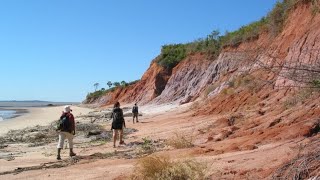
The Origins and Evolution of Madagascar's Modern Vertebrates
Explore Madagascar's unique biodiversity, fossil discoveries, and evolutionary history. Learn about the island's geological past and efforts to preserve its remaining species.

The World's Best Preserved Armoured Dinosaur - Discovery and Research of Borealopelta markmitchelli
Explore the remarkable Borealopelta markmitchelli, a spectacularly preserved ankylosaur from Alberta. Learn about its discovery, preparation, and the unprecedented insights it provides into Early Cretaceous dinosaur life.
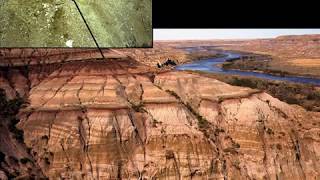
A Revised Chronostratigraphy for Dinosaur Provincial Park
Explore updated chronostratigraphy of Alberta's Dinosaur Provincial Park, examining revised timelines for Oldman, Dinosaur Park, and Bearpaw formations with Dr. David Eberth.
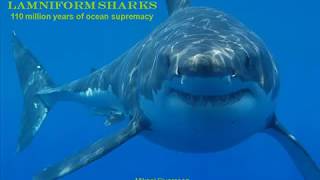
Lamniform Sharks - 110 Million Years of Ocean Supremacy
Explore the 110-million-year reign of lamniform sharks, from their evolution to their dominance in Earth's oceans, in this paleontological journey through time.
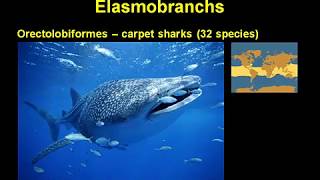
Freshwater Sharks and Rays of the Scollard Formation, Alberta - Paleontological Insights
Explore freshwater sharks and rays from Alberta's Scollard Formation, uncovering their unique characteristics and evolutionary significance in this paleontological investigation.