Shallow Water Processes and Sediments in Carbonate Systems - Session 3
Explore carbonate sedimentology through diverse topics: microbial mounds, oncolites, bryostromatolites, abiotic carbonate formation, and gypsum precipitation in pelagic successions.
Carbonate Platforms, Margins, and Slopes - Session 1
Exploration of carbonate platforms, margins, and slopes through case studies in South China Sea, Red Sea, Senegal, and Mediterranean, focusing on seismic stratigraphy, depositional signatures, and platform evolution.
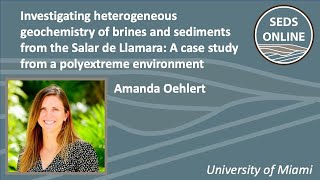
Investigating Heterogeneous Geochemistry of Brines and Sediments from the Salar de Llamara
Explore the unique geochemistry of Salar de Llamara's saline lagoons, examining brine chemistry and sediment cores to understand extreme environments in the Atacama Desert.
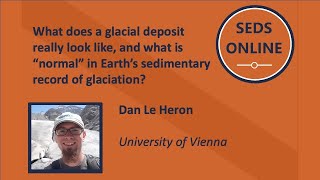
Glacial Deposits and Earth's Glaciation Sediment Record - What is Normal?
Explore Earth's diverse glacial deposits across geological eras, challenging assumptions about 'typical' glacial sediments and encouraging critical analysis of glaciation records.
The Contourite-Turbidite Controversy After 50 Years
Explores the ongoing debate between contourites, turbidites, and hemipelagites in deepwater systems, discussing process overlaps, facies characteristics, and recent advancements in distinguishing these sedimentary deposits.
Fluvial Models - Assessing Variability in Distributive Fluvial Systems
Explore variability in fluvial systems through case studies of Huesca and Salt Wash, examining facies models and their implications for interpreting geological records and building predictive models.
Tide-Dominated and Tide-Influenced Depositional Systems
Explore modern and ancient tidal systems, examining challenges in their investigation and common misconceptions about sedimentary structures and depositional environments.
Reconstructing Flow Properties and Depositional Environment from Sole Marks - The First Field Test
Explore how sole marks can reveal flow properties and depositional environments, with insights from field data in the Aberystwyth Grits Group of West Wales.
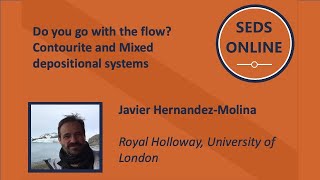
Contourite and Mixed Depositional Systems: Understanding Deep-Water Processes
Explore deep-water processes, contourites, and mixed depositional systems shaped by bottom currents. Learn about their formation, evolution, and significance in modern oceans and ancient records.
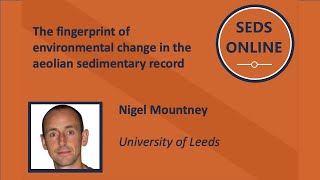
The Fingerprint of Environmental Change in the Aeolian Sedimentary Record
Explore how aeolian sedimentary systems record environmental changes, using field, remote-sensing, and modeling approaches to reconstruct past desert environments and predict future responses to climate change.
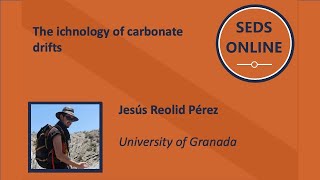
The Ichnology of Carbonate Drifts
Explore bioturbation in carbonate drifts to uncover detailed palaeoenvironmental conditions, enhancing understanding of past oceanic and ecological settings.
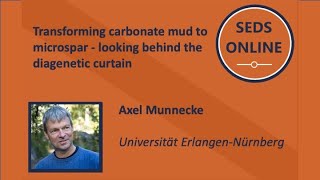
Transforming Carbonate Mud to Microspar - Looking Behind the Diagenetic Curtain
Explore the fascinating process of carbonate mud transformation to microspar, uncovering the intricate details of diagenesis in sedimentary geology.
Fates of World Major River-Derived Sediments - Along-shore vs Cross-shelf Transport
Explores sediment transport patterns of major rivers, highlighting extensive alongshore dispersal and formation of distal mud depocenters, with few rivers directly reaching deep sea.
Ocean Chemistry and Hydrodynamics Focus Mud Production on Great Bahama Bank - Whitings Trigger Analysis
Explore the mystery of whitings in the Bahamas, examining ocean chemistry and hydrodynamics to understand lime mud formation and its geological implications.
The Genesis of Limestone-Marl Alternation - Testing an Environmental Proxy
Explore the formation of rhythmic carbonate lithologies, examining genesis models, diagenetic biases, and data analysis techniques for limestone and marl alternations.
Supercritical Flows: The Sedimentology of the Upper Flow-Regime
Explore sedimentology of supercritical flows, including bedforms, Froude number transitions, and cyclic steps. Understand flow regimes and their impact on sediment patterns in fluid dynamics.
A Journey Through Tides in Earth's History
Explore Earth's tidal history, lunar age discrepancies, and continental impacts on tides. Discover how tidal energy influences Earth's rotation and lunar distance, with implications for planetary systems.
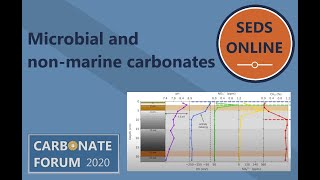
Microbial and Non-Marine Carbonates
Explore microbial and non-marine carbonates through analyses of freshwater dolomites, hydromagnesite-magnesite playa, and lacustrine microbial carbonates, offering insights into their formation and characteristics.
Emerging Technologies for Quantitative Interpretation of Carbonate Rock Images
Explore machine learning applications for automatic identification of carbonate facies using core images, improving accuracy and consistency in geological classifications.
Deep Water Sediment Deposition from Hybrid Contour-Turbidity Currents
Explore the interaction between sediment gravity flows and bottom currents in continental slope morphologies, revealing new insights from laboratory experiments on hybrid bottom-turbidity currents.
Virtual Graphic Logs: Applications for Teaching and Research
Explore virtual graphic logging for sedimentary research and teaching. Learn key geological field skills, improve observational techniques, and enhance inclusivity in classroom environments.