The Anthropocene: Confronting the Prospects of a +4°C World - Part 1
Explore the Anthropocene era and its implications for a +4°C world through expert discussions on paleontology, land cover changes, international law, climate impacts, and science communication.
The Geophysics and Geochemistry of Terrestrial Environments
Explore cutting-edge research on subduction zones, including fluid dynamics, isotope records, mineral growth, and links to volcanism. Gain insights into Earth's deep processes from leading geoscientists.
DEEPSEA CHALLENGE - New Science and Technology at Extreme Depths
Explore groundbreaking science and technology advancements for extreme ocean depths, featuring insights from the DEEPSEA CHALLENGE expedition and its implications for deep-sea research.
Mars Rover Opportunity's Investigations at Endeavour Crater
Explore Mars rover Opportunity's latest findings at Endeavour Crater, including unusual textures and potential clay minerals, with updates on ongoing investigations and future plans.

Transport and Impacts of African Dust on Weather and Climate - Part 1
Explore African dust's impact on tropical cyclones, climate, and ice nucleation. Discover trends in dust transport to the Caribbean and its influence on the hydrologic cycle and tropical convection.
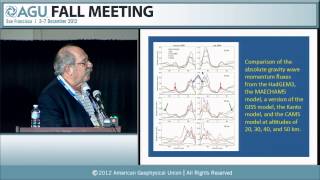
Gravity Waves in the Atmosphere and Ocean - Part 1
Explore cutting-edge research on gravity waves in atmosphere and oceans. Topics include aviation turbulence, internal wave dynamics, predictability, observations, and climate model comparisons.
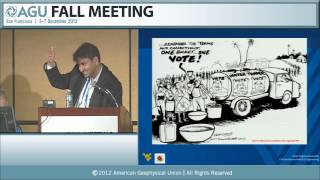
Hydroepidemiology - Understanding Connections Between Hydrology and Human Health - Part 2
Explore connections between hydrology and human health, focusing on waterborne diseases, climate change impacts, and predictive modeling for outbreaks in various regions.
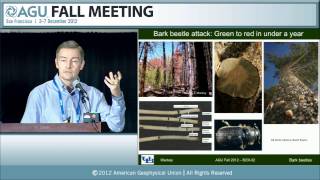
Disturbance Impacts and Responses in Forest Ecosystems - 2012
Explore forest ecosystem responses to climate change, droughts, fires, and other disturbances. Gain insights into carbon dynamics, plant hydraulics, and community structure across various scales and regions.
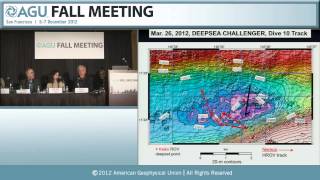
Science and Technology at Extreme Depths - DEEPSEA CHALLENGE Expedition Findings
Explore deep-sea innovations and discoveries with James Cameron and scientists from the DEEPSEA CHALLENGE Expedition, including new species and extreme gigantism in the ocean's depths.
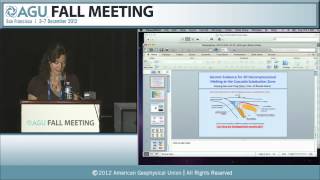
Comprehensive Understanding of Melting Processes at Subduction Zones - Part 1
Explore cutting-edge research on mantle melting in subduction zones, covering experimental studies, numerical models, seismic imaging, and geochemical analyses to understand magma formation processes.
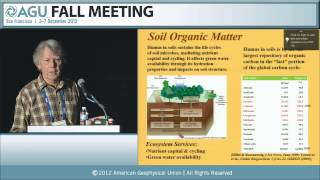
The Soil Underfoot - Green Water and Global Food Security
Explores soil's crucial role in global food security through green water management, emphasizing the need for deeper understanding of soil functions in the water cycle and their response to land-use changes.
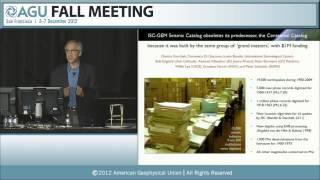
Defeating Earthquakes - Global Earthquake Model and Risk Mitigation
Exploring earthquake risk awareness, global impact, and mitigation strategies through the Global Earthquake Model initiative to reduce casualties and improve urban resilience worldwide.
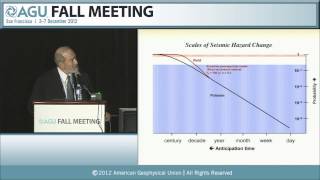
Earthquake Forecasting as a System-Science Problem - Gutenberg Lecture
Explores earthquake forecasting as a system science, discussing probabilistic models, deterministic simulations, and advances in hazard mapping. Highlights challenges in reconciling long-term stress renewal with short-term clustering.
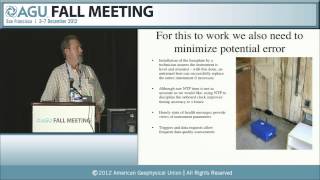
Citizen-Empowered Seismology - Advances in Public Participation
Explore innovative citizen science initiatives in seismology, including USGS "Did You Feel It?", Quake-Catcher Network, NetQuakes, and smartphone-based earthquake detection methods.
Evidence for Human Effects on Global Climate
Explore evidence for human-induced climate change with insights from an American Physical Society subcommittee, covering key findings and implications for global climate policy.
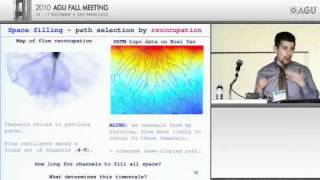
Noise is the New Signal: Moving Beyond Zeroth-Order Geomorphology - 2010 Sharp Lecture
Explore geomorphic transport laws, scale dependence, and robust patterns in Earth's surface processes. Gain insights into sediment transport systems and future research directions.
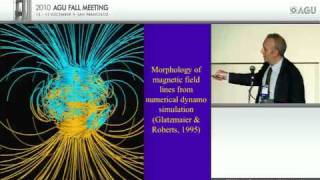
Geomagnetic Secular Variation and Earth's Core Dynamics - Edward Bullard Lecture
Explore Earth's core dynamics through geomagnetic secular variation. Gain insights into historical data, field morphology, and recent advancements in understanding fluid motions and magnetic induction.
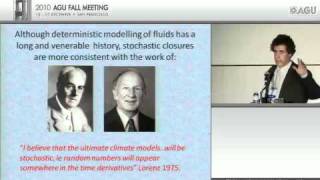
A Very Grand Challenge for the Science of Climate Prediction - Towards a Community-Wide Probabilistic Earth-System Model
Explore the future of climate prediction with a proposed community-wide probabilistic Earth-system model, addressing challenges and potential advancements in atmospheric science.
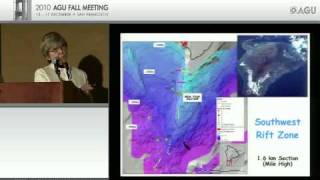
Geochemical Insights Into Mantle Geodynamics and Plume Structure
Explore mantle geodynamics and plume structure through geochemical analysis, gaining insights into Earth's deep processes and their impact on surface geology.
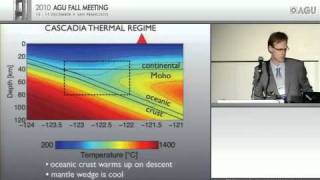
The Fate of Water in the Cascadia Forearc
Explore the complex journey of water in Cascadia's forearc through seismic profiles, revealing insights into plate boundaries, tremors, and oceanic crust behavior.
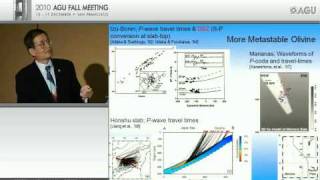
Global Tectonics: Quakes, Rocks, and Volatiles in the Mantle Transition Zone - Birch Lecture
Explore global tectonics, earthquakes, and mantle transition zone dynamics. Discover connections between seismic data, subduction zones, and petrological anomalies in this comprehensive geophysical lecture.