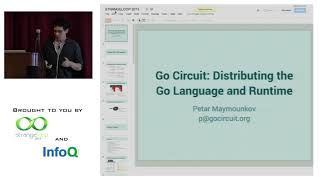
Distributing the Go Language and Runtime
Explore Go Circuit, an extension to Go for distributed systems. Learn about spawning remote goroutines, simplified cloud application development, and powerful lifecycle maintenance tools.
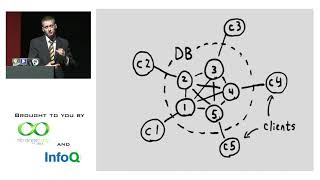
Partitions for Everyone
Explores network partitions in distributed systems, revealing design limits and bugs. Demonstrates challenges in building reliable distributed services through real-world testing of popular systems.
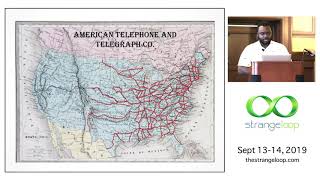
Apache Pulsar and the Legacy of Telegraphy
Explore the parallels between wireless telegraphy and Apache Pulsar, uncovering design principles for distributed, low-latency messaging systems. Gain insights into Pulsar's architecture, features, and future potential.
Designing Augmented Reality Systems for Speed
Explore designing AR systems for speed, balancing complex algorithms with resource limitations. Learn trade-offs, concurrency, real-time interactions, and caching in AR development.

Scalable Anomaly Detection - With Zero Machine Learning
Explore Netflix's innovative approach to detecting anomalies in complex distributed systems using stream processing and simple algorithms, without relying on machine learning.
Building a Canary Testing Framework
Learn to build a canary testing framework for distributed systems, covering architecture, implementation in Go, test configurations, and result visualization using Prometheus.
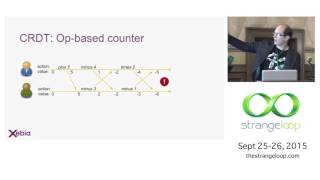
CRDTs Illustrated
Explore CRDTs for partition-tolerant applications, covering concepts, implementation methods, and real-world examples in distributed storage and offline-friendly web apps.
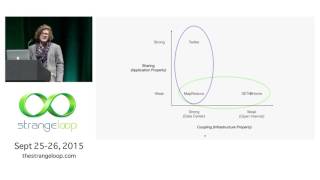
Distributed, Eventually Consistent Computations
Explore Lasp, a new programming model for distributed computations, combining convergent data structures with dataflow execution for large-scale applications with limited connectivity and unreliable networks.

The Art of Service Discovery at Scale
Explore service discovery in microservices, focusing on Netflix's Eureka. Learn about high availability, multi-datacenter awareness, and favoring availability over consistency in network partitions.
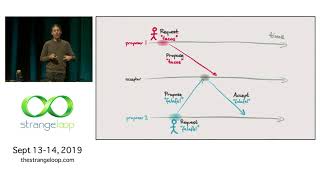
Correctness Proofs of Distributed Systems with Isabelle
Explore formal verification of distributed systems using Isabelle/HOL. Learn to prove correctness of algorithms, focusing on consensus and agreement properties in infinite state spaces.
Federated Learning - Private Distributed ML
Explore federated learning for private, distributed machine learning across devices or entities, addressing data sharing constraints while enabling collaborative model training.
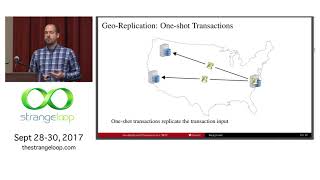
Geo-Replicated Transactions in 1.5RTT
Explore geo-replicated transactions with a new commit protocol that reduces latency in distributed systems. Learn about Consus, a key-value store optimizing transaction execution across data centers.

The Hows and Whys of a Distributed SQL Database
Explore the evolution of databases and dive into distributed SQL systems, focusing on CockroachDB's design choices for scalability, consistency, and high availability.
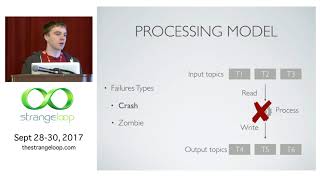
EoS in Kafka - Listen Up, I Will Only Say This Once
Explore Kafka's exactly-once semantics, including idempotence and transactions. Learn about distributed transaction mechanics, two-phase commit protocols, and future improvements for stream processing.

Building a Distributed Task Scheduler With Akka, Kafka, and Cassandra
Explore building a resilient distributed task scheduler using Akka, Kafka, and Cassandra, addressing challenges like dynamic load adjustment, task ordering, and datacenter outages.
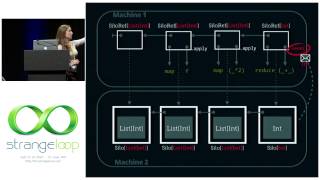
Function Passing Style - Typed, Distributed Functional Programming
Explore function-passing style for distributed programming, leveraging Scala's type system and language features to enable safe, asynchronous computation on immutable data across distributed environments.
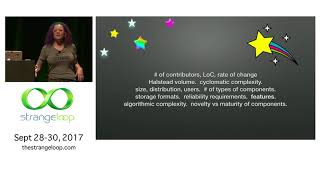
Observability for Emerging Infra - What Got You Here Won't Get You There
Explore modern infrastructure challenges and the shift from traditional monitoring to observability. Learn about event-driven approaches, complexity management, and the future of debugging distributed systems.
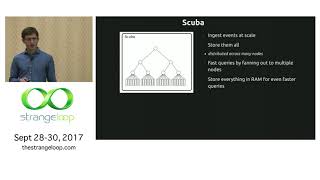
Why We Built Our Own Distributed Column Store
Explore the architecture and implementation of Retriever, a custom-built distributed column store database inspired by Facebook's Scuba, designed for efficient querying of large-scale event data.
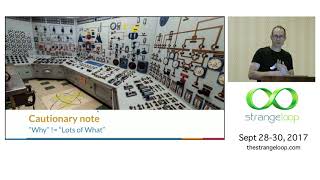
The Holy Grail of Systems Analysis - From What to Where to Why
Explore advanced distributed tracing techniques to pinpoint latency issues in complex microservice architectures, moving beyond traditional monitoring approaches for more effective system analysis.
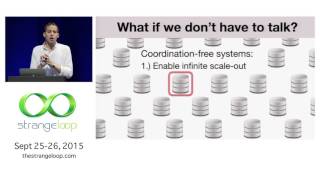
When "Worst" is Best in Distributed Systems
Explore how designing distributed systems for worst-case network behavior can paradoxically improve typical performance, with practical lessons for web, transaction processing, and database applications.

How to Have Your Causality and Wall Clocks, Too
Explore distributed monotonic clocks for causality and wall clock time synchronization in microservices. Learn about implementation, protocols, and applications in distributed systems.