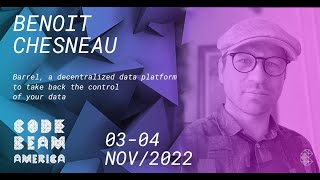
Barrel: A Decentralized Data Platform for Data Control
Explore a decentralized data platform for controlling and filtering data across sites using P2P networks, HTTP, and web technologies. Learn about open-source libraries in the Erlang ecosystem.
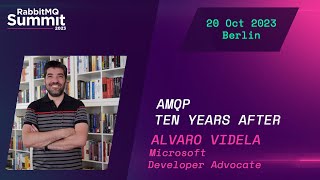
AMQP Ten Years After - Evolution and Interoperability in Cloud Messaging
Explore AMQP's evolution, its adoption by major players, and its role in cloud interoperability. Learn how RabbitMQ and Azure Messaging leverage AMQP for scalable, vendor-agnostic solutions in real-time analytics.
A New Perspective on Commutativity in Verification
Explore a fresh perspective on commutativity in program proofs, focusing on its application in automated verification goals for various program types and properties.

Choosing the Right Platform for Your Event-Driven App - Apache Pulsar Overview
Explore Apache Pulsar's features for event-driven apps: scalability, elasticity, durability, geo-replication, multi-tenancy, and ecosystem compatibility. Learn about its architecture and benefits for data streaming.
Architecting for Resilience: Strategies for Fault-Tolerant Systems - DevOps 2024
Explore strategies for building fault-tolerant systems, covering failure types, design requirements, architecture, and redundancy in DevOps environments.
Observability Standardization: The Elephant in the Room - DevOps 2024
Explore observability standardization challenges and solutions, focusing on Netdata's approach to efficient monitoring, distributed systems, and AI-driven insights for DevOps professionals.
Leveraging the Actor Model in Financial Transaction Systems
Explore the Actor Model's application in financial systems, covering transaction processing, lost update problems, and asynchronous solutions using Kafka and Actor Model implementation.
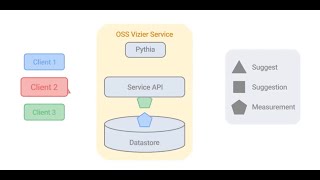
Open Source Vizier: Distributed Infrastructure for Blackbox Optimization and Hyperparameter Tuning
Explore Google's Vizier system for blackbox optimization and hyperparameter tuning, covering its distributed infrastructure, Python implementation, and integration with AutoML ecosystem.
Trillium: Higher-Order Concurrent and Distributed Separation Logic for Intensional Refinement
Explore Trillium, a separation logic framework for intensional refinement in concurrent and distributed systems. Learn about strengthening program logics to prove safety and liveness properties.

IPFS Cluster Overview - Data Orchestration Across IPFS Daemon Swarms
Overview of IPFS Cluster: data orchestration across IPFS daemons, allocating and tracking distributed pinsets. Covers history, roadmap, garbage collection, production use, and key features like load balancing.

Seamless Services for an Open World
Explore the next generation of open services with verifiable data and computation, enabling seamless, location-free, and privacy-respecting systems that scale superlinearly and interoperate without pre-negotiation.
Querying Decentralized Data in Rhizomatic Systems
Explore Rhizome, a decentralized database for InterPlanetary Linked Data, and learn how it empowers developers to build innovative peer-to-peer applications with enhanced consistency and privacy.

Debugging, Logging and Profiling in Distributed Systems
Explore distributed tracing for monitoring microservices, focusing on Google's Dapper system and open-source implementations like Zipkin and OpenTracing, with practical applications for PHP developers.
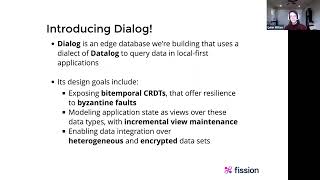
Fission Reactor: Dialog - A Far-Edge Database for Local-First Applications
Explore Dialog, a far-edge database for local-first applications and autonomous computing agents, enabling decentralized data management and offline-first functionality.
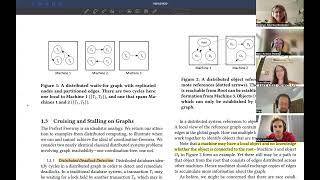
CALM Theorem in Distributed Systems
Explore distributed consistency with the CALM theorem, examining its implications for system design and data management in distributed environments.
Raft Consensus Algorithm - Distributed Systems Reading Group
Explore Raft consensus algorithm with John Ousterhout, discussing its design, implementation challenges, and practical applications in distributed systems.
Conflict-Free Replicated Data Types (CRDTs) - April 2022
Explore Conflict-free Replicated Data Types (CRDTs) in distributed systems, understanding their principles, applications, and implementation challenges.
Making CRDTs Byzantine Fault Tolerant
Explore techniques for enhancing Conflict-free Replicated Data Types (CRDTs) to withstand Byzantine faults, improving distributed system resilience and reliability.
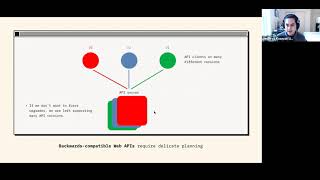
Project Cambria: Managing Schema Change in Distributed Systems
Explore techniques for managing schema changes in distributed systems using Cambria, a TypeScript library employing bidirectional lenses to express schema relationships and separate compatibility code.
Radicle: Secure Peer-to-Peer Code Collaboration Without Intermediaries
Explore secure peer-to-peer code collaboration and open source sustainability with Abbey Titcomb's presentation on Radicle, offering insights into decentralized development practices.
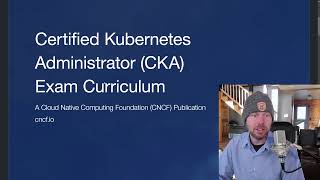
Overview of the CNCF Certified Kubernetes Administrator Exam
Insights into CNCF Certified Kubernetes Administrator exam objectives, covering architecture, workloads, networking, storage, and troubleshooting. Valuable overview for aspiring Kubernetes administrators.