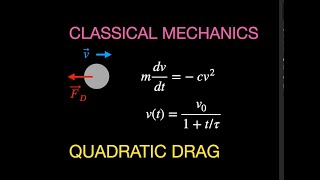
Classical Mechanics: Linear Motion with Quadratic Drag
Explore linear motion with quadratic drag in classical mechanics, deriving velocity and position functions over time using Python simulations.
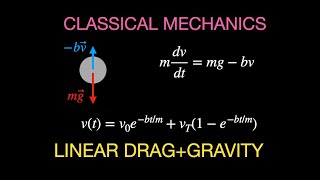
Classical Mechanics: Falling Object with Linear Drag
Explore falling objects with linear drag, analyzing velocity and position over time. Includes Python modeling for practical application.
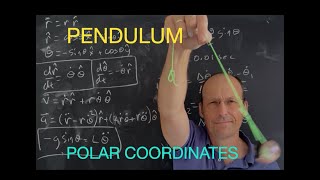
Classical Mechanics: Pendulum in Polar Coordinates - Python Modeling
Explore pendulum motion using polar coordinates and Newton's second law, with Python implementation for practical modeling.
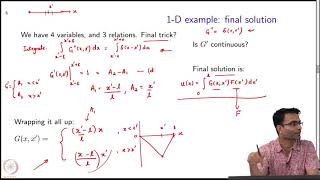
Introduction to Green's Function: 1-D Example - Alternate Representation
Explore alternate representations of Green's Function in 1-D, focusing on practical applications and problem-solving techniques in mathematical physics.
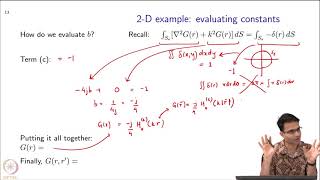
Introduction to Green's Function: 2-D Example - Evaluating Constants - Part 2
Explore advanced concepts in Green's Function for 2D problems, focusing on evaluating constants in the second part of this mathematical analysis.
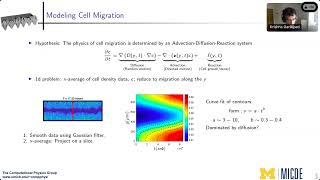
Fokker-Planck-Inverse Reinforcement Learning
Explore Fokker-Planck-Inverse Reinforcement Learning for revealing agent behavior rationale. Learn about a novel physics-aware algorithm inferring transition and reward functions from observed trajectories.
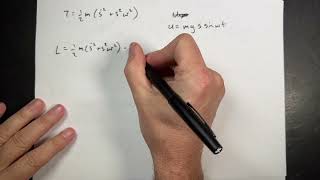
Lagrangian Mechanics: Sliding Bead on a Tilting Wire - Python Model
Explore Lagrangian mechanics through a frictionless bead on a tilting wire, with Python modeling and visualization.
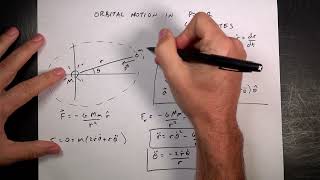
Orbital Motion in Polar Coordinates - Differential Equations and Numerical Solutions
Explore orbital motion using polar coordinates, deriving equations and implementing numerical calculations in Python to visualize and analyze celestial mechanics.
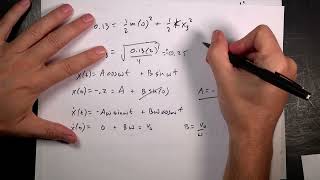
Sketching a Phase Space Plot for a Simple Harmonic Oscillator
Explore phase space plots for simple harmonic oscillators through hands-on coding and visualization techniques.
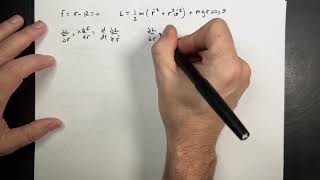
Lagrange Multipliers: Force of Constraint for a Pendulum
Explore Lagrange Multipliers to determine pendulum constraint force, utilizing Python for numerical solutions and work-energy verification.
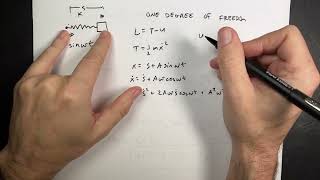
Review of Lagrangian Mechanics with Examples - Projectile Motion and Driven Spring Oscillation
Explore Lagrangian mechanics through projectile motion and driven spring oscillation examples, including numerical calculations and Python implementation.
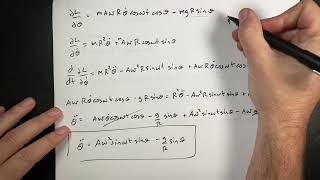
Lagrangian Mechanics: The Jiggle Pendulum
Explore Lagrangian mechanics through a unique oscillating pendulum model, using Python to simulate and analyze its motion.
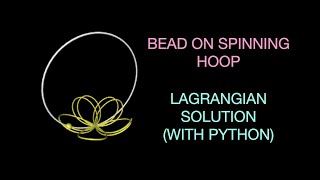
Bead on a Spinning Wire Hoop: Lagrangian Mechanics
Explore Lagrangian mechanics through a bead on a spinning wire hoop problem. Learn coordinate systems, energy calculations, differential equations, and Python modeling.
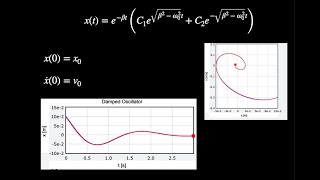
Plotting Damped Harmonic Oscillator with Initial Conditions
Explore damped harmonic oscillator plots with initial conditions, covering over-damped and under-damped scenarios. Gain insights into position vs. time and phase space representations.
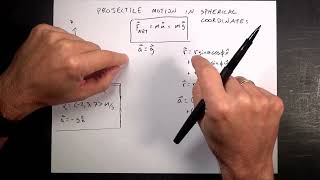
Projectile Motion in Spherical Coordinates - Just Because It's Fun
Derive and model projectile motion using spherical coordinates, exploring acceleration vectors and implementing Python code for accurate simulations.
Physics Question: Two Balls Thrown Up - Which Reaches the Highest Point First?
Explore the physics of two balls thrown upward, analyzing drag forces and their impact on trajectory and maximum height.
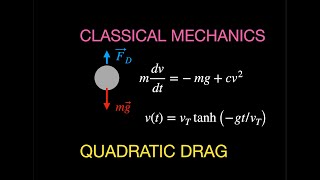
Classical Mechanics: Falling Object with Quadratic Drag
Explore falling objects with quadratic drag in classical mechanics, including velocity analysis and Python code implementation.
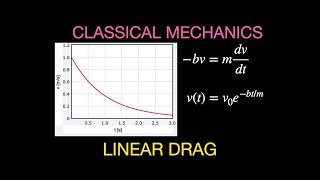
Classical Mechanics: Linear Drag without the Gravitational Force
Derive motion equations for objects with velocity-proportional drag, excluding gravity. Includes numerical modeling and Python code for practical application.
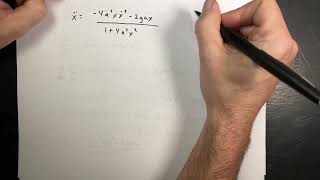
Lagrangian Mechanics: Bead on a Parabolic Wire
Explore Lagrangian mechanics through a practical problem of a bead on a parabolic wire, including Python implementation for enhanced understanding.
Mean Field Limits of Heterogeneous Networks - Informal Systems Seminar
Explore mean field limits of heterogeneous networks, focusing on interacting particle systems coupled on digraphs and their macroscopic behavior. Gain insights into Vlasov equations and digraph measures.
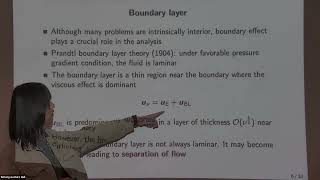
Energy Dissipation of Navier-Stokes Equation with Non-Characteristic Boundary
Explore energy dissipation in Navier-Stokes equations with non-characteristic boundaries, presented by Jincheng Yang from the Institute for Advanced Study.