Embracing Database DevOps through CI/CD
Learn to implement Database DevOps using SQL Server containers, Flyway, Kubernetes, and Azure DevOps. Explore strategies for efficient database migrations and build your first CI/CD pipeline for database deployment.
Deploying SQL Server Big Data Clusters
Learn to deploy SQL Server Big Data Clusters, demystify Kubernetes, and compare on-prem vs cloud deployments. Gain practical tools and scripts for immediate implementation.
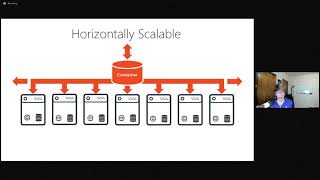
Data Modeling and Partitioning Patterns in Azure Cosmos DB
Explore key strategies for effective data modeling and partitioning in Cosmos DB, using real-world examples to optimize performance and scalability in NoSQL database design.
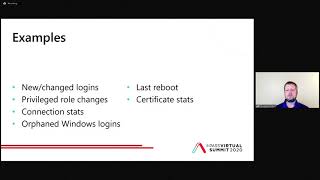
Building a Security Dashboard for SQL Server
Learn to create a Power BI security dashboard for SQL Server, monitoring crucial security data and changes to ensure robust protection of your database systems.
Localizing Reports in Power BI
Learn to localize Power BI reports, including content translation, currency conversion, and language settings for global audiences. Explore options for multi-language support and automated translation using Azure Cognitive Services.
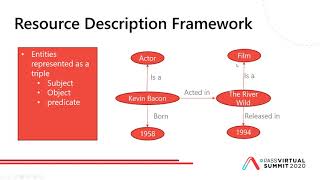
What's Your Bacon Number - An Introduction to Graph Databases
Explore graph databases using IMDB data to calculate Bacon Numbers. Learn graph theory, database types, and practical applications with Azure Cosmos DB and Gremlin API.
DevOps - SSDT Makes Deployment Consistent
Learn to deploy database code consistently and accurately using Azure DevOps pipeline. Explore techniques for setting up database objects, including security and reports, for successful and repeatable deployments across different environments.
PowerShell for DBA Beginners
Learn to automate SQL deployments and upgrades using PowerShell, starting with basics and progressing to multi-server scripts using JSON files.
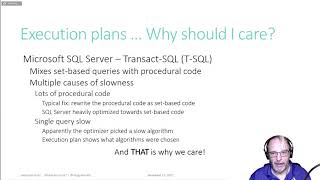
Execution Plans - Where Do I Start?
Learn to read and understand SQL Server execution plans, crucial for optimizing query performance and troubleshooting slow queries. Discover how to obtain plans and interpret them effectively.

ORMs and the DBA - How to Keep Both Happy
Explore strategies to mitigate ORM-related issues, improve performance, and satisfy both developers and DBAs. Learn to audit SQL, optimize code, and use tools for better ORM implementation.
Pay Less, Get More - A Guide to SQL Server Licensing
Optimize SQL Server licensing costs with expert guidance on editions, models, and scenarios for virtual environments, high availability, and non-production setups.
SQL Professional to Cosmic Superstar in 75 Minutes
Transition SQL Server skills to CosmosDB: Learn NoSQL concepts, JSON, multi-models, and key differences in monitoring and data structure. Prepare for a new approach to database management and optimization.
A Deep Dive into Execution Plans & How to Use Them
Explore SQL Server Query Optimizer's execution plans, learn to read and fine-tune them for better performance, and master troubleshooting techniques to enhance database efficiency.

How to Put DevOps Into Action for Your Databases
Learn to implement DevOps practices for database deployments, covering source control, automated testing, and continuous integration/delivery through live demonstrations and practical insights.
From Docker to Big Data Cluster - A New Era for SQL Server
Explore SQL Server's evolution from Docker support to Big Data Clusters, covering containerization, Kubernetes deployment, and integration with Python for modernized database management and analytics.

Migrating Oracle Workloads to Azure
Learn strategies for migrating Oracle databases to Azure, including architecture design, deployment automation, and success factors for moving to IaaS while leveraging both Oracle and Azure products.
The Good, Bad, and Ugly of Migrating SQL Server to Public Clouds
Explore the challenges and best practices for migrating SQL Server to public clouds like Azure, AWS, and GCP. Learn from real-world experiences to ensure a successful transition from on-premises to cloud environments.
Congratulations, You Are Now a DBA
Essential roadmap for new DBAs: daily, weekly, and monthly checklists for SQL Server administration, data protection, and server maintenance. Learn key responsibilities and long-term career prospects in data-driven decision-making.
SQL Server Business Intelligence on Amazon RDS
Explore SQL Server Integration Services, Analysis Services, and Reporting Services on Amazon RDS. Learn cost-saving strategies, configuration, security, and reliability for Microsoft BI toolkit on cloud infrastructure.
Building a Highly-Available, Scalable Application with Amazon Aurora
Learn to build high-performance applications using Amazon Aurora, a MySQL- and PostgreSQL-compatible database. Explore scalability, high availability, disaster recovery, and global replication for open source databases on AWS.
Normalization Beyond Third Normal Form
Explore higher Normal Forms in database design, debunking myths and enhancing your skills. Learn to identify, check, and understand the consequences of violations for improved database architecture.