Inside the Linux Security Modules
Explore Linux Security Modules framework, architecture, and integration. Learn about security data fields, hooks, and configurations for enhanced kernel protection.

Mixing Surfaces, Algebra, and Geometry
Explore the interplay of surfaces, algebra, and geometry through Mirzakhani's theorem, taffy pullers, and mapping class groups in this engaging mathematical journey.
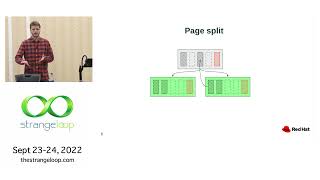
Modern B-Tree Techniques
Explore advanced B-Tree techniques in databases and file systems, covering efficiency improvements, new functionalities, and hardware adaptations. Learn about PostgreSQL implementations and other database applications.
Blue to Red - Traversing the Spectrum
Explore the importance of foundational security skills and an adversarial mindset in navigating diverse InfoSec roles, from forensics to red teaming, in this insightful keynote by Amanda Rousseau.
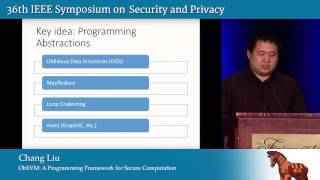
ObliVM - A Programming Framework for Secure Computation
Explore ObliVM, a framework for secure computation offering a domain-specific language, user-friendly abstractions, and efficient oblivious representations for various applications like data mining and genomic analysis.
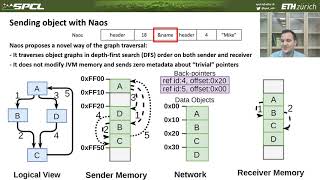
Naos - Serialization-free RDMA Networking in Java
Innovative technique for direct object transfer between Java heaps over RDMA networks, bypassing serialization for improved performance in distributed systems.

Snakes Into Snake Oil - What Blockchains Are And Why They’re Terrible
Comprehensive exploration of blockchain technology, examining its implementation, potential applications, and critical analysis of its limitations and drawbacks in various sectors.
Bootstrapped by Boost
Exploring Boost libraries' role in developing a medical search engine using NLP techniques. Highlights benefits and challenges of extensive Boost usage in C++ projects.
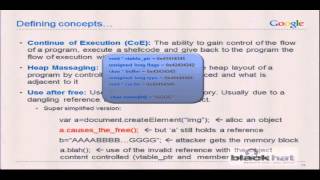
The Info Leak Era on Software Exploitation
Explore advanced techniques for exploiting software vulnerabilities through information leaks, focusing on defeating ASLR and converting various vulnerabilities into effective info leaks.
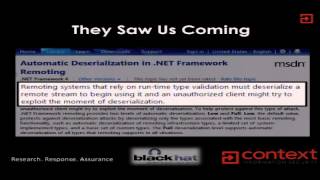
Are You My Type? Breaking .NET Sandboxes Through Serialization
Explore vulnerabilities in .NET serialization, including attacks on applications and sandbox breakouts. Learn about security issues, mitigation strategies, and the impact on .NET technologies.

Kafka in the Wild
Explore how Enterprise Domain Driven Design and Event Storming can streamline Kafka data structures, reducing costs and errors while enabling real-time, distributed data implementations.

Analogue Evolution, Digital Revolution - Tipping Points in Technology
Explore technological tipping points and their impact on society, from digital cameras to AI. Gain insights into past innovations and future trends in this thought-provoking talk on digital revolution.
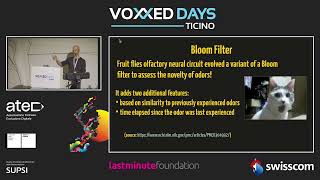
Probabilistic Data Structures
Explore efficient handling of large datasets using probabilistic data structures. Learn about their use cases, trade-offs, and implementation for improved performance and memory management.

The Joy of Building Large Scale Systems
Explore modern hardware capabilities and challenge traditional assumptions about system design. Learn innovative approaches to building efficient, high-performance software leveraging current technology.
Understanding and Mastering Flat Containers
Explore C++23's std::flat_* containers: their differences, use cases, performance impacts, and common pitfalls. Learn when and how to leverage these efficient data structures in your code.
In-Memory Database with Indices from Scratch
Learn to build a simple, extensible in-memory database with indices using C++'s standard library. Explore search algorithms and data structures through animations.
Binary Defense Without Privilege
Learn techniques for implementing binary defense without privileged access, covering code patching, stack overflow prevention, sandboxing, and network filtering.
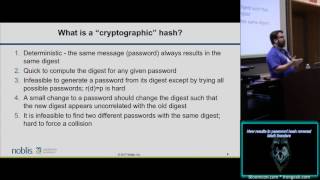
New Results in Password Hash Reversal
Explore innovative techniques in password hash reversal, including rainbow tables and Bloom filters, to enhance cybersecurity practices and understand potential vulnerabilities.
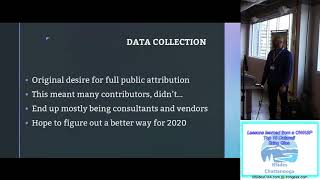
Lessons Learned from a OWASP Top 10 Datacall
Explore insights from OWASP Top 10 Datacall, covering attribution, tools vs. humans, tech complexity, survey results, and vulnerability patterns for improved application security.
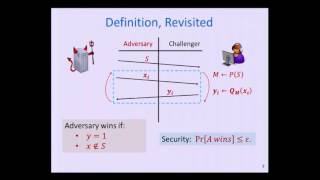
Bloom Filters in Adversarial Environments
Explore adversarial resilient Bloom filters, their applications, and cryptographic necessities in this comprehensive analysis of data structure security.
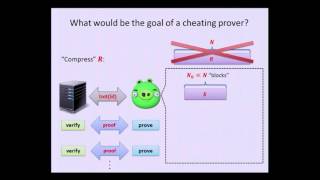
Proofs of Space
Explore proofs of space as an alternative to proof of work in blockchain systems, examining advantages, security considerations, and practical applications.