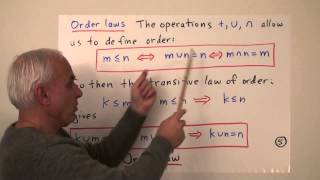
The Realm of Natural Numbers - Data Structures in Mathematics
Explore natural numbers through multisets, examining addition, union, and intersection operations. Discover unique properties, including a new distributive law that forms the basis for tropical calculus.
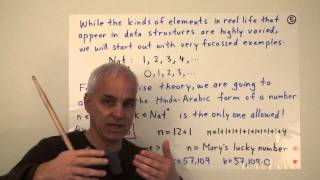
Sets and Other Data Structures - Data Structures in Mathematics
Explore four fundamental data structures in mathematics: lists, ordered sets, multisets, and sets. Learn their characteristics, applications, and a new notation system for easier recognition and distinction.

The Hindu Arabic Number System Revisited - Data Structures in Mathematics Math Foundations
Explores three approaches to Hindu Arabic numerals, examining their mathematical foundations and practical applications in arithmetic and number representation.
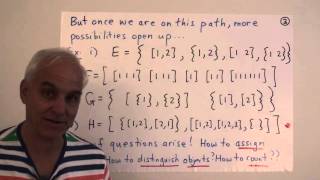
Higher Data Structures - Data Structures in Mathematics Math Foundations
Explore advanced mathematical data structures, including nested combinations of lists, ordered sets, multisets, and sets. Learn their applications in combinatorics, graph theory, and other mathematical fields.
Arithmetic with Negative Multisets and Integral Polynumbers - Math Foundations 232
Explores advanced arithmetic using negative msets and anti-objects, introducing integral polynumbers and Laurent polynomials in a pure algebraic context, revolutionizing traditional algebra understanding.
Negative Numbers from Antimultisets - Math Foundations 231
Explore negative numbers through antimultisets, drawing parallels with particle physics concepts. Discover a new arithmetic perspective based on elementary principles.

Four Basic Combinatorial Counting Problems in Data Structures - Math Foundations 162
Explores four fundamental combinatorial counting problems for lists, ordered sets, sets, and multisets, providing insights into mathematical data structures and their enumeration.
Unique Factorization, Primes and Multisets in Number Theory - Math Foundations 160
Explore elementary number theory through multisets, examining unique factorization, primes, and integral msets. Learn how prime msets connect to fractions and other number theory concepts.
Linear Spaces and Spans II - MathFoundations 220
Introduction to integral linear spaces as abstract algebraic objects, exploring their applications in mathematics, chemistry, and physics. Foundational concepts for linear algebra using vexel language for concrete examples.
Linear Spaces and Spans I - Abstract Algebra Math Foundations 219
Introduction to linear spaces and spans, generalizing natural numbers with addition to form spans of multisets. Explores fundamental concepts in abstract algebra and linear algebra.
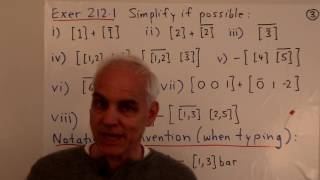
The Anti Operation in Mathematics - Data Structures in Math Foundations 212
Exploring the anti operation in multisets, its symmetry, and applications to vexels and maxels. Expands understanding of mathematical structures and operations.
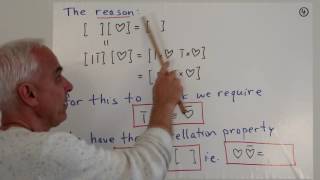
Numbers as Multipliers and Particle-Antiparticle Duality - Data Structures Math Foundations Lecture 211
Exploring the concept of anti-mathematical objects and their role in multisets, drawing parallels to particle/antiparticle symmetry in physics. Provides insights for modern algebra foundations.
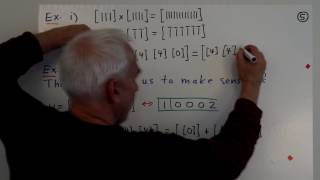
Numbers as Multipliers and Particle-Antiparticle Duality - Data Structures Math Foundations 210
Explores numbers as multipliers for sets and introduces particle/antiparticle duality, extending multiplication from natural numbers to integers in mathematical set theory.
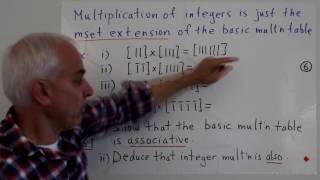
A New Trichotomy for Integer Arithmetic - Math Foundations 206
Novel approach to integer arithmetic using marks, anti-marks, and nothing. Explores symmetry between natural and negative numbers, foundational arithmetic of integers, and the role of multisets in organizing mathematical objects.
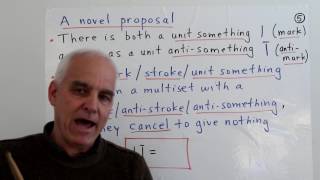
Negative Numbers, Multisets, and Modern Physics in Mathematics - Math Foundations 205
Exploring a new approach to arithmetic with integers using multisets and insights from modern physics, revolutionizing our understanding of negative numbers and mathematical foundations.
Introducing Box Arithmetic - Math Foundations 237
Explore a revolutionary approach to arithmetic using multisets and box/anti-box duality, offering new insights into mathematical foundations and their connection to particle physics concepts.
The Curious World of Integral Polynumbers - Math Foundations 233
Explore integral polynumbers through particle physics concepts, expanding arithmetic to include integers as coefficients and exponents, and viewing polynomials as algebraic objects rather than functions.
C++ Tutorial - Associative Containers and Container Adapters - Lesson 18
Explore associative containers (set, multiset, map, multimap) and container adapters (stacks, queues, priority queues) in C++. Learn about enums and their applications in programming.

Do It Yourself: Collections - Extending Map Data Structures
Hands-on demo extending Map to create MultiSet and MultiValuedMap. Learn to design new collections, add APIs, and implement safeguards using TDD and JDK data structures.
Polyregular Functions on Unordered Trees of Bounded Height
Explore polyregular functions on unordered trees with bounded height, examining first-order interpretations, decidability of equivalence problems, and applications to graph classes with bounded tree-depth.
The Operation of Caret - Exponentiation via Multisets - Math Foundations
Explore a new arithmetic operation called "caret" (exponentiation) for multisets, extending the ladder of operations beyond addition and multiplication with concrete examples and recursive counting functions.