How and Why Prometheus' New Storage Engine Pushes the Limits of Time Series Databases
Explore Prometheus' new storage engine, designed for high-performance time series data handling in dynamic environments like Docker Swarm and Kubernetes.

A New Radix-Tree Based Memory Storage Engine
Explore a radix tree-based memory storage engine for FDB clusters, offering space efficiency and optimized performance for time series workloads with prefix-overlapping keys.

Indexing and Iterating Design Space Permutations
Explore mathematical techniques for indexing and iterating design space permutations, focusing on perfect hash functions for efficient game state conversion and representation.

Reverse Engineering the Tesla Battery Management System to Increase Power Available
Explore Tesla's Battery Management System reverse engineering, focusing on power upgrades in performance models. Learn about architecture, data structures, and hardware modifications for enhanced vehicle performance.
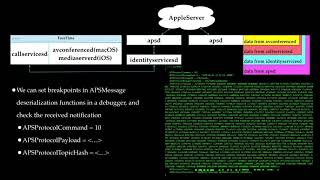
Towards Discovering Remote Code Execution Vulnerabilities in Apple FaceTime
Explore FaceTime's vulnerabilities through reverse engineering, focusing on call initialization, connection processes, and potential attack surfaces for remote code execution.

Don't Ruck Us Too Hard - Owning All of Ruckus AP Devices
Explore vulnerabilities in Ruckus AP devices, including pre-authentication remote code execution exploits. Learn about research methods, discovered CVEs, and a framework for cross-architecture analysis.
ECMA Script 6 from an Attacker's Perspective
Explore ECMA Script 6 from a security perspective, covering new language features, potential attack vectors, and strategies to mitigate risks in modern web browsers.

Cache à la Carte - A Framework for In-Memory Caching
Modular cache framework for diverse in-memory caching needs, offering predictable performance, fixed memory footprint, and easy customization. Lessons from large-scale cache cluster operations shared.

Exotic Functional Data Structures - Hitchhiker Trees
Explore functional data structures, B-trees, and fractal trees, leading to the innovative Hitchhiker tree for efficient, scalable, and persistent off-heap data storage in functional programming.
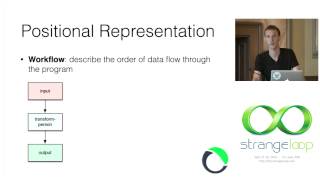
Onyx - Distributed Workflows for Dynamic Systems
Explore Onyx, a distributed computation system addressing workflow complexities in modern frameworks. Learn about its innovative approach to simplify processing and leverage hardware advancements.

Forget about HTTP
Explore alternatives to HTTP for microservices communication, including messaging and RPC. Learn benefits and challenges of different approaches for efficient, scalable, and resilient architectures.

Writing Allocation Free Code in C#
Explore techniques for writing allocation-free C# code, focusing on structs, Span, and memory optimization to enhance performance without sacrificing readability or maintainability.
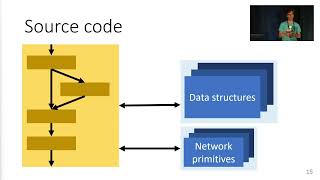
Automated Verification of Network Function Binaries
Automated technique for verifying network function binaries without source code, using ghost maps to model data structures and infer control flow, enabling operators to ensure reliability of proprietary software.
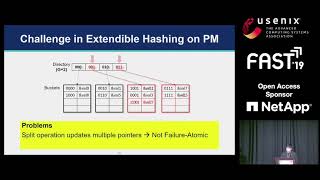
Write-Optimized Dynamic Hashing for Persistent Memory
Optimizing hash-based indexing for persistent memory: CCEH reduces overhead, guarantees constant lookup time, and ensures failure-atomicity without explicit logging, improving query latency compared to existing techniques.
Optimizing Systems for Byte-Addressable NVM by Reducing Bit Flipping
Optimizing data structures and memory allocation to reduce bit flipping in byte-addressable non-volatile memory, improving power efficiency and memory longevity without compromising performance.
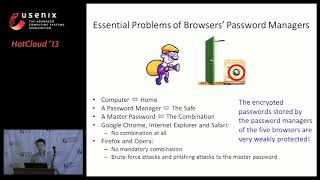
Toward Secure and Convenient Browsing Data Management in the Cloud
Explores a novel Cloud computing Age Browser architecture to address browsing data insecurity and inconvenience issues in modern Web browsers, leveraging cloud storage services.
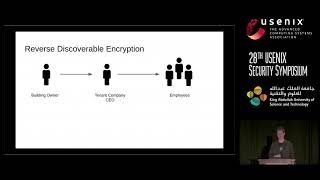
WAVE - A Decentralized Authorization Framework with Transitive Delegation
Explore WAVE, a decentralized authorization framework offering autonomous delegation, enhanced security, and scalability without central trust, as applied to IoT device control.
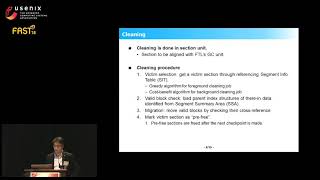
F2FS - A New File System for Flash Storage
Explore F2FS, a Linux file system optimized for flash storage. Learn its design, data structures, and algorithms, and see how it outperforms EXT4 in various scenarios on mobile and server systems.
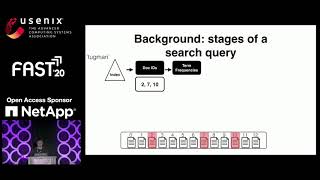
Read as Needed - Building WiSER, a Flash-Optimized Search Engine
Explore WiSER, a flash-optimized search engine designed to maximize SSD performance. Learn about innovative techniques for high throughput, low latency, and efficient memory usage in search applications.
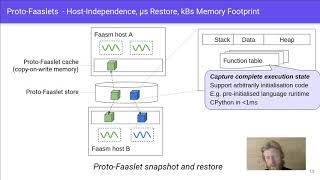
Faasm - Lightweight Isolation for Efficient Stateful Serverless Computing
Lightweight isolation technique for serverless computing, enabling efficient stateful processing and memory sharing between functions, resulting in improved performance and reduced resource usage.
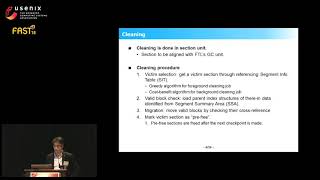
F2FS - A New File System for Flash Storage
Explore F2FS, a Linux file system optimized for flash storage. Learn its design, data structures, and algorithms, and see how it outperforms EXT4 in various scenarios on mobile and server systems.