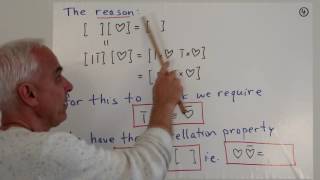
Numbers as Multipliers and Particle-Antiparticle Duality - Data Structures Math Foundations Lecture 211
Exploring the concept of anti-mathematical objects and their role in multisets, drawing parallels to particle/antiparticle symmetry in physics. Provides insights for modern algebra foundations.
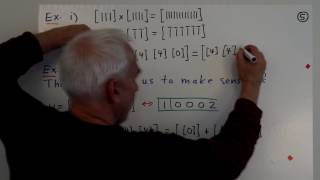
Numbers as Multipliers and Particle-Antiparticle Duality - Data Structures Math Foundations 210
Explores numbers as multipliers for sets and introduces particle/antiparticle duality, extending multiplication from natural numbers to integers in mathematical set theory.
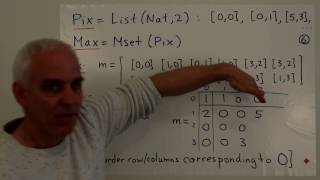
Integral Vectors and Matrices via Vexels and Maxels - Data Structures Math Foundations
Explore integral vectors and matrices through vexels and maxels, expanding on previous concepts with a multiset framework for more flexible indexing and generalized representations.
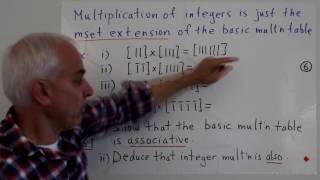
A New Trichotomy for Integer Arithmetic - Math Foundations 206
Novel approach to integer arithmetic using marks, anti-marks, and nothing. Explores symmetry between natural and negative numbers, foundational arithmetic of integers, and the role of multisets in organizing mathematical objects.
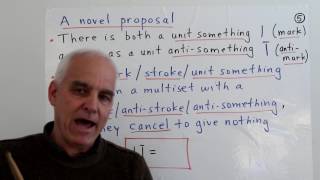
Negative Numbers, Multisets, and Modern Physics in Mathematics - Math Foundations 205
Exploring a new approach to arithmetic with integers using multisets and insights from modern physics, revolutionizing our understanding of negative numbers and mathematical foundations.
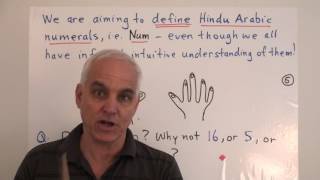
Numbers, Polynumbers, and Arithmetic with Vexels - Part 2
Explore vexels, polynumbers, and Hindu-Arabic arithmetic, transitioning to base-2 for simplified understanding of number systems and their arithmetic operations.
Introducing Box Arithmetic - Math Foundations 237
Explore a revolutionary approach to arithmetic using multisets and box/anti-box duality, offering new insights into mathematical foundations and their connection to particle physics concepts.
The Curious World of Integral Polynumbers - Math Foundations 233
Explore integral polynumbers through particle physics concepts, expanding arithmetic to include integers as coefficients and exponents, and viewing polynomials as algebraic objects rather than functions.
Mapping Classes and Moduli Spaces of K3 Manifolds
Explores mapping classes of K3 manifolds using moduli spaces, focusing on unipotent actions on cohomology and K3 surfaces fibered into genus one curves.
On the Geometry of Extensions of Free Groups
Explore geometric group theory's advancements, focusing on free group extensions. Gain insights from experts through minicourses and collaborative research in this intensive workshop.
Dynamic Graph Sketching: To Infinity and Beyond
Explore graph sketching algorithms for massive-scale graph computation, focusing on connected components and practical implementation challenges.
Schmutz-Thurston Duality in Mapping Class Group-Equivariant Cell Decompositions
Explore mapping class group-equivariant cell decompositions of Teichmueller space, focusing on Schmutz and Thurston's work for closed compact surfaces without marked points.
Graphs and Vogue Dance: Using Data Structures to Create Choreographies
Explore how graph data structures can be used to create and visualize Vogue Dance choreographies, combining computer science concepts with artistic expression and LGBTQIA+ culture.
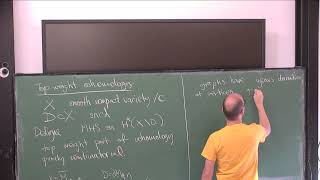
Top Weight Cohomology of M_{g,n} and the Handlebody Group
Explore top weight cohomology of M_{g,n} and its connection to the handlebody group in algebraic topology and Grothendieck-Teichmüller theory.
Recent Advances in Dynamic Graph Algorithms
Explore recent advancements in dynamic graph algorithms, focusing on efficient data structures and techniques for handling evolving network structures.
NumPy: Introduction, Installation, Attributes, and Arithmetic Operations
Master NumPy fundamentals: installation, attributes, and arithmetic operations for efficient numerical computing in Python.
Unraveling the Web of Relationships: Understanding Graph Data
Explore graph theory basics, real-world applications, and the growing importance of graph databases in solving complex data challenges across industries.

Symplectic Mapping Class Groups: Structural Properties from Smooth to C⁰
Explore structural properties of symplectic mapping class groups, from smooth to C⁰, with an overview of key concepts and open questions in this mathematical field.
Prismatic and Syntomic Cohomology of Ring Spectra
Explore prismatic and syntomic cohomology of ring spectra, covering definitions, examples, theorems, and applications in chromatic homotopy and K-theory.
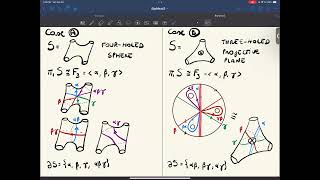
Bowditch Representations and Dynamics on Character Varieties - Part 2
Explore advanced concepts in geometric group theory, focusing on mapping class group actions on character varieties and domains of discontinuity for various surfaces and Lie groups.

A* Search: How Map Applications Find Shortest Routes
Explore A* search algorithm for optimal route finding, comparing greedy and uniform cost approaches. Learn how modern mapping apps balance efficiency and accuracy.