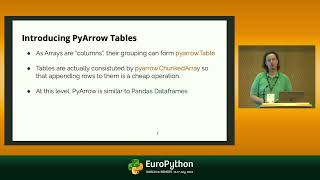
PyArrow and the Future of Data Analytics
Explore PyArrow's transformative impact on data analytics, covering its in-memory format, disk format, network protocol, dataframe library, and query engine integration with NumPy and Pandas.
Use Animated Charts to Present & Share Your Findings with Ipyvizzu
Learn to create engaging animated charts for data storytelling using ipyvizzu. Explore chart taxonomies, morphing engines, and best practices for impactful presentations.
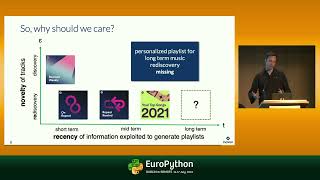
Build Your Own Playlist Recommender System with Python Using Your GDPR Data
Learn to create a personalized playlist recommender system using Python and Spotify GDPR data. Analyze listening history, enrich with audio features, and rediscover forgotten favorites from your past.
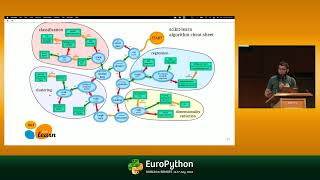
Python for Arts, Humanities and Social Sciences
Discover how Python and data science tools can revolutionize research in arts, humanities, and social sciences. Learn practical tips for overcoming programming fears and applying data-driven methods to real-world problems.
Jupyter - Under the Hood
Explore Jupyter's architecture: from notebook server to IPython kernel. Dive into REST APIs, ZMQ sockets, and internal workings of Jupyter Notebook, JupyterLab, and JupyterHub.
Saving Lives with Predictive Geo - AI
Explore geospatial Python libraries for Multi-Criteria Decision making, including imagery dataset processing, overlay analysis, and zonal statistics. Learn to create intuitive geo-visualization portals using vector tiles.
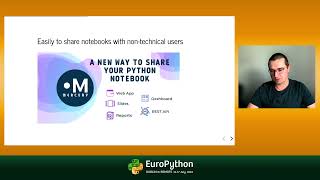
Mercury - Build & Share Data Apps from Jupyter Notebook
Learn to transform Jupyter Notebooks into interactive web apps using Mercury framework. Explore features, architecture, and deployment options for sharing data applications effortlessly.
Super Search with OpenSearch and Python
Explore OpenSearch's search and aggregation capabilities for semi-structured data, and learn to integrate powerful search functionalities into Python applications.
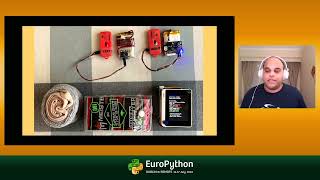
Applying Machine Learning Capabilities to Wearable IoT Devices for Boxing Technique Management
Explore how machine learning algorithms on IoT devices can enhance boxing training using motion sensor data, from problem analysis to algorithm deployment on Arduino.
Czech Drought Monitoring System - A Journey from Manual Work to Global Drought Monitoring and Machine Learning, Powered by Python
Explore the journey of building a robust drought monitoring system using Python, geospatial tools, and data processing libraries for Czechia and Central Europe.
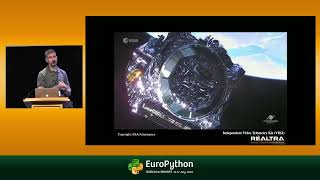
Python's Role in Unlocking the Secrets of the Universe with the James Webb Space Telescope
Explore how Python powers data processing for the James Webb Space Telescope, enabling groundbreaking discoveries about the Universe's origins, star formation, and exoplanets.
I Have to Confess, I Still Love Pandas
Discover the power of Pandas for data science workflows. Learn advantages, efficient usage techniques, and fundamental concepts to enhance your data manipulation skills.
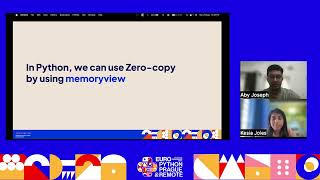
Zero-Copy Zen - Boost Performance with Memory View
Explore zero-copy techniques in Python using memory view objects to optimize data transfer, minimize memory usage, and boost performance when working with large datasets, sockets, and memory profiling.
Threat to Life - Preventing Planned Murders with Python
Explore how Python-based deep learning models are used to detect life-threatening messages in intercepted communications, aiding law enforcement in preventing violent crimes and protecting potential victims.
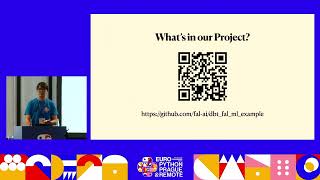
Unleashing the Power of dbt and Python for Modern Data Stack
Explore dbt integration with Python for modern data infrastructure. Learn best practices, tool integration, and complex data analysis using fal package, with real-world examples.
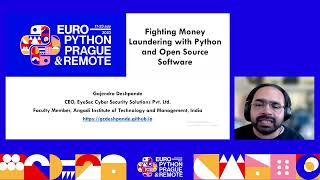
Fighting Money Laundering with Python and Open Source Software
Explore Python-based techniques and open-source tools for detecting fraudulent transaction chains and providing insights to combat money laundering in financial investigations.
Building and Deploying Fair and Unbiased ML Systems - An Art, Not Science
Explore effective practices for developing and deploying ethical, fair, and unbiased machine learning models in production, addressing challenges of data bias and model complexity.
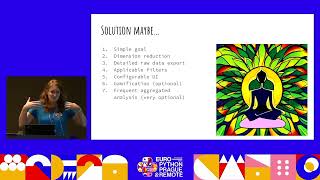
Quantify Self
Explore behavioral and wearable tracking techniques to gain personal insights. Learn data collection methods, analysis approaches, and how to transform findings into actionable self-improvement strategies.
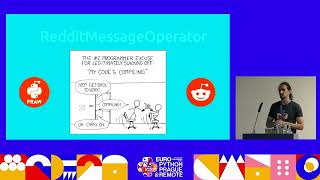
Orchestrating Python Workflows in Apache Airflow
Explore Apache Airflow for efficient Python workflow orchestration. Learn strengths, weaknesses, key features, and how to create custom operators based on 5 years of production experience.
Too Big for DAG Factories?
Explore dynamic generation of thousands of DAGs with Airflow to transform, optimize, and scale data workflows. Learn use cases and techniques for efficient data pipeline management.
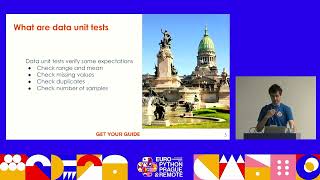
Test Your Data Like You Test Your Code
Discover data unit testing: a crucial tool for data scientists to ensure product quality. Learn implementation techniques and best practices for robust data-driven solutions.