Fish and Chips and Apache Kafka
Learn Apache Kafka® basics through a British fish and chips shop model. Explore key concepts, multiple producers/consumers, and scalable message handling in this fun and practical introduction to data streaming.
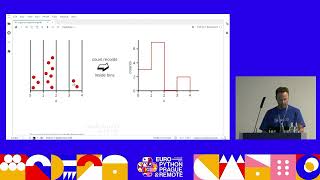
Scipp - Multi-Dimensional Arrays with Labeled Dimensions and Physical Units
Explore Scipp's powerful features for handling multi-dimensional data arrays with named dimensions, physical units, and non-destructive binning. Learn about its intuitive visualization tools for Jupyter notebooks.
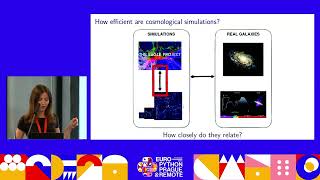
How Well Do We Understand Our Universe? Let's Python It Out!
Explore cosmic evolution using Python and machine learning to model the Universe's history, train AI on simulations, and apply findings to real galaxies, shedding light on their cosmic past.
Solving Data Problems in Management Accounting
Streamline management accounting with Python: automate data screening, identify outliers, and improve report accuracy using statistical tools and machine learning for enhanced productivity.

Python, Visual Studio Code, Copilot - Revolutionizing the Way You Do Data Science
Explore how Visual Studio Code, GitHub, Codespaces, and Copilot enhance data science workflows, boosting productivity through advanced tools like VS Code Notebooks, Data Wrangler, and AI-assisted coding.
Vector Data Cubes as a Bridge Between Raster and Vector Worlds
Explore vector data cubes: multi-dimensional arrays with vector geometries. Learn about Xvec, a new Python library built on Xarray, Shapely 2.0, and GeoPandas for efficient geospatial data handling.
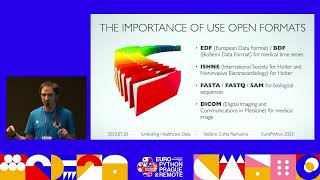
Unlocking Healthcare Data - The Power of Open Formats in Python Data Science
Explore Python analytics for healthcare data, leveraging open formats to manipulate complex patient datasets, enhance collaboration, and improve research impact in fields like ECG, EEG, and radiography.
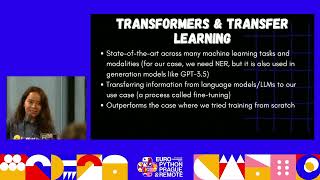
Responding to Earthquakes Using Machine Learning and Racing Through Time
Explore how machine learning and Python tools were used to extract and process social media data for earthquake response, creating afetharita.com to aid survivors in Turkey.
Private Data Anonymization with Python - Fundamentals
Explore techniques for anonymizing legal documents using Python, including entity recognition, masking, and pseudoanonymization. Learn to apply AI models and text mining for improved data privacy compliance.
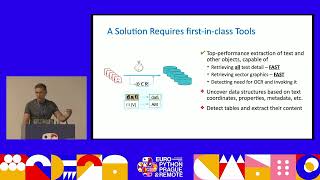
High Volume PDF Text Extraction Using Python Open-Source Tools
Learn efficient techniques for extracting text from large volumes of PDF documents using Python open-source tools, focusing on speed, OCR integration, and detailed information retrieval for business insights.
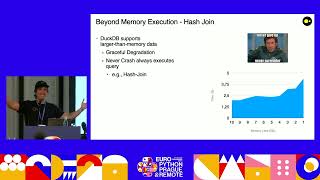
DuckDB - Bringing Analytical SQL Directly to Your Python Shell
Explore DuckDB's seamless integration with PyData ecosystem, enabling efficient analytical SQL queries without a server. Live demo showcases performance and usability alongside Pandas for data science tasks.
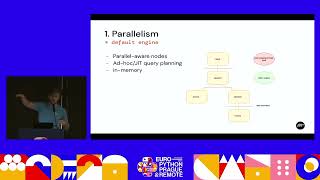
What Polars Does for You
Explore Polars, a fast and efficient DataFrame library built in Rust. Learn about its design, features, and advantages for modern data processing and analysis.
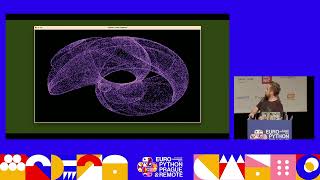
Games of Life - Generative Art in Python
Explore algorithms for creating unique, cohesive graphics using Python. Learn about Clifford attractors, slime mold simulation, and geometric primitives to generate impressive 2D and 3D visualizations.
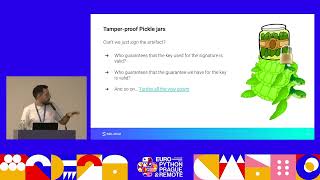
Poisoned Pickles Make You Ill
Explore the risks of using pickle for ML model serialization and learn effective strategies to protect against potential attacks and vulnerabilities in data science pipelines.
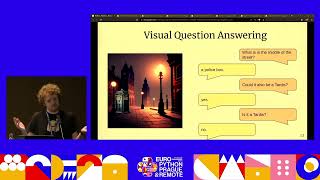
Robot Holmes and The MLington Murder Mysteries
Explore the world of Vision-Language AI through a detective story, uncovering recent developments and key players in this rapidly growing field of machine learning.
Rust for Python Data Engineers
Explore how Rust can enhance data engineering workflows, offering improved performance and safety. Learn about Rust's ecosystem for data processing, databases, and scientific computing to build scalable systems.
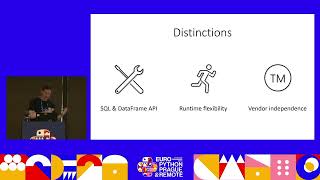
Apache Spark vs Cloud-Native SQL Engines
Opinionated comparison of Apache Spark and cloud-native SQL engines, exploring their strengths, use cases, and complementary nature for data processing and business intelligence tasks.
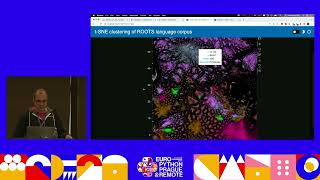
The Needle and the Haystack - Visualizing Single Datapoints Out of Billions
Explore techniques for visualizing and interactively inspecting billions of datapoints using HoloViz ecosystem, overcoming limitations of traditional web-based tools for large datasets.
Polars vs Pandas - What's the Difference?
Explore the differences, pros, and cons of Polars and Pandas data manipulation libraries. Gain insights into their unique features and understand when to use each for optimal data analysis.
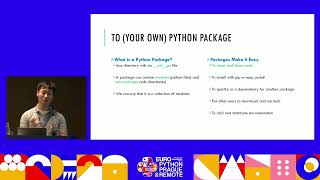
From Jupyter Notebooks to a Python Package - The Best of Both Worlds
Learn to transform Jupyter notebooks into a Python package, enhancing code sharing, refactoring, and version control while retaining notebook benefits. Gain practical skills for improved data science workflows.
Would Rust Make You a Better Pythonista?
Discover how learning Rust can enhance your Python skills, with real-world examples and insights on improving code performance, safety, and design patterns in both languages.